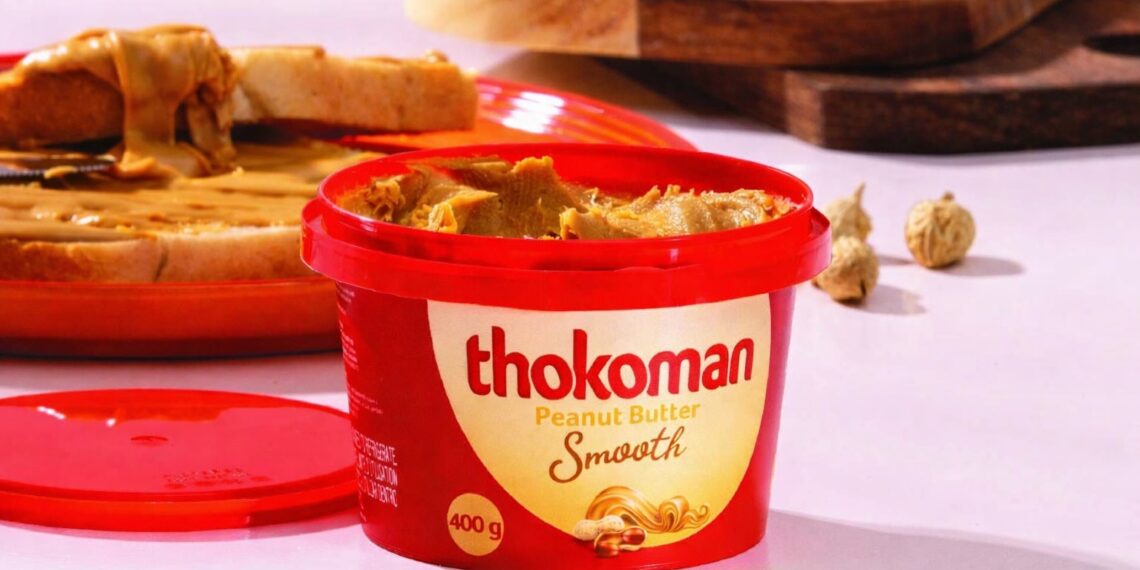
For a quarter of a century, a jar of Thokoman peanut butter has been a quiet constant in many South African kitchens. Now, as one of the country’s largest peanut butter producers marks its 25-year milestone, the brand is using the moment not only to look back, but to lean decisively into the future of food security, innovation and responsible production.
To celebrate the anniversary, Thokoman Peanut Butter has announced a R500 000 commitment to food security through Hot 102.7’s Hot Cares initiative for 2026, reinforcing its belief that accessible nutrition remains one of South Africa’s most urgent needs.
From smallholding to national footprint
What began on a smallholding owned by the Van Rensburg family has grown into a market-leading FMCG manufacturer. Since joining the Basamh Group in 2009, Thokoman has significantly expanded its production capacity while maintaining what it says has always mattered most: consistent quality and rigorous food safety.
Today, Thokoman holds the highest available global food-safety certification, a distinction that places it among the leaders in manufacturing standards, testing protocols and hygiene practices in the local food industry.
“Our sole purpose is to produce peanut butter that is of the highest quality using the best ingredients, that consumers will taste and love,” says David Sieff, head of marketing at Thokoman Foods. “Twenty-five years of consistency speaks to more than just taste. It reflects our commitment to food safety, rigorous testing, and continuous improvement in how we serve South African households.”
A category that keeps growing
Thokoman’s milestone comes at a time when peanut butter continues to prove its relevance. The category has grown steadily at an average annual rate of 3.8% since 2013, underlining peanut butter’s role as one of South Africa’s most affordable and accessible protein sources.
In a country facing rising food prices and persistent food insecurity, this matters. Peanut butter remains shelf-stable, versatile and nutrient-dense – qualities that keep it firmly embedded in everyday diets across income groups.
Responding to changing consumption patterns, Thokoman has sharpened its focus on value-tier and functional innovation. Recent product launches include a 400g value tub, aimed at the category’s largest segment, and a 125g mini tub designed for cash-constrained households and lunchbox convenience.
The brand has also expanded into no-salt and no-sugar options, reflecting growing health awareness, while future nut butter variants are already in development. Packaging has evolved too, with investments in formats that are more user-friendly and increasingly environmentally progressive.
This comes as sustainability continues to influence buying behaviour, with 34% of South African consumers reporting that environmental considerations affect their purchasing decisions.
Related stories
- Farming with nature: The hidden power behind food security
- Joburg Market farmers’ and SMME day sparks growth and food security
- Disaster as floods devastate Mpumalanga & Limpopo farmers
- 2026 Outlook: Crops and exports shine as livestock battles FMD
Food security beyond the shelf
Perhaps most significant is Thokoman’s formalised commitment to community impact. Through its 2026 partnership with Hot Cares, the company will donate R500 000 worth of products, including peanut butter for both human and pet nutrition, to support vulnerable communities.
This builds on earlier disaster relief efforts with Gift of the Givers, where peanut butter played a critical role as a rapid-response protein source during emergencies. The company also maintains ongoing support for local schools, contributing to safer and more dignified learning environments.
“Using our resources and influence to improve lives, whether through product donations or creating employment and training opportunities, we recognise our responsibility extends beyond the supermarket shelf,” says Anis Tannir, managing director at Thokoman Foods.
As Thokoman enters its next 25 years, its story reflects a broader truth about South African food manufacturing: that scale, safety and social responsibility do not have to exist in isolation. By pairing certified production excellence with affordable nutrition and tangible community investment, the brand offers a compelling case study in how local FMCG players can grow without losing sight of the people they serve.
For South African families, it means one thing remains unchanged: a product they can rely on, now backed by an even stronger commitment to the country’s food future.
READ NEXT: Homegrown: TUT turns traditional grains into modern medicine