Monday, September 7, 2026
SUBSCRIBE
22 GLOBAL MEDIA AWARDS
Food For Mzansi
  • News
  • Changemakers
  • Lifestyle
  • Farmer’s Inside Track
  • Food for Thought
No Result
View All Result
  • News
  • Changemakers
  • Lifestyle
  • Farmer’s Inside Track
  • Food for Thought
No Result
View All Result
Food For Mzansi
No Result
View All Result
in Climate Change, News

Grape growers adapt vineyards to thrive in a hotter climate

As the climate changes, South African grape growers are adapting to a 'new normal'. From Keimoes to the Cape, farmers are replacing old vines with resilient, water-wise varieties to help ensure sustainability, quality, and consistency even as weather patterns shift

by Lisakanya Venna
23rd January 2026
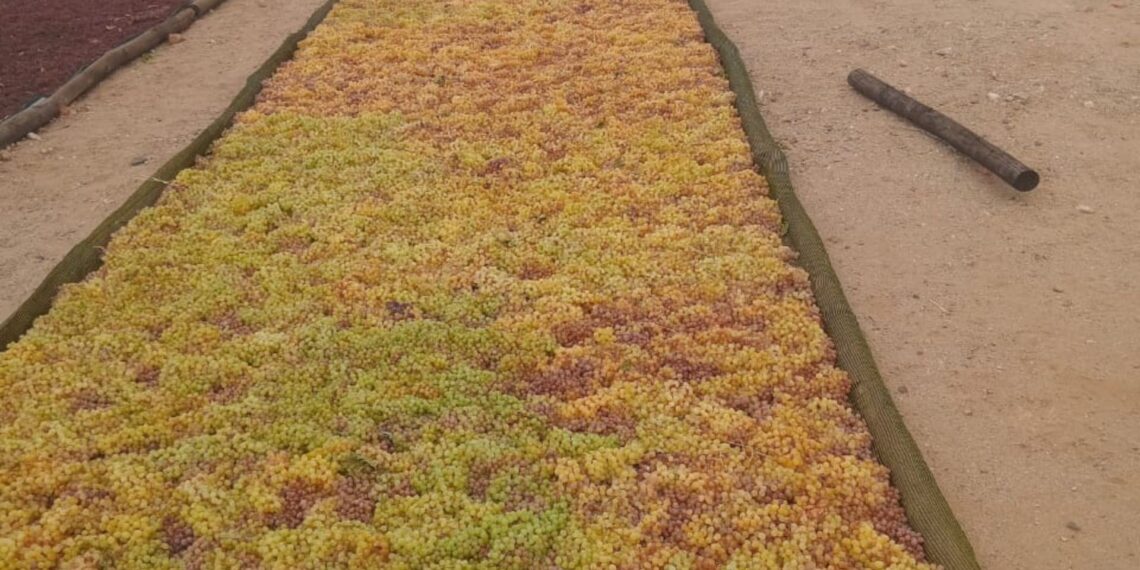
South African grape farmers are adapting to climate change with heat-tolerant, water-efficient varieties, ensuring a sustainable future. Photo: Supplied/Food For Mzansi

South African grape farmers are adapting to climate change with heat-tolerant, water-efficient varieties, ensuring a sustainable future. Photo: Supplied/Food For Mzansi

Share on FacebookShare on TwitterShare on WhatsApp

It has increasingly become important to select the correct grape varieties as South Africa’s climate changes. Rising temperatures, shifting rainfall patterns, and more frequent extremes are influencing vine performance and wine style.

Careful varietal choice is essential to maintain quality, sustainability and long-term resilience in the country’s diverse grape-growing regions.

Farmers have used this opportunity to reinvest in their vineyards, replacing older blocks with high-yielding, heat-resistant varieties that secure their future against a changing climate.

Climate-smart farming bears fruit

According to the South African Table Grape Industry (SATI) report, the national crop estimate remains unchanged at a promising 79.4 million cartons. With volumes currently tracking 0.6% higher than last season, the industry is officially on track to meet global demand.

“The season is on track, and South Africa remains well placed to deliver a consistent, high-quality crop that meets global consumer preferences across all markets,” said Mecia Petersen, CEO of SATI.

Petersen urged farmers to ensure that the grapes they are farming are climate-resilient and able to withstand all types of climate change in South Africa amid heavy rains and drought.

“SATI will continue to monitor the season closely and will communicate any material changes should they arise. At this stage, the industry outlook remains stable, with production and quality expectations aligned with the initial forecast,” she said.

‘Raisin’ the stakes

Food For Mzansi caught up with Elize Gerda Beukes, the founder of G&E Beukes Boerdery, just 15 km outside Keimoes in the Northern Cape.

Farming in a region defined by extreme heat and low rainfall, Beukes noted that success requires careful selection of grape varieties. While popular varieties like Chenin Blanc or Thompson Seedless thrive elsewhere, she prioritises heat-tolerant raisin grapes, specifically Selma Pete, Merbein, and Sultana. These hardy cultivars offer superior water efficiency, proving their edge in a climate where more traditional vines would struggle.
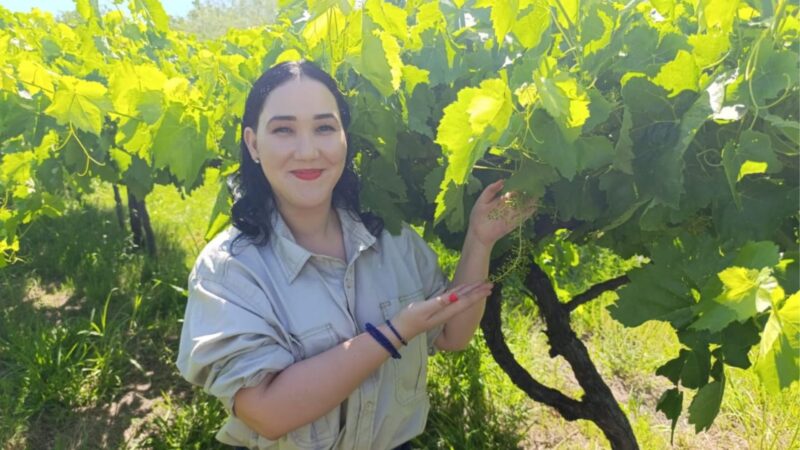
Elize Gerda Beukes tends her climate-resilient grapes at G&E Beukes in the Northern Cape. Photo: Supplied/Food For Mzansi

“Selma Pete is an early cultivar and is usually the first grape we harvest. Under normal conditions, we start harvesting Selma Pete in December. We chose this cultivar because it ripens early, handles heat stress well and allows us to start the season before the most intense heat sets in.

“From a sustainability point of view, that early harvest helps us spread labour and irrigation demands over a longer period. Selma Pete has uniform berries and dries well, which makes it suitable for sun-dried raisins, often marketed as Thompson-type raisins,” she said.


Related stories
  • SATI forecasts high-quality table grapes for global markets
  • SA table grapes break into the Philippine market
  • Export volumes for SA table grapes to exceed previous season
  • Record year predicted for Cape table grape industry

Navigating a new normal

According to Beukes, the Sultana, also known as Thompson Seedless, is one of the most important cultivars on their farm and in the Keimoes area. Traditionally, sultanas would only be harvested in February, but climate change has changed that. With warmer winters and earlier heat buildup, they now often harvest sultanas in the first week of January. 

“Sultanas are chosen because they are reliable, adaptable and produce high sugar levels, which means they dry efficiently. This cultivar is used to make both sun-dried Thompsons and golden raisins. The difference between the two is not the grape but the drying method: sun-dried Thompsons are dried naturally in the sun, while Goldens are dried in controlled tunnels to preserve their light colour.

“The Merbein cultivar was also traditionally a later variety, with harvest usually taking place in February. Like Sultana, Merbein is now ripening much earlier because of climate change, and we often harvest it in early January. We chose Merbein because it is a robust vine that performs well in hot, arid conditions and uses water efficiently, an important factor as water becomes more scarce,” she said.

Beukes further stated that, overall, climate change has had a clear impact on grape production in the Keimoes area. Shorter, warmer winters and higher summer temperatures mean grapes are ripening faster, and harvests are starting earlier than they did in the past. 

“While this requires adjustments in planning, labour and irrigation, the cultivars we’ve chosen, Selma Pete, Merbein and Sultana, have proven to be resilient and well-suited to these changing conditions. That’s why they remain the foundation of sustainable grape farming,” she concluded. 

READ NEXT: UFS secures R10m grant to fast-track local climate action

Sign-up for the latest agricultural news delivered straight to your inbox every day with Mzansi Today!

Lisakanya Venna

Lisakanya Venna is a junior journalist and content coordinator with varied multimedia experience. As a CPUT journalism alumni, she finds fulfilment in sharing impactful stories and serving as a reliable source of information.

Tags: Future-focused farmerInform meNorthern CaperaisinsSouth African Table Grape Industry
Tough times, hardy cattle: Why Mzansi farmers are choosing Nguni
News

Tough times, hardy cattle: Why Mzansi farmers are choosing Nguni

by Vateka Halile
3rd September 2026

Nguni cattle are known for their hardiness and low-maintenance needs, making them ideal for Mzansi's harsh conditions. However, market prejudice...

Read moreDetails
Dragon fruit thrives in KZN valley despite tough national season

Dragon fruit thrives in KZN valley despite tough national season

3rd September 2026
The future of Mzansi's sugar industry hangs in the balance

Government hikes sugar import price, but industry warns of gap

3rd September 2026

Chicken is booming, but the real money is in the supply chain

2nd September 2026
How Tebogo beat post-harvest losses with smart agro-processing

How Tebogo beat post-harvest losses with smart agro-processing

2nd September 2026

Beyond finance: Making women-led farms bankable

Plant, pick, protect: The rising potential of urban foraging in SA

Former electrical engineer builds farming powerhouse on tribal land

Tough times, hardy cattle: Why Mzansi farmers are choosing Nguni

Foot-and-mouth crisis hits SA dairy industry with R1-billion loss

Join Food For Mzansi's WhatsApp channel for the latest updates!

JOIN NOW!
Next Post
Wandile Sihlobo, Agbiz chief economist, at the World Economic Forum in Davos, Switzerland, highlighting South Africa’s agricultural trade opportunities. Photo: Supplied/Food For Mzansi

Davos boosts confidence in Mzansi’s agricultural trade

THE NEW FACE OF SOUTH AFRICAN AGRICULTURE

With 21 global awards in the first six years of its existence, Food For Mzansi is much more than an agriculture publication. It is a movement, unashamedly saluting the unsung heroes of South African agriculture. We believe in the power of agriculture to promote nation building and social cohesion by telling stories that are often overlooked by broader society.

Tiger Brands CEO calls for stronger food value chain

Plant, pick, protect: The rising potential of urban foraging in SA

RSVP now: Emerging farmers’ programme at Nampo Cape

Community-led farms boost food security and incomes in Limpopo

Farmers rethink water use as shortages threaten food production

Honoured roots: A father’s legacy, a daughter’s farming dream

  • Awards & Global Impact
  • Our Story
  • Contact Us
  • Cookie Policy
  • Privacy Policy
  • Copyright

Contact us
Office: +27 21 879 1824
News: info@foodformzansi.co.za
Advertising: sales@foodformzansi.co.za

Contact us
Office: +27 21 879 1824
News: info@foodformzansi.co.za
Advertising: sales@foodformzansi.co.za

  • Awards & Global Impact
  • Our Story
  • Contact Us
  • Cookie Policy
  • Privacy Policy
  • Copyright

Chat Options

I'm Lerato, your AI assistant!
No Result
View All Result
  • News
  • Changemakers
  • Lifestyle
  • Farmer’s Inside Track
  • Food for Thought

Copyright © 2024 Food for Mzansi

This website uses cookies. By continuing to use this website you are giving consent to cookies being used. Visit our Privacy and Cookie Policy.