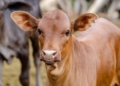
South Africa’s agricultural sector enters 2026 on a stronger footing, buoyed by solid gains in field crops and horticulture. However, recovery remains uneven, with the cattle industry still grappling with foot-and-mouth disease (FMD), writes Agbiz chief economist, Wandile Sihlobo.
I am back at my desk, and I had my first meetings with colleagues in the financial services industry about the state of the South African agricultural sector. My broad message in the meetings was that the sector is continuing its recovery, though unevenly.
The cattle industry continues to struggle with foot-and-mouth disease. The effectiveness of the vaccination process, which should gain momentum soon, will be the major determinant of whether we can see evenly spread growth or recovery in the agricultural sector this year.
Remember, South Africa’s agricultural performance in 2025 was superb from a macro level. But the growth was powered by field crops and horticulture, while the cattle industry struggled with higher feed costs at the start of the year and the spread of foot-and-mouth disease. It is because of such disparities in performance that we termed 2025 as an uneven recovery in South Africa’s agriculture.
Related stories
- Sihlobo: These policies could shake up SA farming
- Steenhuisen sets an optimistic course for SA agriculture in 2026
- SA’s agriculture budget is too little to transform, says Sibiya
- How extension services transform smallholder farming
Strong performance in field crops and horticulture
It is for the excellent production conditions in field crops (grains, oilseeds, and sugarcane) and horticulture (fruits, wine, and vegetables) that, in the first three quarters of 2025, South Africa’s agricultural exports amounted to US$11.7 billion, up 10% year-on-year.
When we receive the full-year 2025 data, I suspect that South Africa’s agricultural exports would have exceeded US$13.7 billion in 2024 and possibly crossed US$14 billion. The volumes of exports and prices were generally healthy. Red meat exports took a knock due to foot-and-mouth disease.
Agricultural machinery sales
These broadly healthy farming fortunes of 2025 also extended to the interlinked industries. For example, we have South Africa’s agricultural machinery sales data for the 11 months of 2025. Cumulative tractor sales are 7,176 units, up 19% year-on-year. The combine harvesters’ sales for the 11 months are at 200 units, up by 3%. The sales have generally been robust throughout the year, with combine harvesters only cooling in recent months.
So, where are we today? Since the start of the current 2025–26 production season, we have continued to receive the excellent La Niña rains, which have supported crop conditions and the grazing veld across the country. Thus, I believe that we enter 2026 with far better prospects of a continuous and broad recovery from the already better conditions of 2025.
And yes, a few people on the call asked whether we are not concerned about the excessive rains. My view is that not at the moment.
Indeed, there was a time just after the early crop plantings that we were worried there wasn’t enough sunshine, and that some seeds weren’t germinating well due to the cold and excessive moisture.
But the few warm days so far have helped. Evidently, the crop looks good in the various regions of the country.
If we continue to get occasional lovely warmer days, I believe that the rains won’t be an issue until March 2026. We will start to worry if it rains after March, when the crops will be starting to mature and require warmer weather.
Vegetables and irrigation
The vegetables are also in good condition with occasional sunshine. Remember, we irrigate vegetables daily, and that is costly. So, the rainy days, to an extent, help.
The one aspect we must keep an eye on during rainy weather is animal diseases, beyond foot-and-mouth disease. But again, I haven’t heard much so far. This is something to keep in mind.
Consumer food prices and risks
If what I have outlined here materialises, it would be fair to expect South Africa’s consumer food price inflation to continue on its current moderating path, driven by potentially ample agricultural supplies.
The significant upside risks, which carry some uncertainty, are again red meat prices and the pace of vaccination against foot-and-mouth disease.
- Wandile Sihlobo is the chief economist of the Agricultural Business Chamber of South Africa. He is also a senior research fellow at the department of agricultural economics at Stellenbosch University. The views and opinions expressed in this article are those of the authors and do not necessarily reflect the views or positions of Food For Mzansi.
READ NEXT: Carbon credits: How to measure, monetise, and manage your risk