Tuesday, December 9, 2025
SUBSCRIBE
21 GLOBAL MEDIA AWARDS
Food For Mzansi
  • News
  • Changemakers
  • Lifestyle
  • Farmer’s Inside Track
  • Food for Thought
No Result
View All Result
  • News
  • Changemakers
  • Lifestyle
  • Farmer’s Inside Track
  • Food for Thought
No Result
View All Result
Food For Mzansi
No Result
View All Result
in Advertorial

Top-quality seeds ensure farming success

by Octavia Avesca Spandiel
15th July 2024
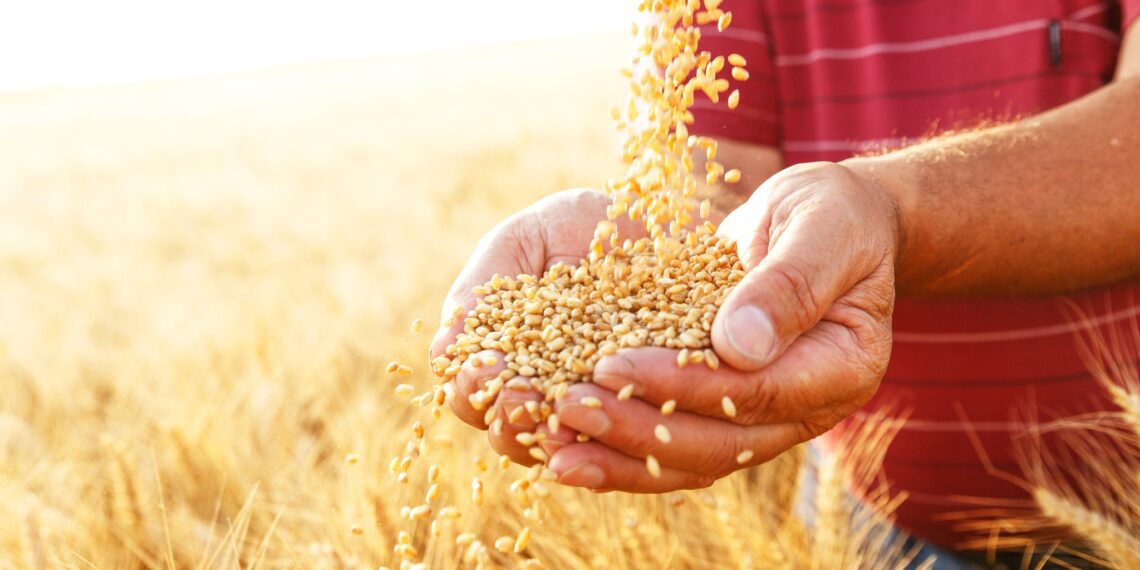
The cornerstone of prosperous crop farming lies in selecting superior seeds, according to the South African Seed Organisation (SANSOR). Photo: SANSOR

The cornerstone of prosperous crop farming lies in selecting superior seeds, according to the South African Seed Organisation (SANSOR). Photo: SANSOR

Share on FacebookShare on TwitterShare on WhatsApp

Making sure farmers get top-notch seeds is a big part of what the South African Seed Organisation (SANSOR) does. But what exactly makes a seed “quality”? Kobus van Huyssteen, technical manager at Sansor, breaks it down for us.


Farmers invest a lot of time and resources in soil preparation, fertilisation, and various farming practices. While many factors in farming are beyond their control, the choice of seeds is one aspect they can manage. This is why selecting high-quality seeds is vital for farmers to achieve their farm’s full potential.

According to Kobus van Huyssteen, technical manager at the South African Seed Organisation (SANSOR), seed quality is not only the cornerstone of successful farming but also clearly implies that the foundation of a bountiful harvest is laid with high-quality seeds.

Van Huyssteen emphasises the importance of selecting the right seed variety for several reasons.

Kobus van Huyssteen, technical manager at the South African Seed Organisation (SANSOR). Photo: Supplied/Sansor

“It’s important that when buying seed, farmers make an informed choice to get the right variety that will manage environmental stresses the best or that has resistance to diseases,” Van Huyssteen says.

Choosing the appropriate seed variety helps farmers cope with challenges such as drought, extreme temperatures, and pest infestations, ultimately leading to more resilient crops and better yields. This decision is crucial for ensuring the sustainability and profitability of farming operations.

When it comes to seeds, decision-making goes beyond selecting the right variety. It also involves ensuring the seed’s physical and genetic quality.

Key factors in seed selection

The seed needs to be of high quality in several aspects: its physical condition, the production process, genetic purity, and viability, Van Huyssteen adds.

In addition, seed quality also encompasses practical factors such as germination rates and moisture content, which influence both the seed’s storability and the uniformity of the resulting crop stands.

“Healthy seeds give rise to a uniform crop. Factors such as seed size, shape, and the absence of physical damage are pivotal in ensuring optimal performance in the field.”

Understanding the key characteristics that determine seed quality is essential for both farmers and seed companies. Van Huyssteen highlights several critical aspects, including varietal identity, genetic purity, viability, seed vigour, germination rate, and moisture content.

“Seed companies go through a lot of lengths to ensure that they put seed out there with good viability and vigour,” he explains.

This meticulous attention to detail ensures that seeds not only germinate well but also thrive under field conditions.

For small-scale farmers, the adoption of precision agriculture and conservation farming techniques has significant implications for seed quality. Van Huyssteen acknowledges the role of data-driven decision-making in this context.

“You need good data to make good decisions. Site-specific management is very important for seed companies to make recommendations for specific areas,” he says.

This approach enhances soil health, optimises resource management, and ultimately contributes to better yields.


Related stories
  • Food security: Innovative butternut varieties extend growing season
  • Gene editing: Time for SA to embrace plant breeding innovations

Consumer preferences and seed quality

Consumer preferences significantly influence variety development, Van Huyssteen points out. This demand drives seed companies to focus on producing crops with superior taste, texture, and nutritional value.

In response to the growing interest in diverse and novel varieties, seed companies are employing advanced breeding techniques to meet these evolving preferences and ensure high-quality seed production.

Access to quality seed is crucial in the South African context for several reasons. Van Huyssteen rates this access as a nine out of ten, reflecting a high level of availability for farmers.

“Every year, our farmers have access to good quality seed,” he notes. “While there may be occasional shortages in specific varieties or volumes, there are always alternative options available.”

Sansor supports Mzansi’s farmers with seeds of success

Looking ahead, Van Huyssteen emphasises several key focus areas to ensure that South Africa remains at the forefront of seed quality. These include continued investment in research and development, fostering collaboration between stakeholders, and promoting sustainable farming practices.

“Development of adapted varieties and promote sustainable farming practices and reduce the need for chemicals,” he advocates.

Farmers themselves play a crucial role in this process, he says and encourages them to participate in field trials, adopt sustainable farming practices, stay informed about technological advancements, and collaborate with local organisations.

“Participating in field trials and providing feedback to the seed company regarding your local conditions is very important,” he advises. 

For more information on seed quality and SANSOR’s initiatives, visit www.sansor.org.

READ NEXT: Sansor: Custodians of quality seed

Sign up for Mzansi Today: Your daily take on the news and happenings from the agriculture value chain.

Octavia Avesca Spandiel

Raised by a close-knitted family who loves her deeply, Octavia believes in the philosophy of ‘I am because you are'. This former news and content editor for radio is now living her best life in the agricultural sector as a commercial journalist at Food For Mzansi. Her soft spot for poetry and passion for life, writing and traveling inspires her to write compelling stories. Apart from being an excellent writer, Octavia has an educational background in youth work and loves working with people. 

Tags: Commercialised farmerCommercialising farmerInform meSeedsSouth African National Seed Organisation (SANSOR)

Related Posts

Wieta, Fairtrade Africa, and Stronger Together are reshaping South Africa’s wine industry. Chirstone Hornsby, Evan Cupido, and Emerentia Patientia share their insights. Photo: Gareth Davies/Food For Mzansi

Ethical partnerships drive change in South Africa’s wine industry

9th December 2025
A GreenCape case study revealed how a KwaZulu-Natal sugarcane smallholder improved yields and cuts costs with precision drone spraying. Photo: Supplied/Food For Mzansi

Drone spraying cuts costs, boosts yields for KZN sugarcane co-op

8th December 2025

After the field: Safe practices when the day is done

Subtrop and Nedbank drive transformation for Limpopo farmers

How to protect sunflower yields from heat stress and drought

Maximising water efficiency with drip irrigation

SoilSistas celebrate graduation of empowered women farmers

Voermol Protein Block is NW Bonsmara farmer’s secret weapon

From Kenya to South Sudan, pastoralists are using digital tools, traditional knowledge and local cooperation to manage scarce resources and strengthen resilience. Photo: Ansar Photography/Pexels
Climate Change

How pastoralists are redefining survival in Africa’s drylands

by Claire Bedelian and Guy Jobbins
7th December 2025

About 60% of Africa is dryland, home to half a billion people. However, pastoralists and farmers are using innovation, mobility,...

Read moreDetails
Dr Ndeke Musee

Farming with nature: The hidden power behind food security

6th December 2025
Screenshot

After the field: Safe practices when the day is done

6th December 2025
The new Plant Improvement Act mandates stricter quality standards and a national listing for plant varieties. This protects farmers by ensuring the seeds and propagating material they buy are up to scratch. Photo: Supplied/Food For Mzansi

New Plant Improvement Act to boost SA crop quality

6th December 2025
Nkosinathi Baloyi, chartered cccountant and chief financial officer of Joburg Market, Africa’s largest fresh produce hub. Photo: Supplied/Food For Mzansi

Joburg Market shines with three consecutive clean audits

5th December 2025

Ethical partnerships drive change in South Africa’s wine industry

Drone spraying cuts costs, boosts yields for KZN sugarcane co-op

How beer powers SA’s economy from farm to pint

New RMIS research targets FMD, stock theft & market growth

Millions missing from Fort Hare’s Nguni cattle programme

Join Food For Mzansi's WhatsApp channel for the latest updates!

JOIN NOW!
Next Post
Farmers and agricultural leaders gather at the Responsible Leadership Symposium in White River, Mpumalanga, hosted by Nedbank in partnership with Partners in Agri Land Solutions (PALS) and the Stellenbosch University Business School, to discuss innovative solutions for land reform and sustainable agriculture. Photo: Supplied/Nedbank

Nedbank & Pals lead MPU farmers towards responsible leadership

THE NEW FACE OF SOUTH AFRICAN AGRICULTURE

With 21 global awards in the first six years of its existence, Food For Mzansi is much more than an agriculture publication. It is a movement, unashamedly saluting the unsung heroes of South African agriculture. We believe in the power of agriculture to promote nation building and social cohesion by telling stories that are often overlooked by broader society.

Seed technology: How innovation drives higher yields & success

Ethical partnerships drive change in South Africa’s wine industry

KwaNdaba farmer transforms food waste into farm wealth

Farmers and financiers unite to grow EC agribusiness

Drone spraying cuts costs, boosts yields for KZN sugarcane co-op

Trash to triumph: Sukazi transforms wasteland into farmland

  • Awards & Global Impact
  • Our Story
  • Contact Us
  • Cookie Policy
  • Privacy Policy
  • Copyright

Contact us
Office: +27 21 879 1824
News: info@foodformzansi.co.za
Advertising: sales@foodformzansi.co.za

Contact us
Office: +27 21 879 1824
News: info@foodformzansi.co.za
Advertising: sales@foodformzansi.co.za

  • Awards & Global Impact
  • Our Story
  • Contact Us
  • Cookie Policy
  • Privacy Policy
  • Copyright
No Result
View All Result
  • News
  • Changemakers
  • Lifestyle
  • Farmer’s Inside Track
  • Food for Thought

Copyright © 2024 Food for Mzansi

This website uses cookies. By continuing to use this website you are giving consent to cookies being used. Visit our Privacy and Cookie Policy.