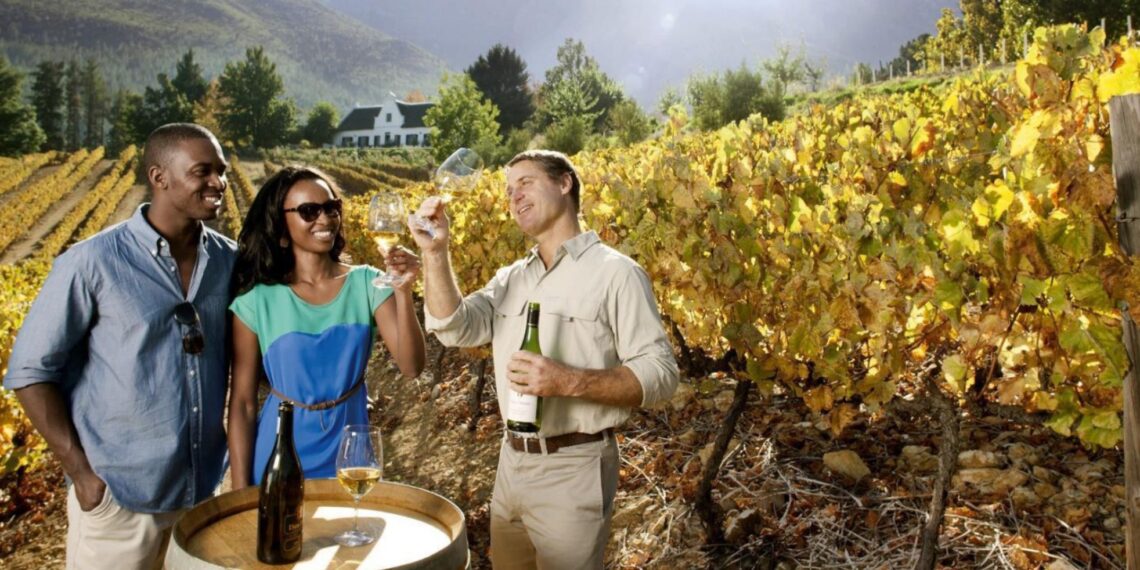
Wine tourism is super important for South Africa and its overall tourism industry, offering a variety of job opportunities for people looking to work in this field.
With a wide network of 23 wine routes across the Western Cape, Northern Cape, and KwaZulu-Natal, wine tourism brought R9.3 billion to the economy in 2022. In addition, it created jobs for between 9 200 and 11 100 people, depending on the time of year.
The SA Wine Industry Professional Body (SAWIPB) plays a key role in shaping South Africa’s wine industry. One of its main jobs is to ensure that wine marketers and tourism experts in the country have the right skills to compete with international standards.
By offering training and promoting best practices, SAWIPB helps keep the industry’s reputation for high-quality and fresh ideas.
According to Marisah Nieuwoudt, wine tourism manager at South Africa Wine, wine tourism is a key part of what makes the Western Cape’s tourism special and is important for supporting local economies and preserving cultural traditions.
Tourists visiting Cape Town for the first time often cite two key activities: riding the cable car to the top of Table Mountain and visiting the Winelands. This highlights how appealing wine tourism is for drawing visitors to the area.
Career opportunities in wine tourism
If you are a young professional wanting to get into wine tourism, there are several job opportunities available. Nieuwoudt says the wine industry is great for building skills, with many learning options that are either partly or fully paid for, helping both workers and employers grow together.
“Most wineries are micro or small enterprises, and the staff complement is therefore generally small – on average, two to four people in a tasting room.
“While the opportunities for career advancement at a winery may not mirror those in larger corporations, there is healthy competition between wineries for top talent,” she explains.
The wine tourism industry is a great place for young people looking for meaningful jobs, Nieuwoudt adds.
“A healthy tourism industry is a great antidote to youth unemployment, which is one of South Africa’s biggest current challenges. Wine tourism, being set predominantly in rural areas, brings meaningful careers to rural youth.”
Gaining hands-on experience
Annelize Morkel, managing director at Achieve Through Action and committee member for the wine tourism and marketing council at SAWIPB, encourages those interested in wine tourism to gain practical experience rather than make assumptions about the industry.
“Get actively involved as soon as possible. Find out what your options are. Don’t assume you know the competencies you’ll need. Don’t rely on a name or job description – find out exactly what it means to be in that role.”
Morkel is confident South Africa’s wine tourism potential remains largely untapped.
“I think we’ve barely scratched the surface of what we can offer international tourism. There are many developing fields that fit well with the experience economy the wine industry offers, and I believe we will continue to grow in that direction.”
She also highlights the importance of continuous learning and storytelling, which she sees as vital for success in the industry. “We are storytellers by nature. All of us in South Africa excel at that, and I think we should continue to develop those skills.
“Wine tourism is a very dynamic industry. It brings together diverse elements, from business and agriculture to the experience economy.”
Related stories
- A new era in wine: Unlocking potential with the SAWIPB
- Want to work in wine? These jobs are in high demand
Essential skills and qualifications
If you want to make it in wine tourism, it is important to pick up the right skills and qualifications.
In 2020, Vinpro developed a competence framework that showed the intersection of wine and tourism knowledge and skills.
Nieuwoudt elaborates on the importance of wine and wine service knowledge, particularly in the tasting room and winery restaurant.
“Hospitality knowledge and experience is critical across the tourism touchpoints at a winery – be it the tasting room, restaurant, accommodation, events, or wine tours and experiences.”
Furthermore, she highlights the necessity of interpersonal skills. A love of people and a friendly nature is non-negotiable in all aspects of the tourism business.
Reflecting on her career, Nieuwoudt recalls her early experiences. “One of my first positions was at The Collection by Liz McGrath, where the inimitable Mrs McGrath met and approved every hire. She was known for hiring for attitude and being willing to train and invest in people for aptitude. It’s a rule that I still follow today.”
Learning and sharing knowledge
To succeed in the constantly changing world of wine tourism, it is important for professionals to also stay updated on new trends and developments.
Nieuwoudt suggests connecting with industry groups, like the SA Wine Industry Professional Body. She recommends joining these groups, signing up for their newsletters, and following their social media accounts to stay in the loop.
“Here, you will receive the latest trend information, research data, and invitations to industry events featuring top international speakers,” she says.
An example is their Knowledge Donation Day, which aims to support junior tasting room ambassadors.
“They will have an opportunity to network with each other, hear from industry heavyweights, and enjoy a fun winemaking and blending exercise.
“The willingness of our marketing and hospitality managers to share their knowledge and expertise through the professional body has been heart-warming and inspiring in equal measure,” Nieuwoudt explains.
READ NEXT: Decades later, labour tenants still wait for land
Sign up for Mzansi Today: Your daily take on the news and happenings from the agriculture value chain