As the world celebrates International Women’s Day, South Africa stands at a historic crossroads. With the United Nations officially declaring 2026 the “International Year of the Woman Farmer,” local female agriculturalists are no longer just filling gaps; they are defining the future of food security in a sector that finally acknowledges them as its backbone.
The 2026 global theme, “Give to Gain,” emphasises that empowering women leads to shared prosperity. In South Africa, this resonates deeply across provinces where women are increasingly stepping into commercial roles.
According to the Commission for Employment Equity (CEE) 2024/25 report, women in top management positions within the agriculture, forestry, and fishing sectors now account for just over 20%.
While this reflects growth, Statistics South Africa (Stats SA) indicates that women make up approximately 30% of the total agricultural workforce, highlighting a persistent gap between labour and leadership.
Redefining the modern farmer
Bridging this gap requires moving beyond the data to address the lived realities of those on the ground. For the women actually turning the soil, today is about the grit required to take up space in boardrooms and barnyards alike.
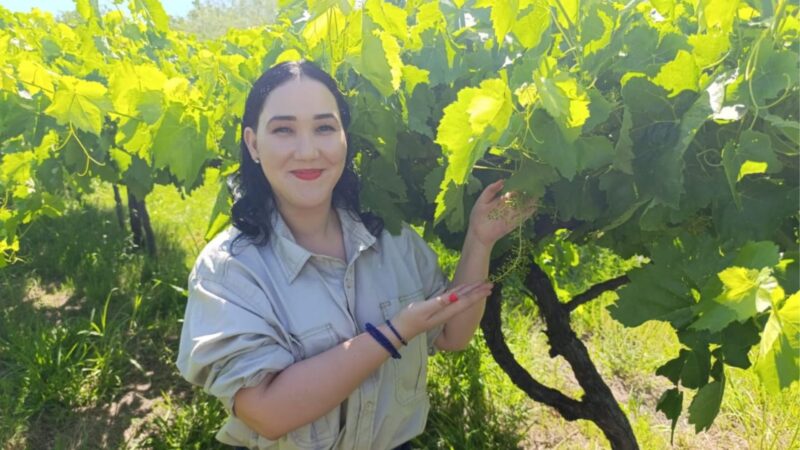
This transition from labour to leadership is personified by trailblazers such as Elize Gerda Beukes, founder of G&E Beukes Boerdery in the Northern Cape, who views the profession as more than just a job.
“My journey into farming was inspired by a deep love for the land and a desire to contribute meaningfully to food security. One of the biggest challenges has been overcoming stereotypes about what women ‘can’ or ‘should’ do in farming.
“Agriculture is still often viewed as male-dominated, especially in physically demanding or leadership roles,” she said.

In Mpumalanga, commercial farmer Lebogang Mashigo has had to navigate the complex intersection of tradition and modern business management.
“Leading a team of men and women, old and young people, has been a learning curve for me. We have cultural norms we’ve had to navigate through. I also have my father hired by the same business; we have to balance the father-daughter dynamics.”
Making women’s voices heard
“Then there are social issues where we say things about a successful black woman my age and how I reached the top. I also get questioned a lot by big clients. You always have to go the extra mile to prove yourself. And there are people who are waiting to take advantage of newcomers in the industry.
“There are more women who still need to be given the platform and support to also shine. On the same front, we must all equally show up when given the opportunity. There is room for most of us, and we must never stop working on our craft. Let’s also not work in silence. Collaboration is key,” Mashigo said.

Reinforcing this call for systemic change is Gabby Malope, international speaker and principal of Toutele Agricultural College in KwaZulu- Natal.
“Agriculture was never just a career choice for me; it was a calling rooted in the soil of our communities. The irony is that women have always been central to agriculture; they are the silent engines of food production in many rural communities. The challenge is not ability, the challenge is recognition and access,” Malop said.
Award-winning farmer Sophy Musabeni, a crop farmer operating in Gauteng and Limpopo, noted that the rights of women in the agricultural sector in South Africa are receiving more attention than in the past.
“The level of attention and resources is still not fully adequate to eliminate the barriers women face. Stronger implementation of policies, increased funding and broader institutional reforms are still needed to achieve meaningful equality in the sector,” Musabeni said.
More women needed in decision-making positions
Meanwhile, Emerentia Patientia, an independent consultant in the agricultural sector, said women in agriculture still face significant challenges, despite efforts to empower them.
“Initiatives like providing funding for women businesses and reserving 40% of public procurement for women-owned businesses are great initiatives, but there is still a gap between policy promises and reality. We need to see more women in agriculture; we need more women in decision-making positions.
“The time is long overdue to accelerate support to address these inequalities. Strengthen policy enforcement that will ensure laws protecting women are implemented effectively and not just rules on paper,” Patientia said.
READ NEXT: Why SA is importing FMD vaccines from Argentina