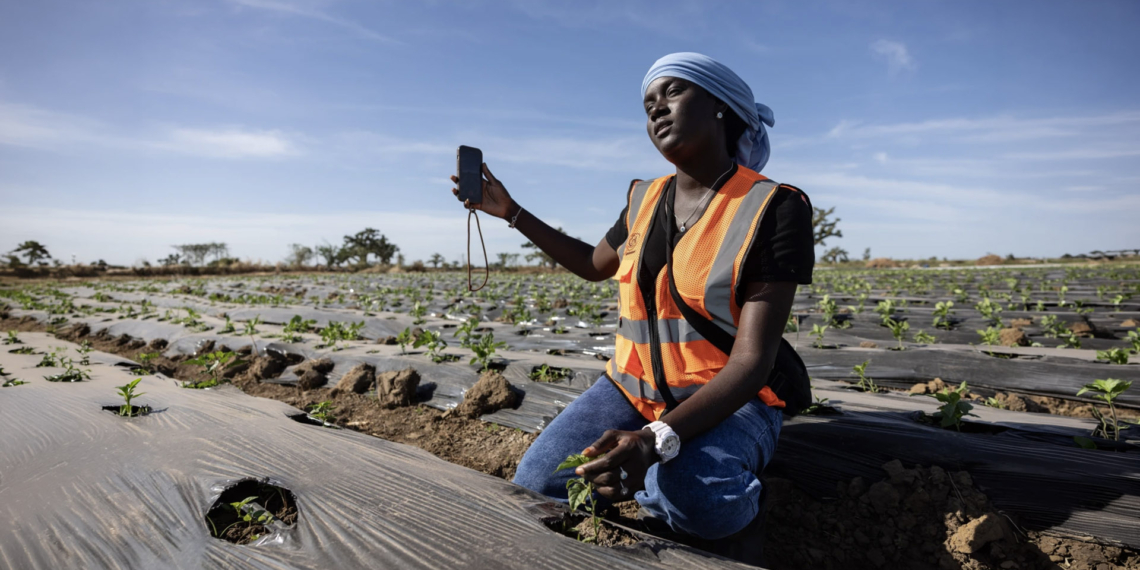
When Senegalese farmer Pape Fall first downloaded TikTok, it was to watch football and funny videos. In the last two years, however, he’s experimented with it to promote his produce and now sells most of it via the platform.
A looped video on his TikTok profile shows a pile of cucumbers with slow-paced Senegalese rap playing in the background. A caption reads: “1.5 tonnes, available tomorrow, god willing.” It includes his phone number.
Power of social media
Fall is one of millions of farmers in West Africa believed to be using TikTok and other social media to do business, share ideas and change the perception of agriculture as the work of poor people in this part of the world.
They and experts acknowledge the region is plagued by high levels of hunger and poverty that have been worsened by the loss of foreign funding from the U.S. and other donors. But they say the improved knowledge and market access that come with social media have resulted in better yields.
The average farm income in Senegal is $1 000 a year, according to a study by the International Food Policy Research Institute published in 2017, but successful farming entrepreneurs can make up to $3 000-$4 500.
“Social media is democratising access to information for farmers,” said Abbie Phatty-Jobe, a specialist in digital agriculture for Caribou, a U.K.-based private research company that is the first to look into regional farmers’ use of TikTok.
Caribou has helped to establish a network of 24 agri-influencers across 11 countries in Africa whose content reaches a combined 5 million people. They help to turn scientific research into information more accessible to farmers.
Related stories
- Young farm manager makes big impact with social media
- Social media and grit fire up Mabaso’s farming hustle
- Middle East conflict: SA farmers brace for impact on agri exports
- SA’s Ceres Fruit Growers wins top global food safety award
Fall recalled watching a Moroccan farmer on TikTok talk about a common cucumber mistake: cutting the lower stems of the plant. But you should leave them to ensure higher yields, the video said.
“I’ve followed that advice ever since. It works,” Fall said. He said he watches videos from farmers around the world, from North Africa to Asia.
Watching out for scams
African farmers’ use of social media differs by region, language and type of business.
In West Africa, farmers prefer TikTok because of the video content and use of local languages, Phatty-Jobe said. In East Africa, the preference is for Facebook’s written posts because of the higher levels of literacy, she said.
Among the agri-influencers who create educational content and sell consultancy services is Nogaye Sene, who manages farmland for clients with little farming knowledge or for the Senegalese diaspora eager to invest back home.
“The success of my business is thanks to social media,” said the 29-year-old, who has 40 staffers and credits Instagram and TikTok for 70% of her clients.
She said she wants to change how young people see agriculture. Her videos teach a wide range of subjects, including how to cultivate chilli plants, drive a tractor and use modern technology. Low levels of mechanisation in the region are a reason why farm productivity and profitability are low, experts say.
“We’re not used to seeing this type of modern production in Senegal, but social media is helping to change the perspective of agriculture, that it’s profitable,” Sene said.
To encourage more young female farmers, she helped organise a training in December for 50 women on farming and social media. Most farming is still done by men.
Sene warned, however, that the majority of her clients say they have been scammed online by people posing as farming consultants and influencers.
Phatty-Jobe encouraged partnerships with research institutions and government extension services as one way to prevent scams and misinformation.
Still out of reach for many
There is still a significant divide among farmers that’s rooted in access to technology and financial backing.
Nicolas Paget, a researcher on digital agriculture at French research institute CIRAD, said some 80% of the farmers he has met don’t have smartphones with access to apps like TikTok and Instagram, and internet data is expensive for those who do. Data packages in West Africa are more costly than they are in Europe, Paget said.
“There is a very high risk of excluding farmers if governments and development agencies focus on this type of technology,” Paget said of social media.
In 2023, the World Bank invested $57.4 million in a digital agriculture platform in the Ivory Coast, aiming to increase access to markets and purchases of agricultural inputs.
However, “most people didn’t really care about specific or tailor-made platforms,” Paget said. “Farmers are using (existing apps) in very creative ways and adapting them to their needs.”
Marketing cucumbers on TikTok may seem simple, but Phatty-Jobe said it’s a way to break free of middlemen who control prices.
- The Associated Press first published this article.
READ NEXT: Stock theft, fighting FMD high on NW and WC priority list