Monday, July 27, 2026
SUBSCRIBE
22 GLOBAL MEDIA AWARDS
Food For Mzansi
  • News
  • Changemakers
  • Lifestyle
  • Farmer’s Inside Track
  • Food for Thought
No Result
View All Result
  • News
  • Changemakers
  • Lifestyle
  • Farmer’s Inside Track
  • Food for Thought
No Result
View All Result
Food For Mzansi
No Result
View All Result
in News

Faster farm technology rollout could boost SA farmer profits

Biological crop protection, artificial intelligence and data-driven farming are reshaping agriculture. But will these innovations reach SA farmers in time? Experts say faster approvals, improved infrastructure and better collaboration could unlock major growth for the country’s grain industry

by Patricia Tembo
6th March 2026
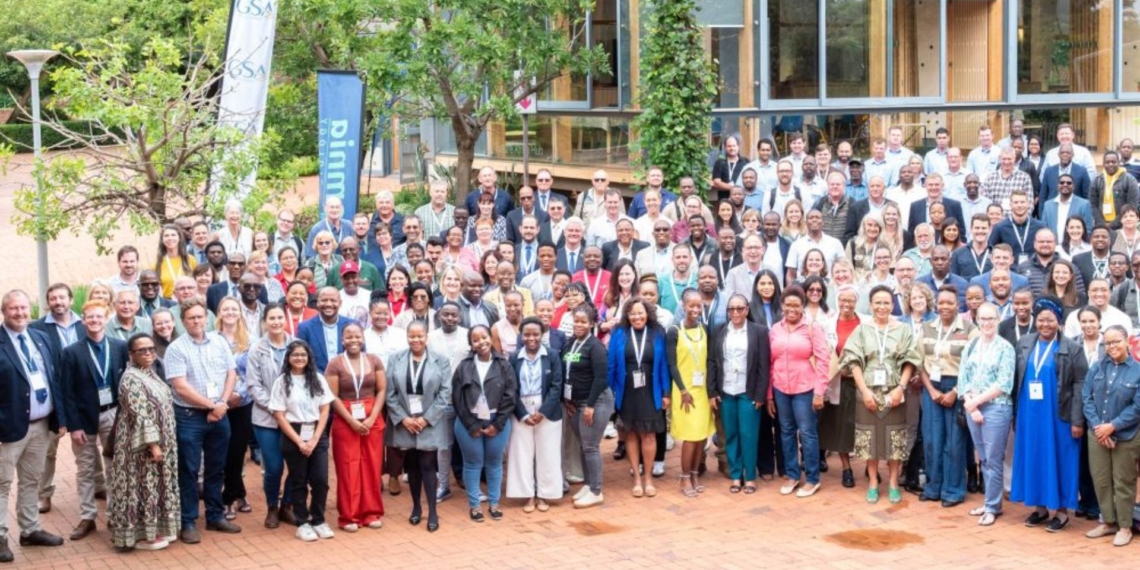
The Grain SA Research Meeting highlighted the urgent need for faster access to crop protection innovations, increased investment in biologicals, evolving agronomic practices, stronger collaboration, and supportive policy. Photo: Grain SA

The Grain SA Research Meeting highlighted the urgent need for faster access to crop protection innovations, increased investment in biologicals, evolving agronomic practices, stronger collaboration, and supportive policy. Photo: Grain SA

Share on FacebookShare on TwitterShare on WhatsApp

Improving farmer profitability, accelerating access to new technologies and strengthening collaboration across the agricultural value chain were key themes discussed during the recent Grain SA Research Meeting in Pretoria, Gauteng. 

Marius Boshoff, managing director of Villa Crop Protection, said the speed at which new technologies reach farmers can have a major impact on productivity and profitability.

“Any profitable business essentially comes down to output minus input, divided by time. If we could reduce the time it takes to bring new technology to South African farmers by even 20%, it would make a significant difference,” Boshoff said. 

The sooner, the better

South Africa represents a small share of the global crop protection market. Boshoff noted that an enabling environment is needed to attract investment and speed up the introduction of new technologies.

Boshoff said the country also relies heavily on imports, with about 99% of synthetic active ingredients sourced internationally. Before Covid-19, companies operated on a just-in-time supply model, but global supply disruptions led to increased stockpiling and widespread overstocking by 2023.

Despite these challenges, Boshoff said significant innovation is still taking place, with a range of new active ingredients expected to reach international markets in the coming years.

“The question is whether these technologies will reach South Africa quickly enough to benefit our farmers,” he said.


Related stories
  • Unified vision key to driving innovation in SA’s grain industry
  • Why the environment is the real boss of farming
  • South Africa eyes bumper grain and soybean crops
  • Three years on: Is the master plan delivering for farmers?

Biological solutions gaining ground

Changing consumer preferences and regulatory trends are also reshaping the crop protection sector, with investment in biological solutions increasing significantly in recent years. Boshoff noted that while the biological market is growing rapidly, about half of its value still lies in biostimulants, and consistent pest and disease control performance from biological products remains a developing area.

He added that highly hazardous chemical products are gradually being phased out and that the industry will continue searching for effective alternatives.

Looking ahead, Boshoff believes digital technologies will play a major role in accelerating innovation.

“Artificial intelligence is already helping scientists discover new molecules; this could significantly speed up the development of new crop protection technologies,” he said. 

Johannes Nel, an agronomist at Omya Idwala, said the role of agronomists is becoming increasingly complex as agriculture adopts more technologies and data-driven decision-making.

“Agronomists today need to understand a wide range of disciplines. Ultimately, the farmer carries the financial risk, so the advice they receive must be accurate and practical,” Nel said.

Threats putting farmers under pressure

From the producer’s perspective, Richard Krige, chairperson of Grain SA, said farmers operate under constant pressure while managing multiple risks.

“Farmers make decisions every day in highly volatile environments, often with incomplete information. Climate variability, rising input costs, disease pressure and regulatory challenges all affect profitability at farm level,” Krige said. 

Krige highlighted that climate is the most significant factor affecting production, accounting for around 80% of farming outcomes and remaining largely beyond farmers’ control. While technologies like conservation agriculture, improved genetics, and data-driven management can help mitigate risk, he cautioned that herbicide resistance is emerging as a serious challenge in some regions.

“In some areas of the Western Cape, herbicide resistance may pose a greater threat to long-term grain production than climate change,” he said.

Krige also raised concerns about delays in the approval of new agricultural technologies and trade policy decisions, which can place local farmers at a disadvantage compared with international competitors.

In addition, he noted that infrastructure constraints, particularly in rural areas, also continue to affect farm profitability. Improvements to rail infrastructure linking grain-producing regions to ports could significantly strengthen the sector.

Despite these challenges, Krige said South Africa’s grain industry remains well-positioned for growth if stakeholders work more closely together.

READ NEXT: Discipline and dirt define Meshack Ndongeni’s farming success

Sign-up for the latest agricultural news delivered straight to your inbox every day with Mzansi Today!

Patricia Tembo

Patricia Tembo is motivated by her passion for sustainable agriculture. Registered with the South African Council for Natural Scientific Professions (SACNASP), she uses her academic background in agriculture to provide credibility and technical depth to her journalism. When not in immersed in the world of agriculture, she is engaged in outdoor activities and her creative pursuits.

Tags: Agricultural technologyAgronomycrop protectionGautengGrain SAInform me
No limits: Charlotte Mosena builds farm-to-table legacy in Gauteng
Inspiration

No limits: Charlotte Mosena builds farm-to-table legacy in Gauteng

by Vateka Halile
24th July 2026

Bad roads, winter frost, and tight budgets couldn’t stop Charlotte Mosena. As the founder of Tshimo Ya Lesego in the...

Read moreDetails
Smart logistics and pricing vital for SA’s potato industry

Smart logistics and pricing vital for SA’s potato industry

24th July 2026

SA pork prices plunge amid local market surplus

24th July 2026
How seed banks and libraries protect Mzansi’s future

How seed banks and libraries protect Mzansi’s future

23rd July 2026

SAWIPB launches opportunity to formalise wine industry skills

23rd July 2026

SAWIPB launches opportunity to formalise wine industry skills

How sustainable potato farming secures finance and future yields

5 000 to 100 000 cabbages: EC co-op gamble pays off

Ample grain stocks shield SA consumers from impending El Niño

Protected agriculture takes centre stage at Nampo Cape seminar

Join Food For Mzansi's WhatsApp channel for the latest updates!

JOIN NOW!
Next Post
Agritec Africa ’26: Driving African farming through global innovation

Agritec Africa ’26: Driving African farming through global innovation

THE NEW FACE OF SOUTH AFRICAN AGRICULTURE

With 21 global awards in the first six years of its existence, Food For Mzansi is much more than an agriculture publication. It is a movement, unashamedly saluting the unsung heroes of South African agriculture. We believe in the power of agriculture to promote nation building and social cohesion by telling stories that are often overlooked by broader society.

How sustainable potato farming secures finance and future yields

5 000 to 100 000 cabbages: EC co-op gamble pays off

Paarl farmer’s heartbreak as stock thieves destroy poultry dream

This week’s agri events: 27 – 31 July

Why SA must shift from climate response to climate readiness

Agriculture’s leading ladies unite: Get ready for Soul To Soil 2026

  • Awards & Global Impact
  • Our Story
  • Contact Us
  • Cookie Policy
  • Privacy Policy
  • Copyright

Contact us
Office: +27 21 879 1824
News: info@foodformzansi.co.za
Advertising: sales@foodformzansi.co.za

Contact us
Office: +27 21 879 1824
News: info@foodformzansi.co.za
Advertising: sales@foodformzansi.co.za

  • Awards & Global Impact
  • Our Story
  • Contact Us
  • Cookie Policy
  • Privacy Policy
  • Copyright

Chat Options

I'm Lerato, your AI assistant!
No Result
View All Result
  • News
  • Changemakers
  • Lifestyle
  • Farmer’s Inside Track
  • Food for Thought

Copyright © 2024 Food for Mzansi

This website uses cookies. By continuing to use this website you are giving consent to cookies being used. Visit our Privacy and Cookie Policy.