Wednesday, December 10, 2025
SUBSCRIBE
21 GLOBAL MEDIA AWARDS
Food For Mzansi
  • News
  • Changemakers
  • Lifestyle
  • Farmer’s Inside Track
  • Food for Thought
No Result
View All Result
  • News
  • Changemakers
  • Lifestyle
  • Farmer’s Inside Track
  • Food for Thought
No Result
View All Result
Food For Mzansi
No Result
View All Result
in News

Zimbabwe bans maize imports despite production shortfall risks

South Africa and Zambia are set for bumper maize harvests, strengthening their positions as regional grain exporters. However, Zimbabwe has reinstated a ban on maize imports, limiting short-term export opportunities

by Wandile Sihlobo
2nd September 2025
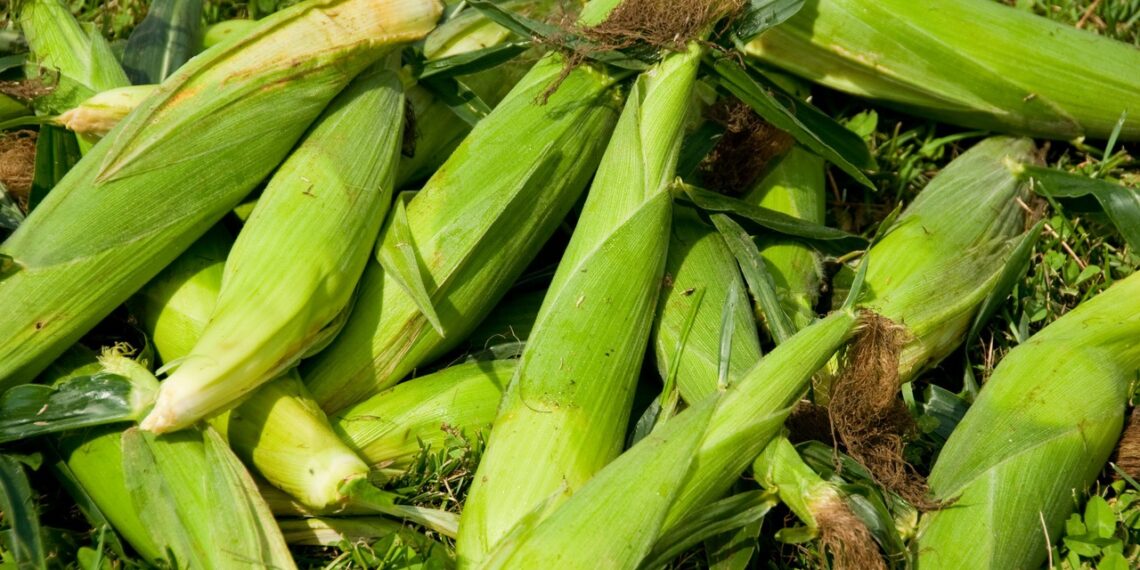
Zimbabwe reinstates its maize import ban despite production shortfalls, while South Africa and Zambia expect bumper harvests, reshaping regional grain trade dynamics. Photo: Pexels

Zimbabwe reinstates its maize import ban despite production shortfalls, while South Africa and Zambia expect bumper harvests, reshaping regional grain trade dynamics. Photo: Pexels

Share on FacebookShare on TwitterShare on WhatsApp

Minimal government intervention in agricultural markets is often considered an ideal policy path, as government intervention may disrupt the efficient allocation of scarce resources or functioning of the market (through the forces of supply and demand).

In times of abundant harvests, farmers and agribusinesses must be allowed to export and benefit from the global market. In times of droughts or floods, trade must still be allowed. Indeed, there may be short-term economic pain for consumers through higher prices in deficit years when imports are needed, but this induces farmers to plant more in the coming seasons.

At times, governments ban imports to protect local farmers when they have ample domestic supplies, which are deemed sufficient to meet consumer requirements. However, that also limits the consumer’s choice and artificially increases the domestic price by restricting more competitively priced imports.

Zimbabwe’s maize supply recovers

I am highlighting these policy tradeoffs due to recent news from Zimbabwe. A report by Reuters, a news organisation, suggests that the Zimbabwean government has reinstated a ban on maize imports. The government believes that in the interim, there are sufficient supplies for the local market and wants to ensure maximum price realisation for the domestic producers before allowing imports.


Related stories
  • Sihlobo: Trade issues mustn’t overshadow SA biosecurity crisis
  • Minister vows to fast-track land reform, axe bad CPAs
  • Daybreak Foods rebuilding after R150 million lifeline
  • Schoeman: ‘If the people lead, the government will follow’

Nevertheless, it remains unclear if Zimbabwe has sufficient maize supplies for the year or will need imports later. Zimbabwe’s 2024-25 maize production is forecast at 1.3 million tonnes, according to recent data from the Pretoria-based unit of the United States Department of Agriculture (USDA). This is just more than twice the output from the previous season, which was a drought period.

This recovery in Zimbabwe’s maize production is primarily driven by improved weather conditions and an increase in the area that farmers managed to plant for maize. If this production level materialises, then the ban may be temporary.

Zimbabwe’s potential maize harvest of 1.3 million tonnes will not be sufficient to meet the country’s domestic needs of 2.0 million tonnes per annum, leaving it to import the balance.

Surplus expected in SA maize production

In the last marketing year, South Africa supplied nearly all of Zimbabwe’s maize imports. However, in the 2025-26 marketing year, there may be some changes, with Zambia regaining its net exporter status as it expects a bumper harvest of 3.66 million tonnes. This far surpasses Zambia’s maize consumption of 2.8 million tonnes per annum.

South Africa also forecasts a robust maize harvest of 15.80 million tonnes, which is 23% higher than the previous 2023-24 season’s crop. These forecasts are well above South Africa’s annual maize needs of approximately 12.00 million tonnes, implying that South Africa will have a surplus and remain a net exporter of maize.

For South African maize exporters, the message here is that Zimbabwe may not be the ideal market in the near term, as they have ample domestic supplies. However, later in the season, they may return to the market and import. The USDA forecasts suggest that the expected crop is insufficient to last throughout the year.

  • Wandile Sihlobo is the chief economist of the Agricultural Business Chamber of South Africa

READ NEXT: Tractor handover empowers EC women in food security drive

Sign-up for the latest agricultural news delivered straight to your inbox every day with Mzansi Today!

Wandile Sihlobo

Tags: Agricultural exportsCommercialised farmerInform meMaizeWandile SihloboZimbabwe

Related Posts

From dairy to wool and fruit to meat, the Chris Hani District Agricultural Show celebrated the power of local production. Photo: Supplied/Food For Mzansi

Farmers and financiers unite to grow EC agribusiness

9th December 2025
Jean Vincent Ridon and his son, William, co-founded the Beer Trophy Awards in 2015, at the dawn of the craft beer era. Photo: Danie Nel and Gareth Davies

How beer powers SA’s economy from farm to pint

8th December 2025

This week’s agri events: 08 – 12 December

New Plant Improvement Act to boost SA crop quality

Joburg Market shines with three consecutive clean audits

New RMIS research targets FMD, stock theft & market growth

World Soil Day shines light on degraded farmland

Fraud exposed at Fort Hare’s Honeydale Research Farm

From Kenya to South Sudan, pastoralists are using digital tools, traditional knowledge and local cooperation to manage scarce resources and strengthen resilience. Photo: Ansar Photography/Pexels
Climate Change

How pastoralists are redefining survival in Africa’s drylands

by Claire Bedelian and Guy Jobbins
7th December 2025

About 60% of Africa is dryland, home to half a billion people. However, pastoralists and farmers are using innovation, mobility,...

Read moreDetails
Dr Ndeke Musee

Farming with nature: The hidden power behind food security

6th December 2025
Screenshot

After the field: Safe practices when the day is done

6th December 2025
The new Plant Improvement Act mandates stricter quality standards and a national listing for plant varieties. This protects farmers by ensuring the seeds and propagating material they buy are up to scratch. Photo: Supplied/Food For Mzansi

New Plant Improvement Act to boost SA crop quality

6th December 2025
Nkosinathi Baloyi, chartered cccountant and chief financial officer of Joburg Market, Africa’s largest fresh produce hub. Photo: Supplied/Food For Mzansi

Joburg Market shines with three consecutive clean audits

5th December 2025

How beer powers SA’s economy from farm to pint

After the field: Safe practices when the day is done

Joburg Market shines with three consecutive clean audits

Nanny Nelia bakes up success with Yaya’s Rusks

Subtrop and Nedbank drive transformation for Limpopo farmers

Join Food For Mzansi's WhatsApp channel for the latest updates!

JOIN NOW!
Next Post
In the first article, Buhlebemvelo Dube, economist for trade research at the National Agricultural Marketing Council (NAMC), is writing about South Africa’s current tariff and trade landscape within BRICS+ Photo: Food For Mzansi

Brics+ offers new horizons for SA’s agri-trade

THE NEW FACE OF SOUTH AFRICAN AGRICULTURE

With 21 global awards in the first six years of its existence, Food For Mzansi is much more than an agriculture publication. It is a movement, unashamedly saluting the unsung heroes of South African agriculture. We believe in the power of agriculture to promote nation building and social cohesion by telling stories that are often overlooked by broader society.

Seed technology: How innovation drives higher yields & success

Ethical partnerships drive change in South Africa’s wine industry

KwaNdaba farmer transforms food waste into farm wealth

Farmers and financiers unite to grow EC agribusiness

Drone spraying cuts costs, boosts yields for KZN sugarcane co-op

Trash to triumph: Sukazi transforms wasteland into farmland

  • Awards & Global Impact
  • Our Story
  • Contact Us
  • Cookie Policy
  • Privacy Policy
  • Copyright

Contact us
Office: +27 21 879 1824
News: info@foodformzansi.co.za
Advertising: sales@foodformzansi.co.za

Contact us
Office: +27 21 879 1824
News: info@foodformzansi.co.za
Advertising: sales@foodformzansi.co.za

  • Awards & Global Impact
  • Our Story
  • Contact Us
  • Cookie Policy
  • Privacy Policy
  • Copyright
No Result
View All Result
  • News
  • Changemakers
  • Lifestyle
  • Farmer’s Inside Track
  • Food for Thought

Copyright © 2024 Food for Mzansi

This website uses cookies. By continuing to use this website you are giving consent to cookies being used. Visit our Privacy and Cookie Policy.