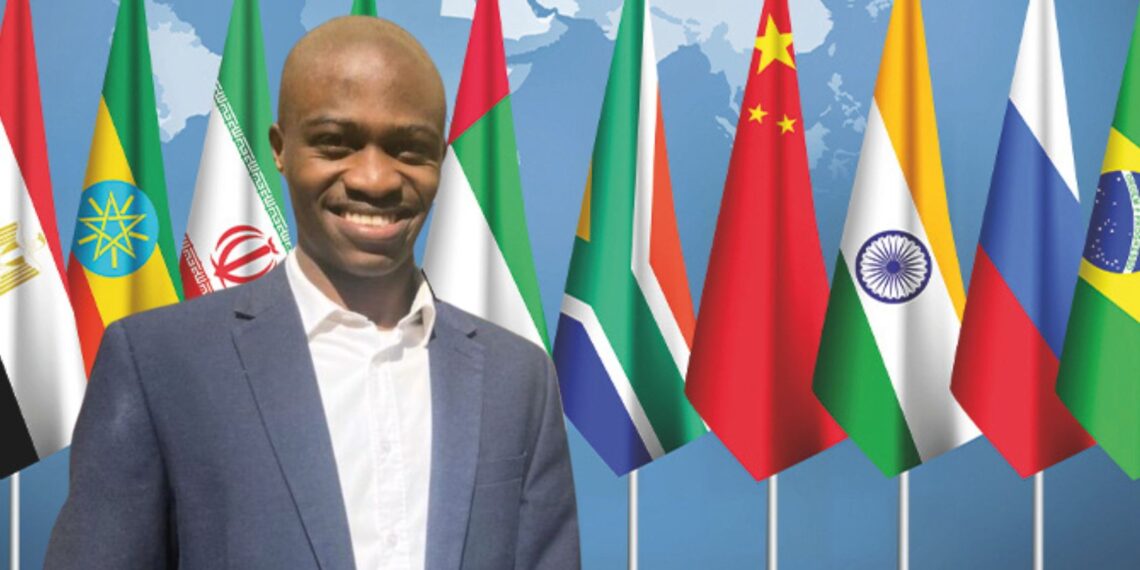
In the first instalment of a two-part opinion series, Buhlebemvelo Dube, economist for trade research at the National Agricultural Marketing Council (NAMC), examines the 2025 Brics Rio Declaration and its implications for South Africa’s agricultural trade.
South Africa’s strategic location, in the form of the prominent Cape Sea Route shipping transit corridor, which provides a preferred route for vessels bypassing the Suez Canal, and its membership in organisations such as Brics+, positions the country as an important player in international trade and regional integration.
The international trade environment is increasingly becoming more complex, unpredictable, and volatile. This is especially problematic for developing nations, such as South Africa, which exports 70% of its total agricultural production. A rise in trade disruptions exposes South Africa’s exports to considerable uncertainty in its quest for market access.
Amid these challenges, South Africa, a key member of Brics, has never been at a more crucial time to explore how the country can unlock trade opportunities within the bloc and thus safeguard market access.
Market access erosion, driven by rising tariffs, non-tariff barriers, and geopolitical realignments, threatens rural livelihoods and the viability of agribusinesses across the entire value chain.
Against this backdrop, the expansion of Brics into Brics+, coupled with commitments made in the 2025 Rio Declaration, offers a timely window for South Africa to secure new preferential market access, especially in Asia, Latin America, and West Africa. However, to unlock these gains, South Africa must use tariff data, institutional commitments, and trade diagnostics to strategically safeguard its interests.
Without a doubt, our agricultural sector remains one of the most advanced and competitive sectors in Africa.
Related stories
- Women agripreneurs take the stage at Brics+ agriculture summit
- Sihlobo: Trade issues mustn’t overshadow SA biosecurity crisis
SA tariff landscape and export vulnerabilities
Firstly, South Africa`s tariff landscape currently presents an internally liberalised structure, but outward exposure remains delicate. Most favourable nation (MFN) applied average tariffs for all goods are at 7.6%, while agricultural products remain at 11.4%, placing South Africa among moderately open economies for agricultural imports.
At least 41.5% of agricultural tariff lines are bound, compared to a full 100% in most Brics+ peers, which limits flexibility in negotiating new protections, and a further 37.8% of total lines are duty-free, reflecting a relatively open structure in our tariff regime and with the highest agricultural tariff peaks applied on dairy (up to 96%), followed by meat and edible offal (up to 82%), indicating strong defensive interests in these sensitive sectors.
Our key import partners include Brazil, India, Argentina, and increasingly Russia and China, driven by fertilisers, cereals, and animal feed additives. These are strategic partners within Brics.
Top export products include citrus, wine, grapes, nuts (macadamia, almonds), wool, and sugar, with a growing presence in avocados and blueberries. Some of the top exported products have gained market access in key markets, and this growth boosts optimism for the future.
Nevertheless, our dual vulnerability remains in the form of high reliance on commodity exports with price elasticity, and increased dependence on a narrow pool of partners, mostly outside Africa. These weaknesses make it not only economically sound to diversify exports to Brics+, but it’s strategic as a means to keep abreast of rising protectionism.
Challenges and emerging opportunities
Lack of tangible trade arrangements within Brics has been a significant hurdle. Despite this, agricultural exports, between 2020 and 2024, rose by $194 million, totalling an estimated $1.1 billion in 2024.
However, growth remains underwhelming, largely due to the absence of a dedicated Brics trade agreement, divergent applied MFN tariffs, and non-tariff barriers (NTB), as well as complex sanitary and phytosanitary (SPS) protocols in India and China. This growth has been surprisingly slow, and it’s not shocking since there is no trade agreement.
The expansion of Brics is, however, set to have some positive effects on trade. For instance, recent data from the World Trade Organisation reports reveal a wide divergence in MFN applied tariffs across Brics+ members.
Notably, India and Nigeria impose high average agricultural tariffs (India: 50.8%; Nigeria: 120.5%), yet also show increasing import volumes in horticultural, cereal, and livestock products, which signals demand-driven access opportunities.
China and Vietnam show lower simple agricultural averages (China: 10.0%, Vietnam: 7.6%) with broader duty-free treatment in select subsectors, including citrus, nuts, and processed foods. Russia and Brazil, though net exporters, offer complementary seasonal access windows where counter-cyclical trade can be advantageous (e.g., off-season exports of grapes, pears, avocados).
Thus, South Africa’s high-quality, counter-seasonal produce, SPS compliance, and preferential SADC logistics corridors position it well to supply high-value commodities into these expanding markets.
- Buhlebemvelo Dube is an economist for trade research at the National Agricultural Marketing Council (NAMC). The views and opinions expressed in this article are those of the author and do not necessarily reflect the views or positions of Food For Mzansi.
READ NEXT: Why the VAT on sorghum is starving SA’s heritage