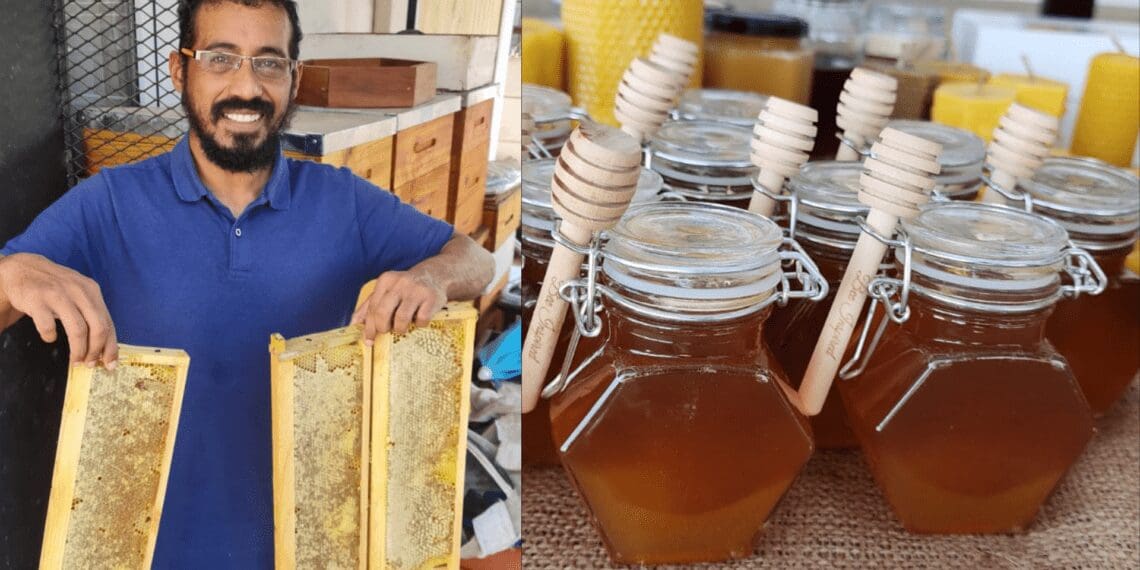
As a finance manager in the non-profit sector, Achmat Kazie started farming with one beehive in his backyard in 2021. He quickly realised that there is an opportunity to make good money in this buzzing industry. Within a few months, one beehive went from five to 20. He is now building on his dream of owning a bee empire and is doing it one beehive at a time.
For Kazie, from Somerset West in the Western Cape, life has always been about exploring new ways to do things while living sustainably. When the opportunity to farm with a beehive in his backyard came, there was no stopping him. A new world opened up for him as a beekeeper, discovering all the opportunities of what he could do with honey and the natural products to be created.
“I have always read that 80% of honey that you find is either fake or mixed with sugar syrup. I wanted to have a beehive for myself,” he explains.
His insatiable curiosity took him to YouTube and books to learn more about bees. Furthermore, Kazie learned more about the other benefits of bees besides creating honey. What he discovered was enough to convince him to erect his own beehive in his backyard.
“I have always been someone who is environmentally conscious and self-sufficient. At home, I am full-on solar, and I have my own well point. So having a beehive was just a natural progression,” he says.
First harvest adventure
With his first harvest, he was left with a plethora of beeswax and the propellers that he got from the beehives. These are all-natural products and of course, the idea for Kazie was to research how these natural products can be used.
“I looked up what it is that I can do with these things and I just found these amazing uses for it. I decided I don’t need to only use it, other people can use it as well.”
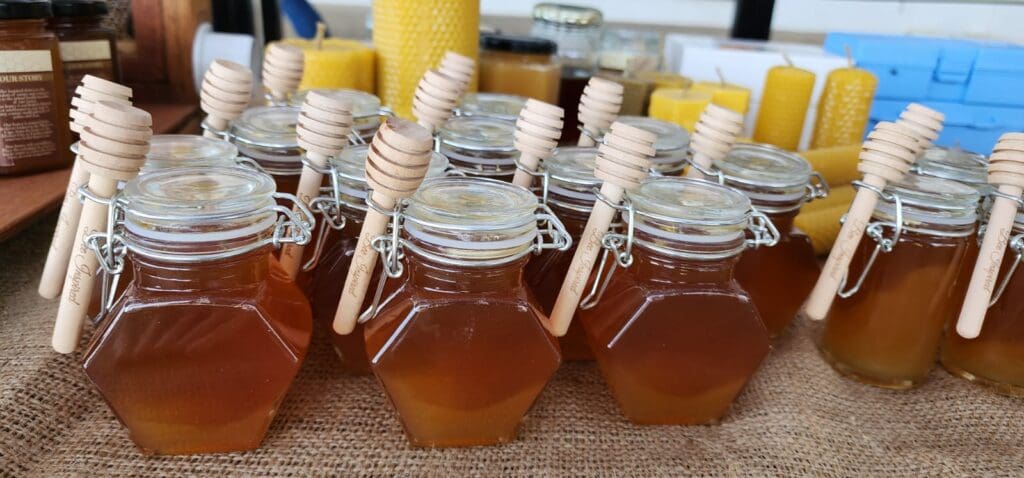
After numerous research and figuring out how to make products, Kazie used beeswax to create lip balm, wraps, body and lotion balms. Many other products are in the pipeline.
“I have a small catalogue that I am growing because there is so much use for beeswax,” he says.
Marketing access
The start-up cost for beekeeping can be very steep, Kazie explains there are a lot of things to consider such as extracting equipment. Operating costs might not be that heavy on the pocket, Kazie adds, but it is quite an expensive venture.
“Your first investment is buying the hives and the equipment that you need. It’s probably like any other farming. Your big expenses are the land and then tractors, but the maintenance does not compare to that initial investment into the business.”
Thanks to his bookkeeping background, Kazie is not afraid of numbers. He used this skill to his advantage to make money from the beeswax and reinvested the profits back into the business.
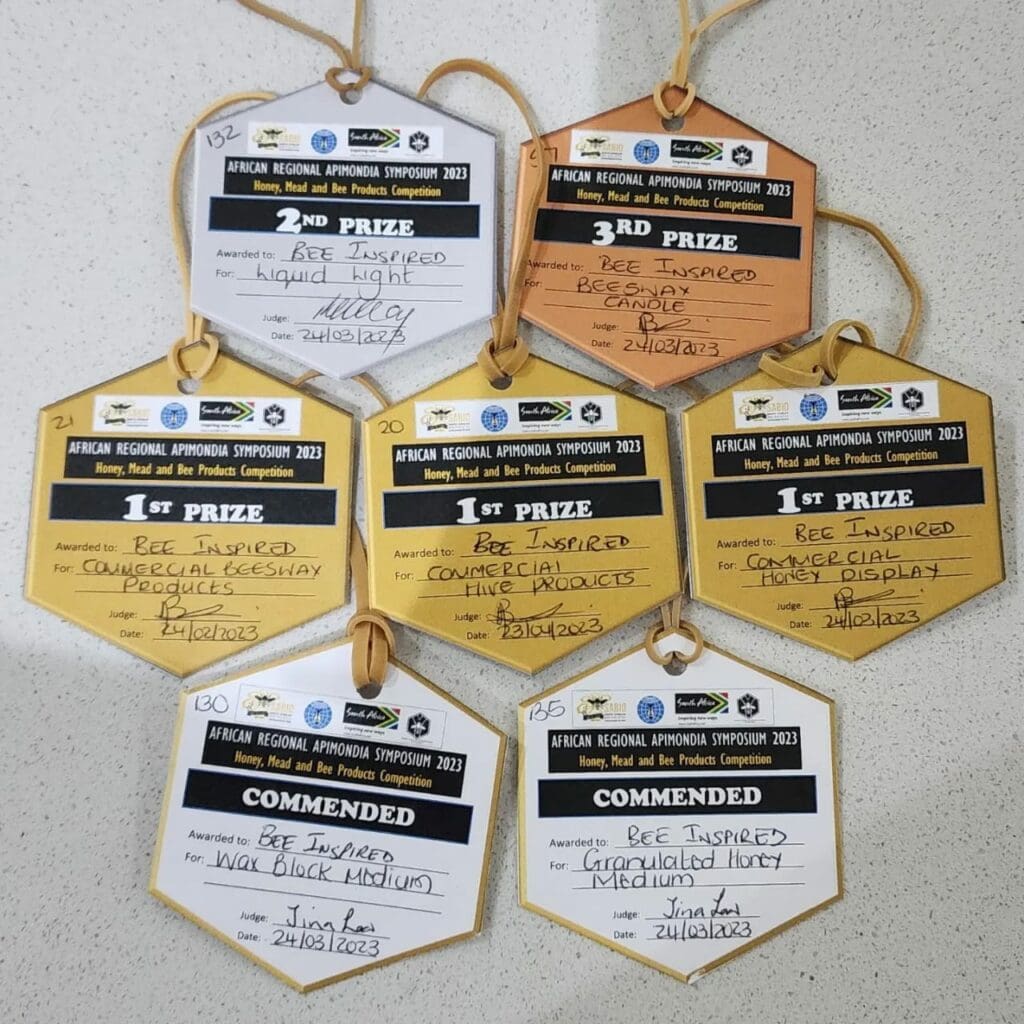
“I entered an entrepreneurial competition where I ended up winning a prize of R50 000, which helped me with a lot of my equipment,” he says excitedly.
Kazie looks forward to expanding and creating, and there is no doubt that his business will succeed.
Lessons from the beekeeper:
- Identify your market.
- Be authentic, sell your story before selling your product.
- Do not be afraid to put yourself out there.


READ NEXT: Grab indaba tickets before they’re gone
Sign up for Farmer’s Inside Track: Join our exclusive platform for new entrants into farming and agri-business, with newsletters and podcasts.