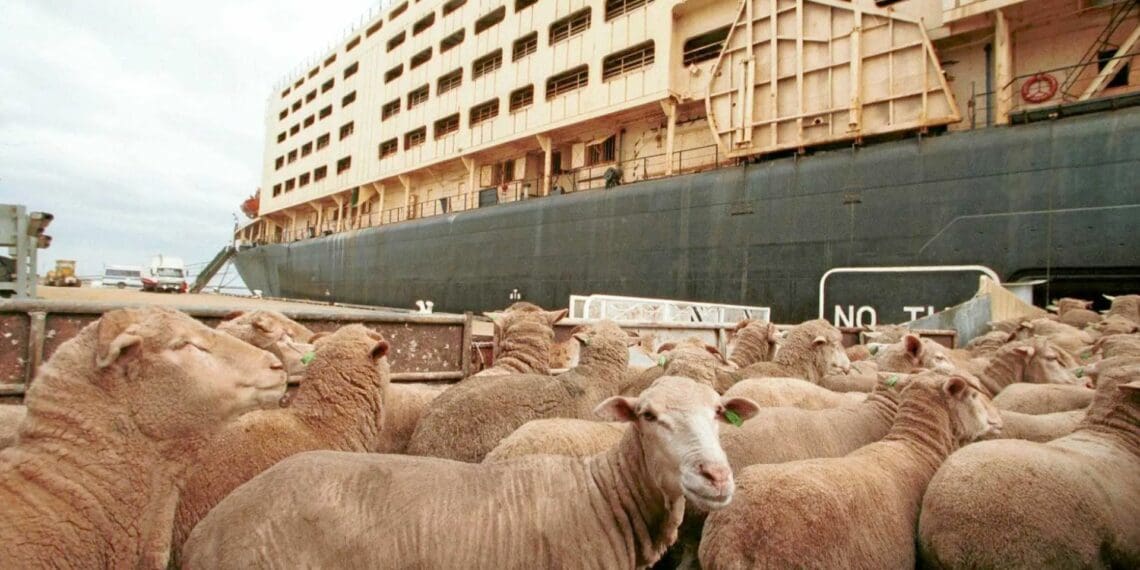
The department of agriculture, land reform and rural development has finalised the publishing protocol on guidelines for the exportation of live animals by sea.
This, according to the Red Meat Producers Organisation (RPO), is an important step for the sake of exportation on a sustainable basis.
The RPO has been on record in the past that it is vitally important to finalise a protocol for the exportation on a sustainable basis. The RPO via the Red Meat Industry Forum (RMIF) even got involved in a legal process to ensure that such a protocol would be finalised.
“The RPO’s view always was to ‘do it right in order to do it on a sustainable long-term basis’,” the organisation said.
‘Treat animals humanely’
The guidelines are expected to serve as an assurance to consumers that the industry is sincere to comply with animal welfare requirements. Furthermore, for animal welfare organisations to take note that the government and the industry have finalised these guidelines in accordance with the World Organisation for Animal Health (WOAH).
“The main parties involved in the exportation of animals by sea are the exporter; the importing country competent authority; the South African competent authority; the animal sellers; the shipping company and master of the ship; animal handlers; and veterinarians employed at holding facilities and on the vessel.”
These parties are responsible and accountable for the health and welfare of the animals while under their care and supervision for the entire period of the transportation, which includes the pre-journey period, the embarkation, journey at sea, and disembarkation.
According to the RPO, it is important that animals exported from South Africa are treated humanely in South Africa and at the country of destination.
“It is expected that animals exported from South Africa will be handled under similar conditions as they would be handled in South Africa.
“Therefore the animal welfare requirements under the Animals Protection Act, 1962 (Act No. 71 of 1962) will be used as a benchmark to evaluate animal welfare requirements in the country of destination.”
Increased exports on the cards
The protocol now paves the way for the implementation of Vision 2030 for the red meat industry in order to grow exports on an inclusive basis, as well as for red meat and livestock slaughtering purposes to increase the profit margins for the primary producer.
RPO said South Africa is 30 % below the world norm in terms of red meat and livestock prices.
“We are also internationally competitive and we must take this opportunity to grow the income of producers. It would therefore be a mistake to only be dependent on the local market in terms of red meat production.”
ALSO READ: Financed farmers offer loan repayment tips
Sign up for Mzansi Today: Your daily take on the news and happenings from the agriculture value chain.