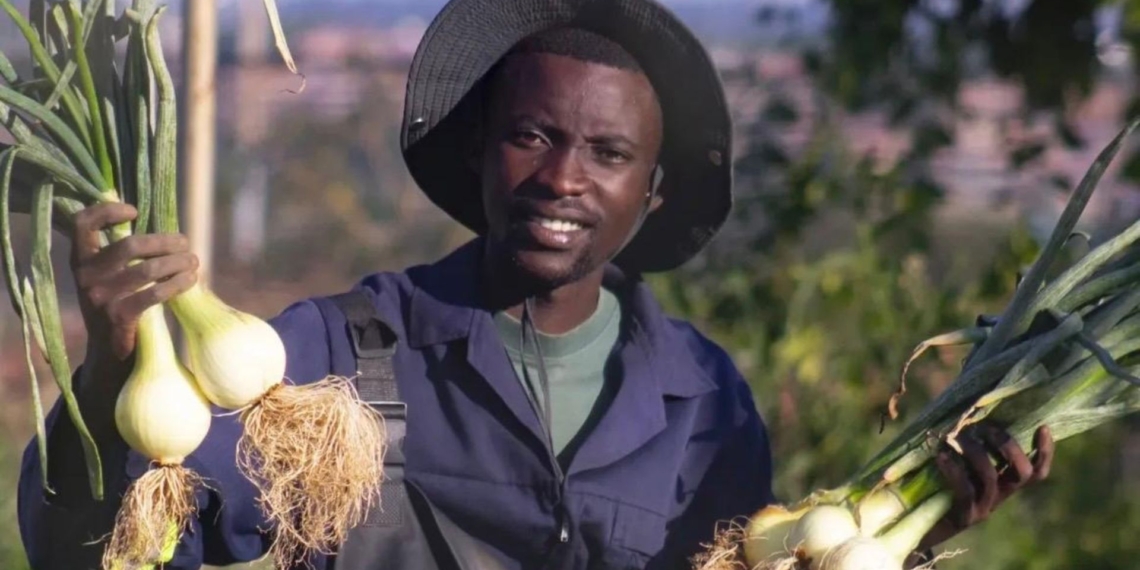
In the heart of Meadowlands Zone 5, Soweto, Tebogo Makgatho is transforming public spaces into productive landscapes. As the founder and sole director of Agrolimo Farms, Makgatho is proof that agricultural success isn’t defined by the size of the land, but by the depth of one’s commitment to the community.
Makgatho’s connection to the soil was forged early in Johannesburg. While growing up in Meadowlands, he attended Malvern Primary, located just next to Jeppe, before moving on to West Ridge High in Roodepoort.
Even as a young boy, Makgatho felt a pull toward the land. During a school career day, while others chose more conventional professions, he arrived carrying potatoes, carrots, and other vegetables. This early spark was fanned by childhood memories of Leon Schuster films, which showed him scenes of South Africa’s rural heartland where farming was a way of life.
“Bringing vegetables to school for career day was my way of showing that I already had an idea about farming. I wanted to be a farmer even back then.
“It has been a gradual process, especially since my environment didn’t offer much; there was no gardening at my primary or high schools, and none of my friends or family was involved in it. Growing up, the idea of the farm just kept coming back to me until I finally started exposing myself to agriculture.”
While his formal circles lacked agricultural ties, Makgatho found quiet inspiration in the community figures around him. He drew inspiration from the everyday community figures like Koko Johanna, and the security guards who tended the grounds during their shifts at the Phefeni Recreation Centre.
Related stories
- Flourishing go-getter ditches city for farm
- Flagstaff farmer keeps hope growing when the rain stops
- Taking chances pays off for NW livestock farmer
- Cultivating crops helps Zulu conquer hardships
Finding new ambitions
After matriculating in 2020, Makgatho attempted to follow this interest into formal education, enrolling at Gauteng City College (GCC) in 2021 to study animal production. However, during his studies, he felt a lack of alignment with the curriculum. He realised he didn’t truly have a hunger for that specific type of literacy, and the connection he sought was missing.
This uncertainty led him to walk away from his studies and begin volunteering at local community centres. It marked his first real encounter with the soil. While his time at GCC was short-lived and lacked practicals, the reality of “turning the earth” proved to be a challenging but eye-opening experience.
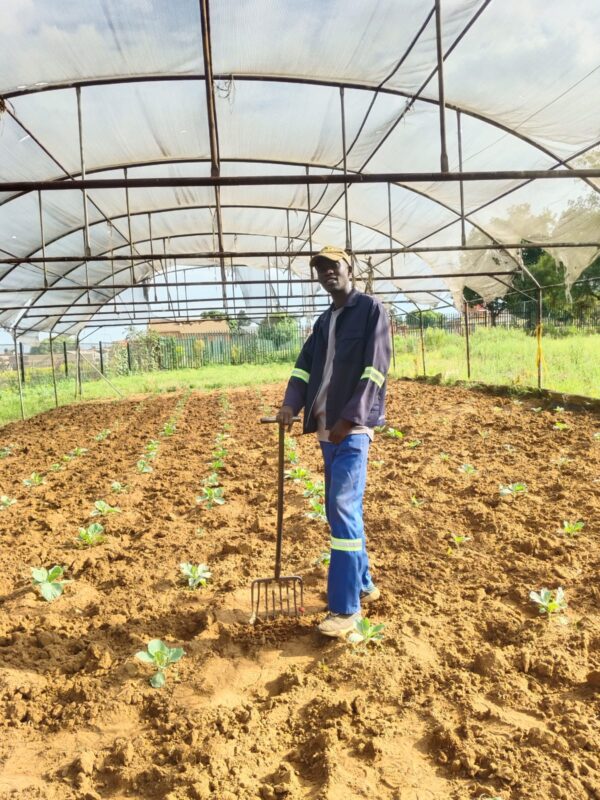
“Leaving high school, I wanted to go to university immediately, but I don’t think I was ready. I lacked the confidence I have now. I tried applying to NWU without luck, so volunteering provided the start I needed almost instantly.”
He eventually moved into the workplace, gaining hands-on experience at PAG/Evergrow and Soweto Aquaponics. It was a formative period that allowed him to see how urban agriculture functioned in Johannesburg, gaining experience that would later draw him back to his true calling.
The birth of Agrolimo
By 2023, Makgatho was ready to strike out on his own. While participating in the NYS Food Security programme at the Southern African Association of Youth Clubs (SAAYC) Soweto, he began selling his own harvest directly from the programme’s gardens to the local community, realising he could turn his passion into a sustainable livelihood.
He adopted a “balanced farming” approach, mixing volunteer gardening at the Phefeni Recreation Centre and the Meadowlands and Orlando library with online short courses. With no formal funding, he relied on grit and self-study to build his knowledge.
Makgatho started on a modest 37-square-meter plot, where he successfully practised intercropping by planting maize with pumpkins.
In the same year, he officially registered his business, Agrolimo Farms. Though he started with co-founders, they recently moved on, leaving Makgatho to run and direct the venture alone.
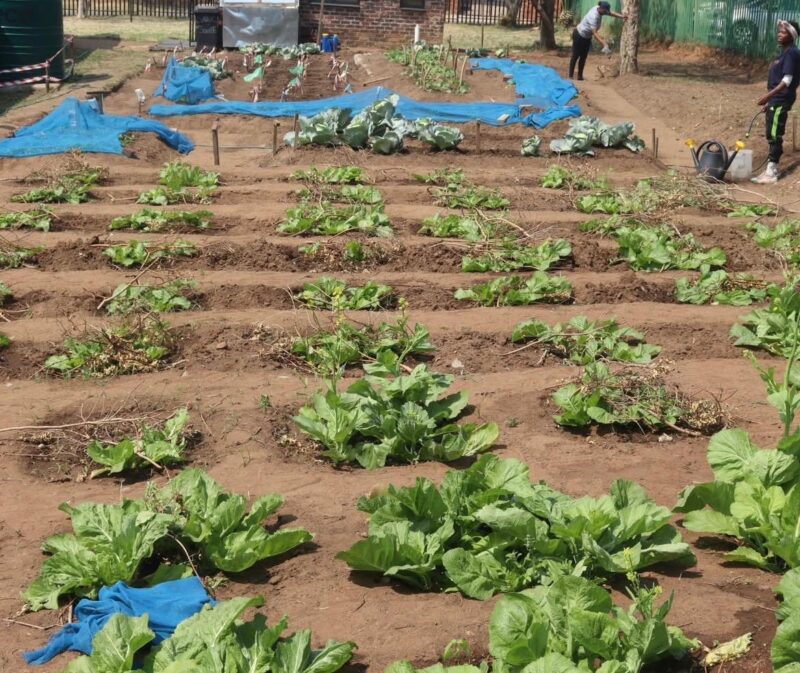
Under his stewardship, the operation has since expanded beyond that small plot. He now utilises land from government schools like Tsumbedzo Primary, Mbuyisa Primary, and Mathediso High School.
“Owning a farming business in Gauteng is the greatest achievement, and I go to the farm almost seven days a week,” he says.
Since he became the sole director, he has also expanded his team to include six part-time employees.
Navigating modern challenges
Success, however, has not come without significant hurdles. Water remains his number one challenge; while the rainfall season offers some relief, water outages and fluctuating pressure are constant concerns for his vegetable crops.
Beyond infrastructure, Makgatho faces the persistent threat of pests and diseases. To keep his crops healthy, he balances modern innovation with traditional wisdom. While he uses AI tools like Grok for quick information, he considers his real pillar to be the local farming community.
“I occasionally visit other farmers, especially the elderly, who share their insights on the challenges I face,” he explains. “Self-studying through short courses also gives me a much-needed boost in knowledge.”
Looking ahead, Makgatho plans to complete his higher certificate in life and environmental science at Unisa this year. He also aims to contribute nutritious food to school kitchens to give back to the students who are now where he once was.
It is this blend of community focus and hands-on grit that forms the basis of his advice for the next generation.
Rooted in his own journey from a career-day dream to a registered business, Makgatho offers a straightforward perspective: “Be patient, work hard and be consistent; also believe in yourself to get better. Lastly, avoid using highly hazardous chemicals on the farm in order to look after the environment.”
READ NEXT: Biostimulants: Helping crops beat stress and boost yield