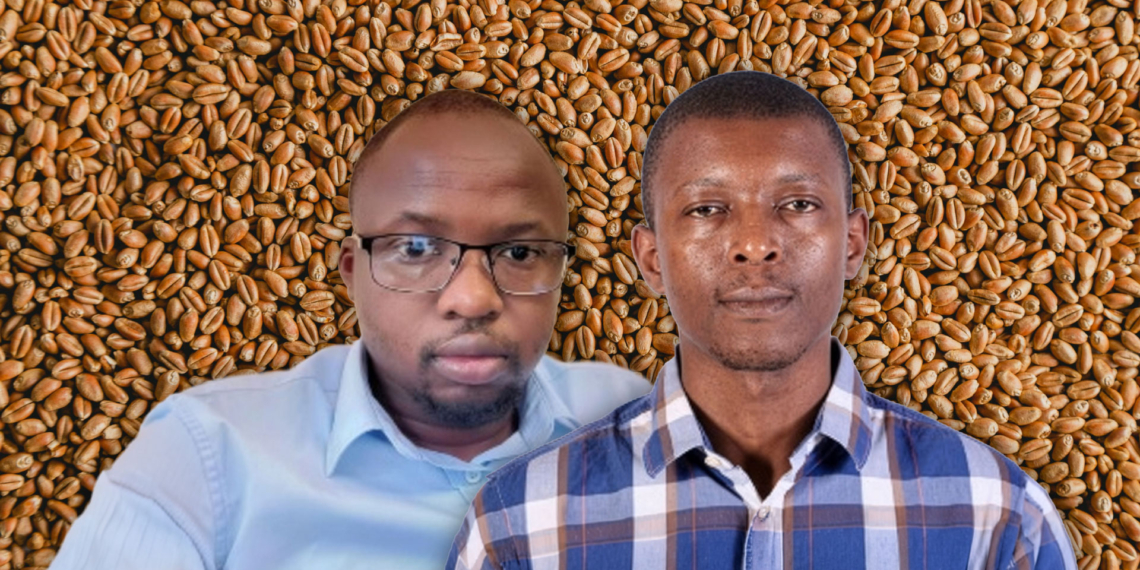
When farmers save their own seeds, they save their future. Dr Matelele Lehlogonolo and Fakude Sithembiso from the department of agriculture’s National Plant Genetic Resources Centre explain how household seed banking empowers rural families, especially women, to preserve traditional crops and reduce dependency on commercial seed systems.
Across South Africa’s diverse agricultural landscapes, the conservation of traditional crop varieties and locally adapted seeds has become a pressing concern. As climate change, market pressures, and the dominance of commercial hybrid seeds reshape farming systems, the genetic diversity of crops, an invaluable resource for resilience and food security, is steadily eroding.
In response, innovative and community-driven strategies are emerging to safeguard these genetic resources for future generations. One such approach gaining renewed attention is household seed banking.
Household seed banking refers to the practice whereby individual farming households save, store, and maintain their own seeds from one planting season to the next.
Unlike formal or community seed banks, which operate at organised institutional or collective levels, household seed banks are small-scale, informal, and embedded within the daily routines and traditional knowledge systems of rural families. They represent the most localised form of genetic resource management, often preserving landraces and farmer-selected varieties that are uniquely adapted to local soils, climates, and cultural preferences.
Bridging the gap
In South Africa, where smallholder farmers play a vital role in sustaining food production and agrobiodiversity, household seed banking serves as both a practical and cultural conservation strategy. It enables farmers to retain autonomy over their planting materials, reduce dependency on costly external seed sources, and ensure the continuity of indigenous varieties that might otherwise disappear.
Moreover, household seed banks complement larger conservation initiatives such as community seed banks and national genebanks, bridging the gap between formal scientific conservation and traditional farming practices.
This article explores how household seed banking functions as a complementary conservation strategy in South Africa. It highlights the role of traditional knowledge, the importance of household seed banking, complementarity with formal and community seed banks, and the challenges and opportunities associated with household seed banking.
By recognising the value of household-level efforts, South Africa can strengthen its broader agricultural resilience, promote seed sovereignty, and preserve its rich crop heritage in the face of ecological and socio-economic change.
Related stories
- Seed libraries, food gardens empower Cape communities
- Seed technology: How innovation drives higher yields & success
- Free State farmers hit by rising seed theft
- Hybrid seeds: Tips for optimising maize yields
Why household seed banking matters
Household seed banking is rooted in traditional farming systems, where families select, dry, and store seeds from one season to the next. Beyond preserving seed for future planting, this practice sustains local crop varieties adapted to diverse microclimates, soil types, and cultural preferences.
In rural South African communities, especially in provinces such as Limpopo, Eastern Cape, Northern Cape, Free State, North West, Mpumalanga and KwaZulu-Natal, many smallholder farmers, mostly women, still rely on their own seed stocks for 60-70% of their needs.
These farmers are the custodians of agricultural biodiversity, maintaining old landraces of maize, sorghum, cowpea, pumpkin, and millet that are no longer found in commercial seed systems.
When farmers keep their own seed, they also keep control over their future.
Household seed banking ensures that these varieties, often more drought-tolerant and pest-resistant, continue to thrive in the face of climatic unpredictability.
Some of the household seed banks in KwaZulu Natal (eg Sophiwe Dlamini’s House hold Seed Bankin Pongola – conserving more than 13 difference landrace crops such as sesame, groundnuts, cowpea, pumpkin, kidney bean, pearl millet, pigeon pea, calabash, maize, sorghum, mung bean, jugo bean, watermelon), and Limpopo provinces are being supported by non-governmental organisations (NGOs), such as Biowatch and Ukuvuna Urban Farming.
Complementing formal and community seed banks
South Africa’s formal seed banks, like the National Plant Genetic Resources Centre (NPGRC) in Roodeplaat, play a critical role in long-term ex situ conservation.
Similarly, community seed banks managed by farmer groups in Gumbu village (Limpopo), Jericho (North West) and Sterkspruit (Eastern Cape), with the assistance of both the national department of agriculture, directorate of genetic resources, and the provincial departments of agriculture, facilitate shared access and collective management of seed diversity at a local scale.
However, household seed banks complement these systems by anchoring conservation directly in people’s homes and everyday practices. They provide a decentralised safety net: if pests, theft, or natural disasters affect one household’s seeds, neighbouring families can easily restore lost varieties through local exchange networks.
This interconnectedness strengthens resilience and redundancy within the broader conservation framework.
Empowering farmers and strengthening food sovereignty
Household seed banking is not only a conservation measure but also an act of empowerment. By maintaining control over their seeds, small-scale farmers reduce dependence on costly hybrid or genetically modified varieties that must be purchased each season. This autonomy enhances food sovereignty, allowing farmers to decide what to plant, when to plant, and how to manage their crops in line with local traditions and ecological knowledge.
Did You Know? Women in smallholder farming communities select over 60% of seeds based on taste, cooking time, and storage life, preserving not only crops but culture.
Moreover, women often play a central role in seed selection and preservation. Their expertise in identifying desirable traits, taste, storage quality, cooking time, and pest tolerance ensures that household seed banking supports both cultural heritage and nutritional diversity.
Our grandmothers didn’t just save seeds — they saved futures.
Challenges and opportunities
Despite its value, household seed banking faces several challenges; however, these challenges also present opportunities, as indicated below:
| CHALLENGES | OPPORTUNITIES |
| Decline in traditional seed knowledge – due to modernisation &migration | Training on seed selection, drying, labelling, and airtight storage can improve seed viability and longevity |
| Poor storage conditions – leading to seed deterioration from humidity, pests or mould | Youth engagement through “seed schools” – through integrating household seed banking into school & community programmes |
| Policy barriers favouring commercial seed systems over farmer-saved seed | Partnerships with government agencies, NGOs and local cooperatives could also support households with materials like airtight containers, labelling tools, and record-keeping templates |
A path toward integrated conservation
For South Africa to fully safeguard its agricultural biodiversity, an integrated seed conservation system is essential, one that connects national, community, and household seed banks in a mutually reinforcing network. Household seed banking contributes the grassroots depth needed to make this system truly resilient and sustainable.

In the era of climate uncertainty and food insecurity, each seed stored at home represents more than future harvests; it embodies heritage, resilience, and hope. Strengthening household seed banking ensures that the nation’s agricultural future remains firmly in the hands of its people.
️Biodiversity conservation begins in the household – one jar, one seed, one season at a time.
Final thoughts
Household seed banking is more than a storage technique: it is a practice of stewardship.
Household seed banking is not just about storing seeds; it is about preserving heritage, empowering farmers, and securing South Africa’s food future.
In South Africa, as elsewhere, it links food security to culture, resilience to community ties, and biodiversity to everyday choices. When households keep seed, they keep options: options for flavour, adaptation, and a future where farmers and communities remain the custodians of the seeds that feed them.
Household seed banking offers a grassroots, low-cost, and culturally grounded approach to conservation. It strengthens resilience, supports climate adaptation, and keeps control in farmers’ hands. As the country seeks sustainable agricultural solutions, recognising and investing in household seed banking as a complementary conservation strategy will ensure that the seeds of today become the harvests and heritage of tomorrow.
Each seed saved is a story preserved.
- Dr Matelele Lehlogonolo is a scientist in production, and Fakude Sithembiso is a scientific technician at the department of agriculture, directorate: genetic resources at the National Plant Genetic Resources Centre. The views and opinions expressed in this article are those of the author and do not necessarily reflect the views or positions of Food For Mzansi.
READ NEXT: Women gain ground in agri careers, but pay gaps remain