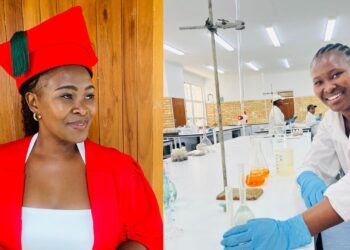
Growing up in a home with limited means, support and encouragement were always the glue that held Babalwa Ntwana-Mpambani’s family together. That foundation guided her when it came time to choose a career, helping her not only get into university but also return as a certified agronomist.
Today, she sees the value in what she once took for granted, and she carries a deep appreciation for the importance of growth, care, and nurturing, the very things she witnessed in her childhood home.
Family roots run deep
In the rural village of Ngxingweni in Cofimvaba in the Eastern Cape, Ntwana-Mpambani says life was all about community love, a unity she felt not just from her family but also from her surroundings.
She started school at the age of four because no one at home could babysit her, as her grandmother, Madlomo, and mother, Mandungwane, were busy with house chores and working in the fields.
Ntwana-Mpambani absorbed a lot from her environment, including farming, tending animals, and how people used natural remedies for both humans and livestock.
Some of these tasks were not her favourite, since they often felt like chores, but they left a lasting impression. Despite this, she had a clear vision of becoming a lawyer and focused on history all the way through to matric at Ngwayibanjwa Senior Secondary School.
“After passing matric with a conditional exemption, and without funding to pursue university studies, my aunt Phumelele Ntwana advised me to improve my science results (mathematics, biology and agricultural science).”
This, she says, was to make things easy for her to enrol in nursing studies.
“It was when the SRC of the University of Fort Hare had a campaign in Queenstown preaching that education is free. I only needed R50 for the application form, so I went to UFH to pursue a BSc in pre-medicine.”
Related stories
- Hardship forged Sihle’s passion for animal health
- Wealth in dirt: Crop scientist’s plan B becomes farmingdestiny
- From an apricot tree, a career in agronomy blooms
- Meat inspector Sangcozi’s career is a calling, not just a job
Answering the call of the soil
Getting admitted at Fort Hare, Ntwana-Mpambani says she became aware of a BSc in agricultural science and went on to register.
“That awakened my childhood memories of planting and being a shepherd for my grandmother’s sheep. Surprisingly, I hated everything around agriculture, as I presumed it to be hard labour.”
However, she says, the thought of having a profession in agriculture got her excited, and she wanted to learn more.
“Also, the fact that we could live off it at a young age, having food from what was planted, having money from the sales of beans and grain, having money from sheep wool to buy our winter clothes, awakened that interest.
“I had a very shaky start at university, but I soon found my feet and excelled, graduating in record time.”
She completed her BSc in agriculture at the University of Fort Hare in 2004. Her results were accepted for a master’s in agriculture at Stellenbosch University.
Her uncle, Zimisele Ntwana, helped with registration and travel fees to the Western Cape. “My uncle and his wife played a huge role in taking care of me throughout my university years. I had faith that I would apply for a bursary and get it, and that paid off.”
Science with a purpose
In 2007, she returned home with her master’s, specialising in agronomy and horticulture.
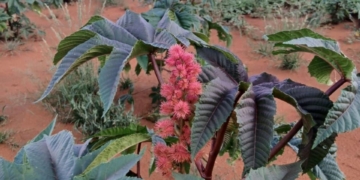
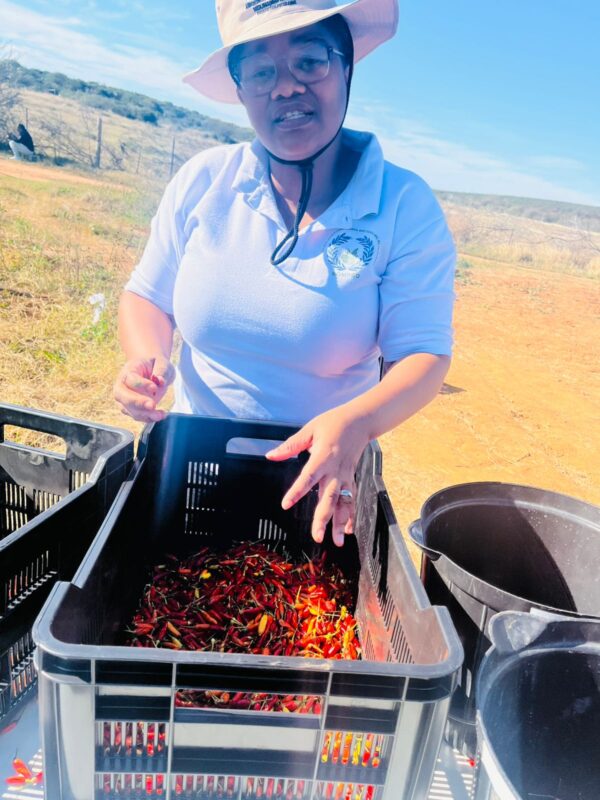
She explains that after eight months of developing a research proposal, she secured sponsorship from Agribusiness in Sustainable Natural African Plant Products (ASNAPP) to work on buchu, a medicinal plant endemic to the Western Cape.
The programme also offered her a learnership with a stipend, which became her first formal job in the agricultural science field.
“I had an interest in protected environment agriculture, particularly hydroponics. I was then introduced to medicinal plants, and my interest grew from cultivation to their use.”
She adds that being the daughter of a traditional herbalist gave her an advantage, as she already knew the names and uses of some medicinal plants.
Preserving medicinal plant knowledge
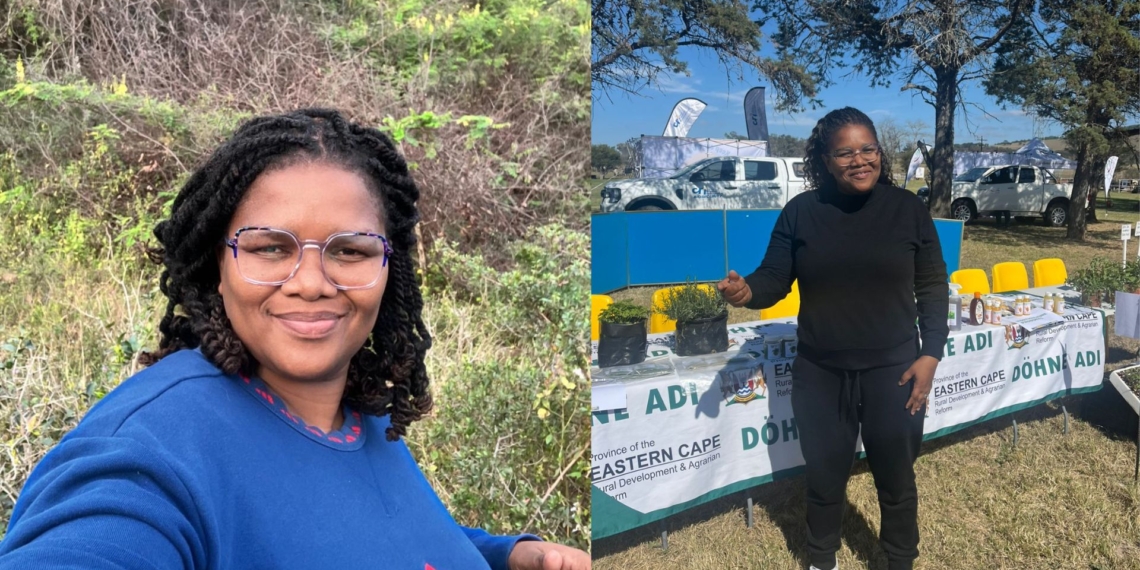
Currently, she works as a scientific manager leading horticultural research with Dohne Agricultural Development Institute, in Stutterheim, Eastern Cape, with a special focus on medicinal plants, their preservation, cultivation and uses.
“My career path has focused on developing my leadership and administration skills while continuing to mentor young, upcoming scientists.”
She says her studies helped her realise that the Eastern Cape is rich in medicinal plants that play an important role in primary healthcare.
For farmers, communities, scientists and future researchers, this presents an opportunity to protect these plants, conduct research, and use them to heal both people and animals.
She adds that agriculture is broad and full of opportunity. It offers pathways into employment and self-employment, from primary production to agroprocessing business opportunities.
READ NEXT: Sibongile’s plant passion: Healing crops and feeding Mzansi