Saturday, September 5, 2026
SUBSCRIBE
22 GLOBAL MEDIA AWARDS
Food For Mzansi
  • News
  • Changemakers
  • Lifestyle
  • Farmer’s Inside Track
  • Food for Thought
No Result
View All Result
  • News
  • Changemakers
  • Lifestyle
  • Farmer’s Inside Track
  • Food for Thought
No Result
View All Result
Food For Mzansi
No Result
View All Result
in It Takes a Village

Beekeepers of Mngazana find hope in honey

Deep in the Eastern Cape's mangroves, a beekeeping cooperative is buzzing with life. Led by women, the Sise Cwebeni cooperative harvests honey and hope, overcoming challenges and inspiring a new generation

by Lucas Nowicki
25th June 2024
Nolulamile Lazola leads the hike back to Cwebeni. Members of the cooperative say they need a new building to bottle the honey and help to transport materials from the forests. Photo: Supplied/Lucas Nowicki

Nolulamile Lazola leads the hike back to Cwebeni. Members of the cooperative say they need a new building to bottle the honey and help to transport materials from the forests. Photo: Supplied/Lucas Nowicki

Share on FacebookShare on TwitterShare on WhatsApp

It’s 7am in Cwebeni, a small village near Port St Johns in the Eastern Cape, and 42-year-old Nonkqubela Mpumapi is preparing to trek four kilometres to harvest honey deep in the mangrove forests.

Mpumapi is a member of the Sise Cwebeni Bee Farming Cooperative, formed in 2010 by eight villagers from Cwebeni.

To visit their beehives, members of the cooperative have to walk through the Mngazana mangroves, the third largest mangrove forest in South Africa, where the hives are located.

Cwebeni is located on the periphery of the mangrove forests of Mngazana, and is difficult to access via road. With very few employment opportunities and little access to basic services, most villagers rely on social grants and remittances to survive.

The catalyst for starting a beekeeping cooperative came one morning in 2008, when beekeeping volunteers visited the local school. “They went to the bush and showed us how to install bee hives. But we did not have enough understanding of bee farming then,” says Mpumapi.

Dressed in their safety gear, the bee-keepers use smoke to keep the bees calm during hive inspections and harvesting. Photo: Supplied/Lucas Nowicki

This led a group of women from Cwebeni to visit the Phila Beekeeping Cooperative, formed in 2003 by eight women from Zibungu village in Libode, about an hour’s drive from Cwebeni on the R61.

“We didn’t understand that you could farm bees, but after we visited the women in Libode, I knew we could do it,” says 62-year-old Nolulamile Lazola, another beekeeper from Cwebeni.

A year after its formation, the cooperative started receiving funding from Pick ‘n Pay.

Leonora Sauls, head of philanthropy at the Ackerman Foundation, said the foundation partnered with the community to help “alleviate unemployment” in Cwebeni and “to encourage and support their enterprising spirit, in the hope that it would result in self-reliance”.

Central to the foundation’s support for the cooperative was training. Wouter Dell, a professional bee-keeper from Cape Town, was sent to help train the members and set up a processing facility for the honey.

Meet the host farmers for our 2024 provincial farmer days!

Dell has over two decades of experience working with bees, founding BMan, a company specialising in cruelty-free bee removal. He said he first visited Cwebeni in 2010 and travelled there repeatedly over four years to train and educate the villagers about the importance of bees in the local ecosystem.

“The concept I used to teach was that if you look after the bees, then the bees will look after you,” Dell told GroundUp.

Mpumapi joked that they were “clueless about bees”.
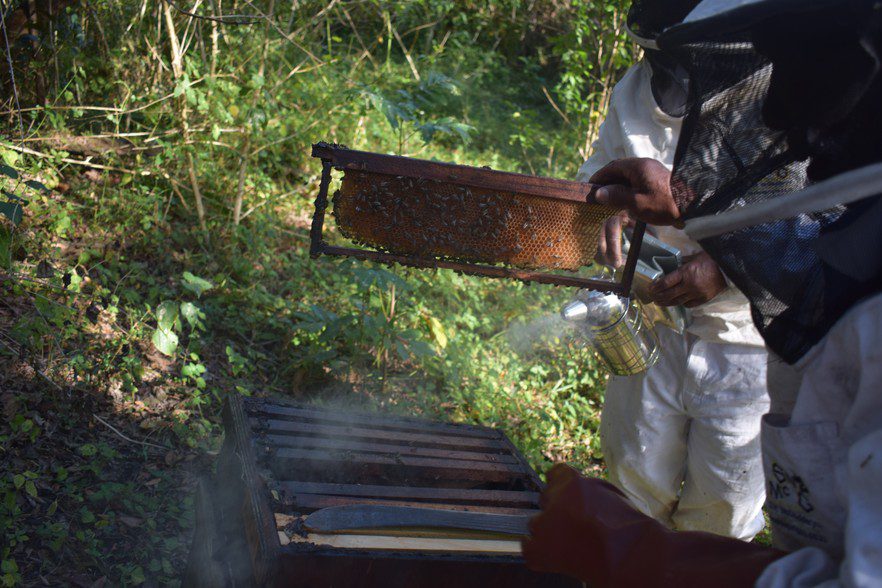
Mangrove honey is a rare type of honey that is said to be slightly saltier because of the saltwater environment. Most of the honey comes during summer, when there is an abundance of flowering plants in the area, according to beekeeper Nonkqubela Mpumapi. Photo: Supplied/Lucas Nowicki

The cooperative established a training and bottling facility for honey in Cwebeni in 2013, repurposing an unused community building. Other funders included the Eastern Cape Development Corporation (ECDC) and the Social Change Assistance Trust (SCAT).

In 2018, the Pick n Pay foundation exited the partnership to allow for community ownership. Tragedy struck on a dry winter night in 2020, when the cooperative’s training and processing facility burnt down with nearly all their equipment. It is unclear how the fire started.

This severely affected the operations of the co-operative and its ability to produce and bottle honey. However, the members have continued at a smaller scale.

“We lost our equipment. It was devastating. We now don’t have any place to bottle the honey,” says Lazola.


Related stories
  • Bee inspired: Answering the call of the hive
  • Beekeepers breaking shackles of state dependency

The beekeepers take off their protective gear before the long walk back to the village. Photo: Supplied/Lucas Nowicki

Vovo Qhuzelwa has fond memories of the cooperative’s training and processing facility. “People would come from all parts of the province to visit the centre and learn about bee farming,” he says. Before beekeeping, Qhuzelwa worked as a labourer in Durban. He says he much prefers working with bees, finding it interesting and not as physically demanding.

The cooperative now sells the honey for about R60 per 500ml to nearby Entabeni Hardware stores and to the Umngazi Hotel and Spa.

With some of the beekeepers getting old, they are struggling to walk the long distances and to carry equipment, says Lazola.

Beekeeper Nosiseko Klaas hopes the cooperative can grow to support more members of the community. She wants to pass on her skills to the next generation.

“This has helped relieve my poverty, so it is important that the youth also get the opportunity,” says Klaas.
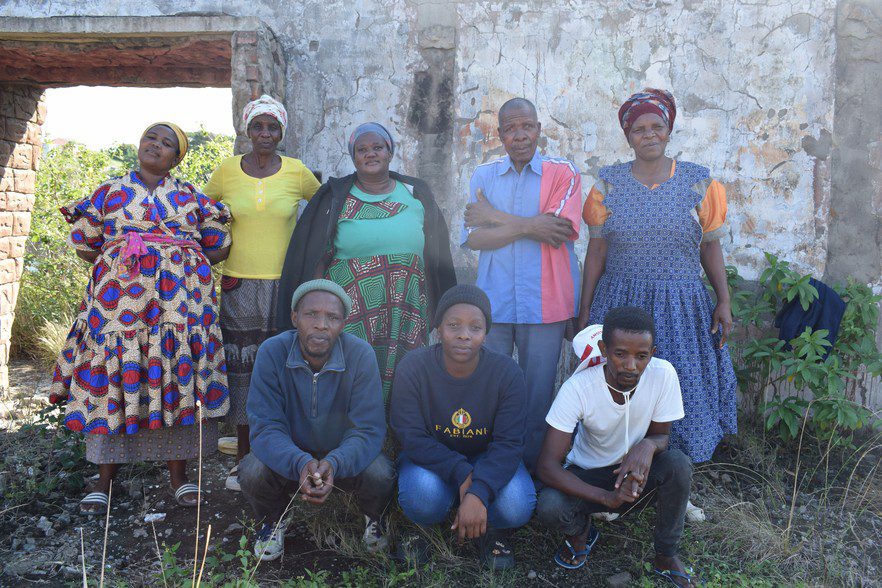
Members of the cooperative stand in the ruins of the processing facility that burnt down in 2020. From left to right, back row: Nonkqubela Mpumapi, Nozazile Khonqo, Nosiseko Klaas, Qhuzelwa Vovo and Nolulamile Lazola. Front row, left to right: Xola Lazola, Nokonwabisa Vovo and Lwandiso Vovo. Photo: Supplied/Lucas Nowicki
  • This story was first published by GroundUp.

READ NEXT: Mpumalanga duo rise and shine with mixed farming operation

Get Stories of Change: Inspirational stories from the people that feed Mzansi.

Lucas Nowicki

Tags: BeekeeperCommercialising farmerEastern CapehoneyInspire me
News

Aucamp outlines strategy for biosecurity, trade, and infrastructure

by Tiisetso Manoko
2nd September 2026

In an exclusive interview with Food For Mzansi, agriculture minister Willie Aucamp outlines his vision to accelerate the AAMP, tackle...

Read moreDetails
Tobias Doyer, CEO of Grain SA. Photo: Supplied/Grain SA Facebook

Rising costs, climate risk push Swartland wheat farmers to the brink

2nd September 2026
Sick spuds: No need to panic as SA’s potatoes are banned in Zim

Potato turning point ahead as onions double in price year-on-year

1st September 2026
Early calf care: Key growth targets every cattle farmer must track

Early calf care: Key growth targets every cattle farmer must track

1st September 2026

How to align your farming cycles with long-term financial success

1st September 2026

Government hikes sugar import price, but industry warns of gap

Gauteng farmers urged to harness massive urban market

Rising costs, climate risk push Swartland wheat farmers to the brink

Water rights alone won’t fix inequality in SA commercial farming

Chicken is booming, but the real money is in the supply chain

Join Food For Mzansi's WhatsApp channel for the latest updates!

JOIN NOW!
Next Post
Ask Afrivet: Top tips on tick bite management in livestock

Combatting livestock theft with DNA technology

THE NEW FACE OF SOUTH AFRICAN AGRICULTURE

With 21 global awards in the first six years of its existence, Food For Mzansi is much more than an agriculture publication. It is a movement, unashamedly saluting the unsung heroes of South African agriculture. We believe in the power of agriculture to promote nation building and social cohesion by telling stories that are often overlooked by broader society.

Honoured roots: A father’s legacy, a daughter’s farming dream

Gauteng farmers urged to harness massive urban market

Foot-and-mouth crisis hits SA dairy industry with R1-billion loss

Tough times, hardy cattle: Why Mzansi farmers are choosing Nguni

Dragon fruit thrives in KZN valley despite tough national season

Government hikes sugar import price, but industry warns of gap

  • Awards & Global Impact
  • Our Story
  • Contact Us
  • Cookie Policy
  • Privacy Policy
  • Copyright

Contact us
Office: +27 21 879 1824
News: info@foodformzansi.co.za
Advertising: sales@foodformzansi.co.za

Contact us
Office: +27 21 879 1824
News: info@foodformzansi.co.za
Advertising: sales@foodformzansi.co.za

  • Awards & Global Impact
  • Our Story
  • Contact Us
  • Cookie Policy
  • Privacy Policy
  • Copyright

Chat Options

I'm Lerato, your AI assistant!
No Result
View All Result
  • News
  • Changemakers
  • Lifestyle
  • Farmer’s Inside Track
  • Food for Thought

Copyright © 2024 Food for Mzansi

This website uses cookies. By continuing to use this website you are giving consent to cookies being used. Visit our Privacy and Cookie Policy.