Thursday, February 19, 2026
SUBSCRIBE
21 GLOBAL MEDIA AWARDS
Food For Mzansi
  • News
  • Changemakers
  • Lifestyle
  • Farmer’s Inside Track
  • Food for Thought
No Result
View All Result
  • News
  • Changemakers
  • Lifestyle
  • Farmer’s Inside Track
  • Food for Thought
No Result
View All Result
Food For Mzansi
No Result
View All Result
in News

Beyond sugar: How SA’s farmers are crushing it with diversification

As the closure of Tongaat Hulett mills threatens thousands of livelihoods, South African farmers are turning the humble sugarcane into energy, rum, feed, and even fudge. Discover how cane growers are reshaping the future of agriculture, and innovation is the new lifeblood

by Lisakanya Venna
19th February 2026
Gugulethu Musuku,
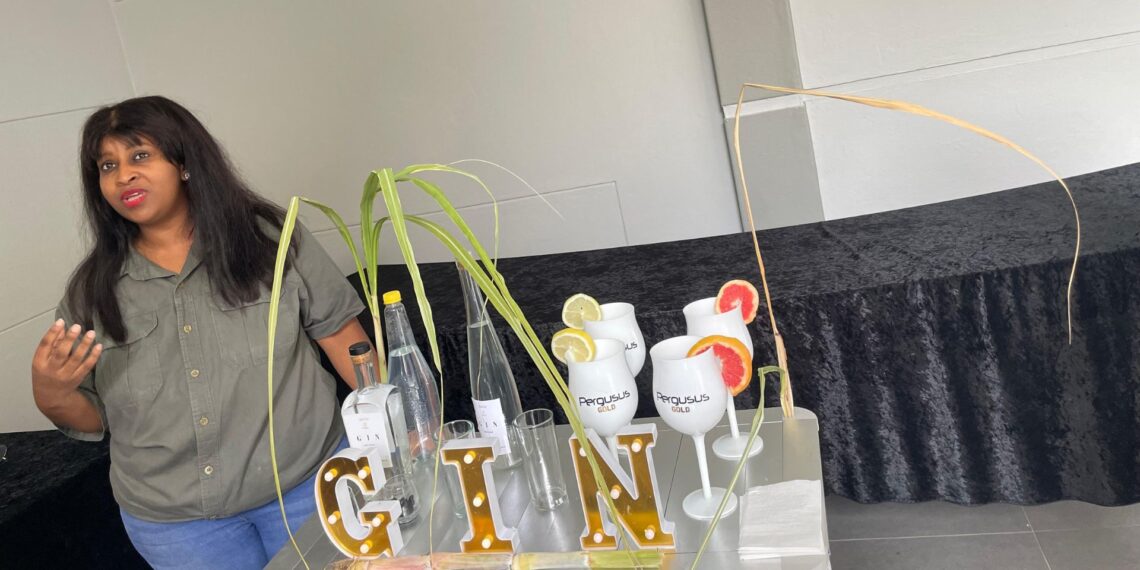
PLAS farmer and spirits innovator, started her business as a hobby with fermented guavas and now produces retail-ready rum and gin. Photo: Lisakanya Venna/Food For Mzansi

Gugulethu Musuku, PLAS farmer and spirits innovator, started her business as a hobby with fermented guavas and now produces retail-ready rum and gin. Photo: Lisakanya Venna/Food For Mzansi

Share on FacebookShare on TwitterShare on WhatsApp

Diversification of South Africa’s sugarcane industry is crucial as the sector navigates a critical phase with Tongaat Hulett’s closure threatening jobs, livelihoods and grower stability.

The government has raised concerns with the closure, which has the potential of crippling the economy of KwaZulu-Natal, especially towns that are solely dependent on the sugarcane commodity.

Minister of agriculture, John Steenhuisen, said, “This is not a theoretical risk; it is an immediate economic threat to rural communities. If the mills do not open, farmers cannot harvest, workers cannot earn an income, and entire local economies will stall. The longer uncertainty persists, the greater the damage becomes.”

However, by investing in bioenergy, bio-products and value-added crops, the industry can build resilience against market volatility and economic shocks.

The new frontier for SA sugarcane

From powering the national grid to crafting award-winning spirits and packing export-quality fruit, South African sugarcane farmers are moving beyond the sugar bowl to unlock the full economic potential of the cane stalk.

For generations, the humble sugarcane stalk was synonymous with one thing: white gold. However, as the industry evolves, farmers are pivoting. On a recent tour hosted by the South African Sugar Association (SASA) in KwaZulu-Natal (KZN), it became clear that the era of the single-product farmer is over.

“We are in an era whereby we are unleashing the full potential of the cane stalk,” said Cedric Mboyisa, communications manager at SASA.

KZN growers, from industrial operations to small-scale distilleries, are finding that the “chewing industry” can produce far more than just a sweetener.

At UCL Company in Dalton, near Tongaat, the focus is on energy self-sufficiency. Clinton Vermeulen, general manager of operations at UCL, explained that the site functions as a model of harmony, where the sugar factory provides the power and steam required to run their sawmill, wattle factory, and animal feed production.

Clinton Vermeulen, general manager at UCL, is powering packhouses and the national grid with bagasse energy. Photo: Lisakanya Venna/Food For Mzansi

The electricity is generated through a process of burning bagasse, the fibrous residue left over after the juice is squeezed from the sugarcane. This biomass is fed into the mill’s high-pressure boilers to create steam, which then drives turbines to produce electricity. By generating its own power directly from this sugarcane byproduct, the site remains highly competitive.


Related stories
  • Sugar crisis as Tongaat Hulett files for provisional liquidation
  • From bitter to sweet: Tongaat Hulett farmers feel at ease
  • Sugar tax, cheap imports endanger rural livelihoods

“We are more competitive than other packhouses because we do not have to buy power. The traditional way of trying to diversify the sugar industry was to derive more different products from sugar and to use those sugar products to make other products,” he said.

Vermuelen explained that this internal power supply also fuels their advanced avocado packaging plant, which now handles an output roughly similar to the rest of KZN combined. Beyond meeting its own industrial needs, UCL also contributes to the national grid by selling excess electricity back to Eskom.

From farm to bottle

The drive for diversification is also transforming the craft spirits sector. Brad O’Neill, head distiller at Sugar Baron Craft Distillery and steward of Seafield Farm, has dedicated a portion of his 294 hectares of sugarcane to a premium farm-to-bottle rum operation.

The process involves cane being cut and pressed, with the juice going directly into fermentation tanks. After a couple of days, the liquid is distilled before being rested in glass demijohns for six to 12 weeks.

Cane to craft: Brad O’Neil blends legacy and innovation in sugar

From there, some of the rum is bottled for their flagship White Rum, while some is barrelled for ageing. O’Neill has also expanded into the confectionery market, launching a range of rum-infused fudges and sauces, often highlighting the natural benefits of his raw materials.

“It is [juice from the sugarcane] low GI, low glycemic index, so it doesn’t spike your blood sugar, especially if you’re diabetic,” he said.

For him, the use of the cane stalk does not end there; to maintain a circular economy, the leftover cane fibre is either composted to return nutrients to the soil or burnt to create steam for the distillery boilers.

This spirit of exploration is shared by PLAS farmer Gugulethu Musuku, who is set to enter the retail market this year. What began nine years ago as a “hobby mistake” with fermented guavas led Musuku to research and develop her own spirits.

After identifying a gap in the local market, she expanded her production from rum into gin, following a similar value-added path to O’Neill.

READ NEXT: Sugar tax, cheap imports endanger rural livelihoods

Sign-up for the latest agricultural news delivered straight to your inbox every day with Mzansi Today!

Lisakanya Venna

Lisakanya Venna is a junior journalist and content coordinator with varied multimedia experience. As a CPUT journalism alumni, she finds fulfilment in sharing impactful stories and serving as a reliable source of information.

Tags: Commercialising farmerInform meKwaZulu-NatalSouth African Sugar AssociationSugarcane

Related Posts

Choosing the right maize variety for South African conditions is key to boosting yield, resilience, and profitability.

South Africa eyes bumper grain and soybean crops

19th February 2026
Red Meat Industry Services (RMIS) advocates for methods that can revolutionise red meat production, ensuring sustainable resource use and nourishing nations. Photo: Supplied/Food For Mzansi

Meat is safe to eat despite FMD outbreak, assure experts

18th February 2026

Expert urges farmers to leverage ‘good debt’ for growth

Pork prices rise as disease outbreaks tighten supply

Sugar crisis as Tongaat Hulett files for provisional liquidation

High-quality seeds, high stakes for smallholder farmers

This week’s agri events: 16 – 20 February

Small-scale fishers battle DFFE over linefish quota cuts

CGA’s Dr Ntshabele charts bold citrus future for SA
Food for Thought

CGA CEO marks first year with renewed drive for citrus growth

by Boitshoko Ntshabele
17th February 2026

From expanding production to strengthening logistics and trade access, South Africa’s citrus growers continue to invest in the future. Dr...

Read moreDetails
Pig farming: How to get started and keep it going

Pork prices rise as disease outbreaks tighten supply

17th February 2026
Sugar crisis as Tongaat Hulett files for provisional liquidation

Sugar crisis as Tongaat Hulett files for provisional liquidation

16th February 2026
Cane to craft: Brad O’Neil blends legacy and innovation in sugar

Cane to craft: Brad O’Neil blends legacy and innovation in sugar

16th February 2026
High-quality seeds, high stakes for smallholder farmers

High-quality seeds, high stakes for smallholder farmers

16th February 2026

Harvesting love: How farming couples balance business & romance

Pomegranate pioneer: Debbie Theunissen’s rise in fruit farming

CGA CEO marks first year with renewed drive for citrus growth

Bringing sorghum back: How Malebe is reviving indigenous grains

Beyond sugar: How SA’s farmers are crushing it with diversification

Join Food For Mzansi's WhatsApp channel for the latest updates!

JOIN NOW!
Next Post

Precision irrigation drives Zimbabwe’s blueberry boom

THE NEW FACE OF SOUTH AFRICAN AGRICULTURE

With 21 global awards in the first six years of its existence, Food For Mzansi is much more than an agriculture publication. It is a movement, unashamedly saluting the unsung heroes of South African agriculture. We believe in the power of agriculture to promote nation building and social cohesion by telling stories that are often overlooked by broader society.

Precision irrigation drives Zimbabwe’s blueberry boom

Beyond sugar: How SA’s farmers are crushing it with diversification

South Africa eyes bumper grain and soybean crops

Traditional medicinal plants offer hope for men’s health

Pomegranate pioneer: Debbie Theunissen’s rise in fruit farming

Meat is safe to eat despite FMD outbreak, assure experts

  • Awards & Global Impact
  • Our Story
  • Contact Us
  • Cookie Policy
  • Privacy Policy
  • Copyright

Contact us
Office: +27 21 879 1824
News: info@foodformzansi.co.za
Advertising: sales@foodformzansi.co.za

Contact us
Office: +27 21 879 1824
News: info@foodformzansi.co.za
Advertising: sales@foodformzansi.co.za

  • Awards & Global Impact
  • Our Story
  • Contact Us
  • Cookie Policy
  • Privacy Policy
  • Copyright
No Result
View All Result
  • News
  • Changemakers
  • Lifestyle
  • Farmer’s Inside Track
  • Food for Thought

Copyright © 2024 Food for Mzansi

This website uses cookies. By continuing to use this website you are giving consent to cookies being used. Visit our Privacy and Cookie Policy.