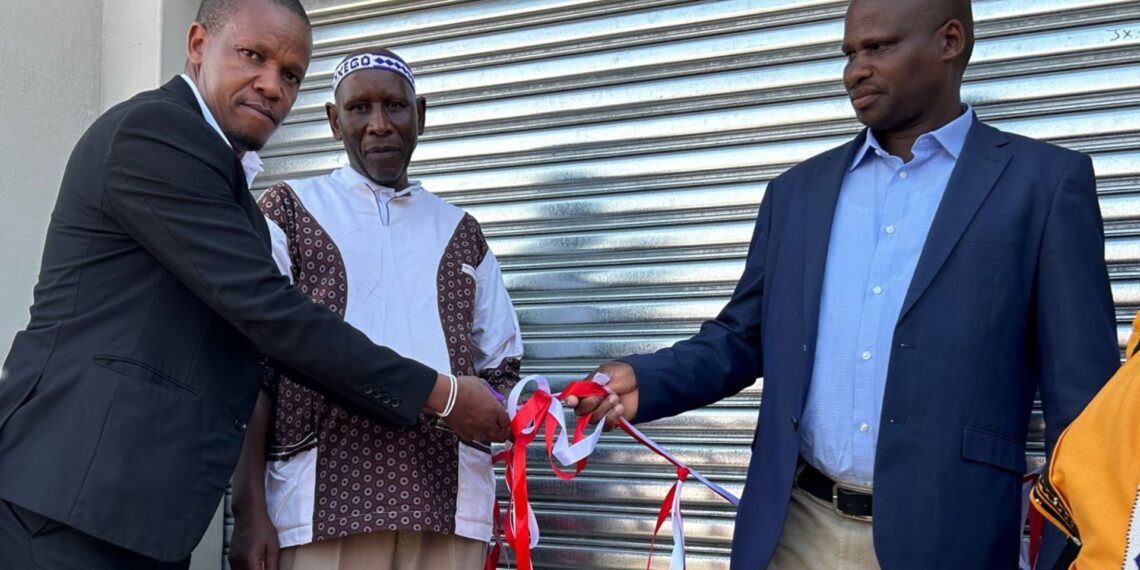
Jubilant communal wool farmers in Mgwalana village, located near Peddie in the Amathole district of the Eastern Cape, are celebrating a significant boost to their operations. The provision of a shearing shed, dip tank, and equipment by the government is expected to improve the quality of their wool and positively impact their socio-economic conditions.
As part of the Eastern Cape rural development and agrarian reform drive to provide wool improvement infrastructure, equipment, and training to communal and emerging farmers, MEC Nonceba Kontsiwe handed over the infrastructure and equipment to the Mgwalana Woolgrowers Association.
The communal farmers believe that the new structures will help them achieve and maintain higher standards for their wool, reducing contamination and ensuring cleaner, increased wool production.
Sithembele Kutu, chairman of the association, expressed his gratitude and optimism.
“I am grateful that today we are officially receiving this shed. We have been shearing our wool in makeshift shack structures that used to leak a lot when it rained. We have been going back and forth trying to make it work.
“Today we are elated; the quality of our wool will improve, as it previously mixed and got contaminated. Our sheep will also be healthier because they will no longer be sheared in a dirty place and we have a dip tank,” Kutu said.
The government initiative aims to empower residents in rural villages to become self-sustainable and contribute to local economic development. Kontsiwe highlighted the importance of mass participation in agriculture for combating and eradicating poverty.
“To combat and eradicate poverty, we need mass participation in agriculture. We need communities to be coordinated and strengthen their participation in various agricultural activities.
“Woolgrowers are a great example; they have organised structures and they are selling their product in formal markets. These steps can play a crucial role in improving livelihoods and fostering sustainable development in the region,” Kontsiwe stated.
Related stories
- Wool exports rebound amid industry transformation
- Podcast: Tracking smallholder wool producers
- ‘We need to create a market for wool locally’
Infrastructure boost expected to increase wool production
AB Xuma municipality councillor Sandiso Ngxangu emphasised the potential of empowering community members in rural villages to bridge the inequality gap.
“This community is located in a far-flung area, but this business will bring them closer to social and economic activities,” Ngxangu said.
The farmers, who have 2 223 sheep, produced 3 778 kg of wool in the previous production season, sold through BKB in Gqeberha, earning them a revenue of R109 575. These returns are expected to rise as they utilise quality equipment in a proper structure.
The provision of the infrastructure is part of a broader wool improvement production program that saw the value of wool exported from the province reaching 28 million tonnes in 2022, generating R3.9 billion. The formerly underdeveloped communal sector exceeded R250 million in annual income.
To ensure the increased quality and quantity of wool produced by emerging farmers, the department provided 73 new shearing sheds, 81 multipurpose sheds, 72 new dipping tanks, and renovations of 248 dipping tanks and 7 shearing sheds. The shearing sheds are fenced with built-in offices, toilets, a 7 425-litre dip plunge, portable small stock handling facilities, wool presser, sorting table, classing bins, and two water harvesting tanks.
The enterprise, which started in 2010 with 29 members, including 7 women and some youth, initially built a shabby structure that compromised quality and led to inefficiencies and time wastage.
The department invested about R1.1 million in infrastructure development and provided training in contract understanding, managerial expertise, administrative capabilities, business environments, select business opportunities, and marketing.
READ NEXT: Tech-based ear tags target livestock theft in Eastern Cape
Sign up for Mzansi Today: Your daily take on the news and happenings from the agriculture value chain.