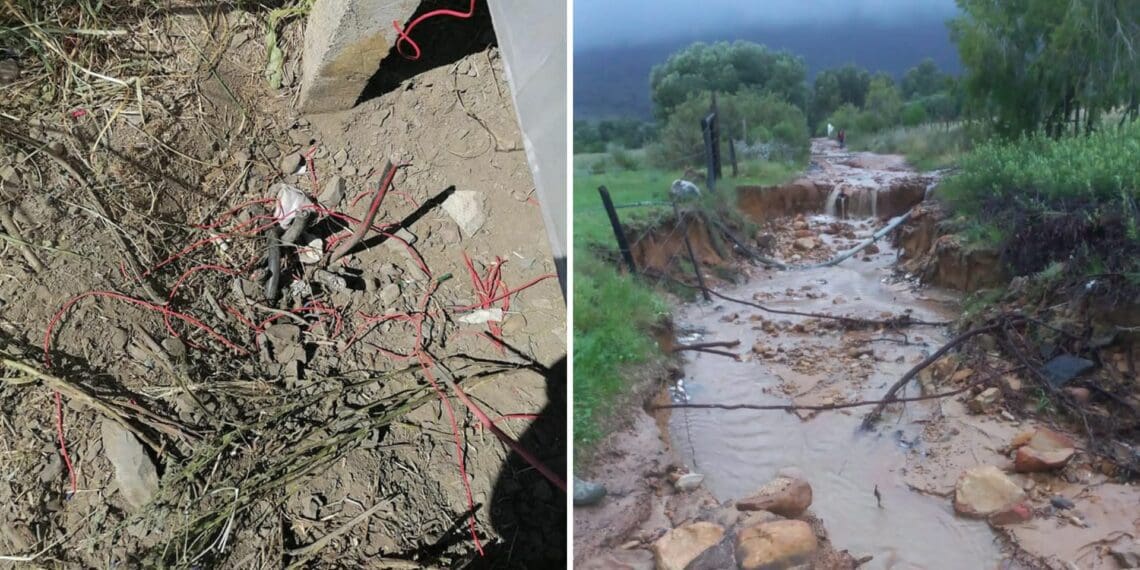
Some of the Western Cape’s most important agricultural regions are among the areas hit hardest by severe floods. As floods pummel infrastructure, crops and livestock, opportunistic cable thieves have now also targeted the community of the Drakenstein Municipality, worsening the situation for flood-affected farms and households.
As if rural and farming communities do not already have enough on their minds, due to the recent floods and continuous heavy downpours, they now have to deal with a lack of electricity while trying to make food or stay warm.
According to Drakenstein Farm Watch representative, Anthea Carlse, flooded farms and farmhouses are the greatest calamity faced by residents. The sudden increase in cable theft incidents is adding to their frustrations.
“During the flooding, cables [have been] stolen. When the area was flooded, the power went off automatically,” Carlse said.

The devastating impact on farms
The cable theft incidents could not have come at a worse time, she added as it has a major impact on the industry and farms are at a big disadvantage, Carlse pointed out.
“If your farm is not situated near a dam, then you cannot pump water for irrigation and you cannot pump water to flush toilets and even get drinking water.
“So this is a major problem that we have. Some farms are lucky because they are planted below the water level of the dam, so they have access to the free flow of water,” she said.
Cable theft in the area is, however, nothing new. Thousands of Rands have been spent to replace stolen cables, Carlse told Food For Mzansi.
Community organisations have been trying to assist affected community members by providing free water, clothing food and rebuilding broken infrastructure. The cable theft is a major setback according to DFW CEO Daan van Leeuwen Boomkamp.
He believes rural areas need better implementation of bylaws regarding cable theft. Such crimes should be more punishable, the organisation believes.
Agriculture hit hard
Heavy and consistent rainfall over large parts of the province led to the damage of infrastructure and the closure of access roads. Citrusdal and Ceres are amongst some of the areas worst affected by infrastructure damage and the closure of access roads.
During a recent media briefing, Jannie Strydom, CEO of Agri Western Cape confirmed that from a commercial farming side, the major impact at this stage is infrastructure and access roads to farms.
“The major issue is getting the produce off the farms and into the markets …We are in the peak season of the citrus industry and potatoes are also badly impacted by the floods.
“Fortunately our grain planting season has ended, so all the grains are planted. We just have to get into those areas with fertilisers and spraying,” he said.
The Western Cape minister of agriculture, Ivan Meyer said he was particularly concerned with the citrus harvest. He said their first priority is to safeguard lives and livelihoods. Meyer said they are working hard to ensure access to roads for farmers.

‘This too shall pass’
FNB senior agricultural economist, Paul Makube believes that it is important that farmers adapt quickly to the changing climate conditions. This will help protect their farming operations and help with food affordability in South Africa.
“As weather patterns change, and farmers face challenges and rising production costs, the affordability of food becomes a significant concern for vulnerable populations with lower levels of disposable income,” he explained.
This, he said, underscored the need for proactive measures to address food security. “Not just by farmers, but also by all stakeholders in the food production chain.”
The ability to bounce back
Makube remains confident that South African farmers should be able to bounce back from heavy rain storms due to their experience with past heavy rain conditions.
“The country’s farmers have repeatedly proven that they have the resilience, capacity, and innovative thinking to adapt to changing conditions,” he said.
By taking proactive measures to address the challenges posed by changing weather patterns, farmers can, and will, mitigate the impacts and build a more resilient and sustainable agriculture sector for the future, Makube said.
ALSO READ: Diversification is the secret to commercialisation
Sign up for Mzansi Today: Your daily take on the news and happenings from the agriculture value chain.