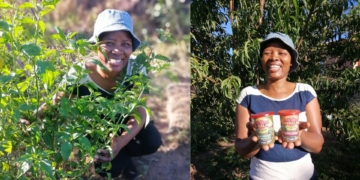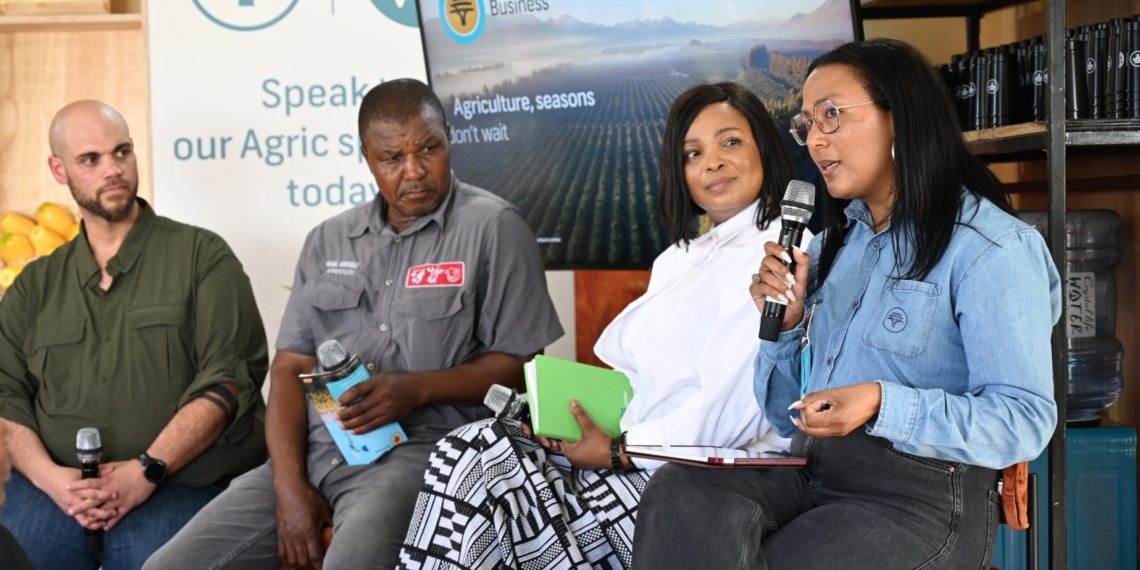
From a farmer who bought his farm by paying with cattle to a wine entrepreneur who built a brand on customer support, a conversation hosted by FNB Business at the Royal Show highlighted why markets, sound management and strong relationships matter in agriculture.
Commercial farming is rarely a journey travelled alone. Behind a successful agricultural business are often years of relationship-building, trusted mentors, reliable markets and the financial discipline needed to turn production into a sustainable enterprise.
That was the message at “Farming together: Collaboration that builds commercial farmers”, a special event hosted this week by FNB Business, in partnership with Food For Mzansi, at the Royal Show in Tweedie, KwaZulu-Natal.
Facilitated by Food For Mzansi’s managing director, Ivor Price, the conversation brought together farmers, entrepreneurs, bankers and industry representatives to explore what it takes to build commercially viable agricultural businesses, secure funding and navigate the challenges of growth.

For FNB, the discussion reflected the importance of building lasting relationships with agricultural clients rather than treating finance as a once-off transaction.
Greg Farris, FNB’s agricultural head in KwaZulu-Natal, said agriculture accounts for roughly a third of the bank’s overall lending book. In the province, he estimated that FNB serves between 45% and 47% of farmers.
“Our aim is to grow our bank and our brand in the same way we want to help you grow your businesses and collaborate with you,” he told attendees.
Farris said FNB’s agricultural specialists work across a wide range of commodities, from sugar cane and timber to livestock and aquaculture. The bank also relies on industry associations and other agricultural organisations to strengthen its understanding of the sector and help clients prepare for challenges such as animal disease and changing weather conditions.

A farm bought with cattle, not cash
One of the day’s most compelling stories came from commercial farmer Shakes Shabalala, who farms near Ladysmith and on Bergvliet farm near Dundee. His journey demonstrated how determination, diversification and a trusted commercial relationship helped him secure ownership of his own farm.
Related stories
- Royal Show: FNB brings farmers together to talk collaboration
- Four steps to formalise your farm and unlock finance
- The business of farming: How to make your farm bankable
After 28 years in the defence force, Shabalala left in May 2017 to pursue his passion for agriculture. He initially farmed livestock on leased land, building his operation from a small herd before expanding into commercial weaner production.
His breakthrough came through a relationship with established commercial farmer Ashley Jacobs, who offered him a supply opportunity. The two formalised their arrangement, and Shabalala secured a contract to supply 100 weaners in 2020.
When Shabalala identified a farm he wanted to buy in 2021, however, his applications for bank finance were unsuccessful because his financial records were not up to date.
Rather than abandon the plan, he approached Jacobs, using his track record as a supplier and the income generated from cattle sales to negotiate a deal.
The arrangement allowed Shabalala to pay for the farm through successive deliveries of weaners. He paid a R500 000 deposit and continued settling the balance through livestock supplied over subsequent production cycles.
The farm was eventually paid off, and ownership transferred to Shabalala.
But he stressed that the journey required more than cattle sales. To manage cash flow and support his family, he diversified into goats, sheep and poultry, while his son developed a vegetable operation supplying spinach to Boxer.
His wife and children are also involved in the family’s agricultural cooperative.
“It’s difficult, but we’re managing,” he said, describing how the different enterprises contribute to the household and the farm’s financial resilience.
His experience illustrated a central theme of the discussion: commercial relationships can create opportunities that traditional funding channels may not immediately offer.

The three Ms of funding readiness
For Janis Robson, FNB’s head of development and SME business development, the fundamentals of a finance-ready agricultural business can be distilled into three words: market, management and money.
Banks need to understand not only what a farmer produces, but also whether the business has a credible route to market, sound financial systems and the ability to manage risk.
“Success is increasingly, in my view, determined by who can manage margins and cash flow,” she said.
Robson highlighted the importance of accurate financial statements, budgeting, cash-flow forecasting and stress-testing business plans against possible setbacks.
In agriculture, expenditure often comes long before revenue. Farmers must pay for inputs, labour, equipment and other operating costs before their products are sold and income is received.
A credible marketing and distribution plan, supported where possible by off-take agreements, can help demonstrate that a business has a viable market for its production.
Robson encouraged farmers approaching a bank to be transparent about their financial needs, the challenges facing their operations and the measures they have put in place to manage risks such as weather, rising input costs and fluctuating interest rates.
The discussion also highlighted the importance of maintaining relationships with financial institutions before funding is urgently needed.

Bertram July, FNB’s distribution sales lead, said a setback or unsuccessful funding application should not necessarily end the relationship.
“Relationships don’t start the day we need something,” he said, encouraging farmers to engage with their bankers, agricultural associations and study groups well before they require assistance.
Opening doors for women and young entrepreneurs
The conversation also explored how the agricultural sector can widen access to commercial opportunities for women and young entrepreneurs.
Robson outlined FNB’s funding facility for qualifying women-led agricultural businesses that are ready to grow. The criteria she described include annual turnover of between R3 million and R60 million, at least three years of trading history and demonstrated profitability, alongside specified ownership or board representation requirements.
The facility offers qualifying applicants an agricultural term loan, with pricing from prime less one percentage point, subject to approval and applicable terms and conditions. Robson stressed that it is a loan, not a grant, and is intended for established businesses with growth potential.

Entrepreneur Sandy Gumede, co-founder of Zulu Girl Wines, offered a complementary perspective on building a business without an established financial or entrepreneurial network.
The wine brand was self-funded when it began during the Covid-19 pandemic. Its first customers became important believers in the business, helping establish a brand in an industry where Gumede said female and black entrepreneurs remain underrepresented.
She also highlighted a lesson many growing businesses learn the hard way: sales do not automatically translate into cash in the bank.
For entrepreneurs, managing cash flow and seeking advice from people with relevant expertise can be just as important as generating demand for a product.
Meanwhile, Sandy La Marque, CEO of Kwanalu, shared the impact of the organisation’s Women, Youth and Rural Entrepreneurship (WIRE) programme. She said its initiatives had trained more than 7 600 farmers, facilitated 750 practical placements on farms and supported the growth of more than 6 000 businesses.
The programme’s impact on the rural economy had exceeded R1 billion, according to independently monitored and evaluated figures she presented.
La Marque noted the importance of practical mentorship, financial literacy and collective action in helping rural entrepreneurs build sustainable businesses.
Collaboration that creates commercial value
The discussion closed with a message that extended beyond access to finance: farmers need relationships that help them build stronger businesses over time.
From Shabalala’s livestock supply agreement to Gumede’s customer-led growth, the examples showed how commercial opportunities often emerge when entrepreneurs build trust, demonstrate their commitment and surround themselves with the right support.
For new-era farmers, the lesson is to treat farming as a business from the outset. That means understanding the market, keeping reliable records, managing cash flow and building relationships before the need for finance becomes urgent.
For established businesses, it means recognising that the next generation of commercial farmers needs more than capital. It needs access to markets, mentorship, practical knowledge and networks that can help turn potential into lasting enterprise.
Ultimately, farming together is not simply about offering a helping hand. It is about building relationships that deliver commercial value, strengthen rural economies and create opportunities for more South Africans to participate meaningfully in agriculture.
READ NEXT: Agricultural Writers SA North honours top farmers, stakeholders