Imagine a world where fresh vegetables and herbs sprout in the heart of our cities without the need for sprawling farms.
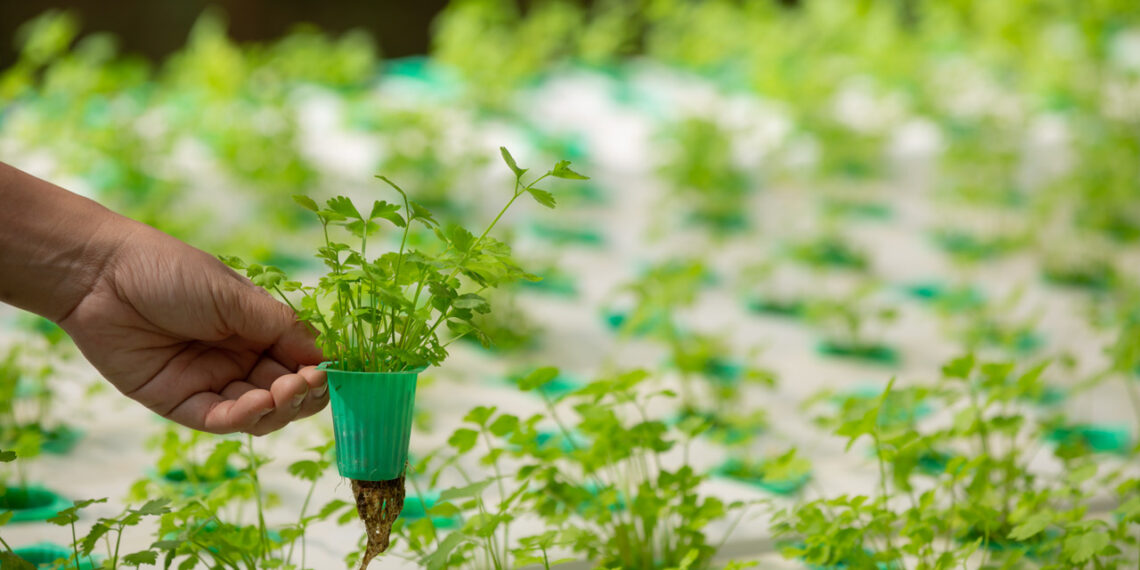
Hydroponics – a method of growing plants without soil – uses a nutrient-rich water solution instead of earth and is useful in areas where soil quality is poor, land is frequently flooded, water supply is unreliable, or there simply isn’t enough space.
Hydroponically cultivated plants use 90% less water than soil-based agriculture. They grow upwards in stacked layers and occupy 99% less land.
Some hydroponic crops can yield ten times more produce compared to traditional cultivation methods, depending on crop type and the scale and design of the system.
Hydroponic farming has great potential in cities that are grappling with rapid urbanisation, limited green spaces, and climate change. These problems make traditional farming methods increasingly unsustainable.
In South Africa’s low-income areas, people find accessing fresh, nutritious food difficult. Hydroponics could offer a modern, urban farming solution. Because they don’t need soil, hydroponic systems can be set up on rooftops, in disused urban spaces like abandoned warehouses, parking lots and railway lines.
This is already happening in Johannesburg’s city centre. In the US, urban vertical farms contribute significantly to local food production. In India, research found that hydroponics could improve food security and nutrition if farmers were trained and governments adopted supportive policies.
Related stories
- Podcast: Explore soilless farming with hydroponics
- Hydroponics beginner’s guide: Grow more crops in less space
- This #SoilSista builds a future in hydroponics
- Hydroponics: Here’s what you need to know
I’m an urban geographer and research the ways in which impoverished communities in cities create livelihoods and food systems.
Together with research assistant Busisiwe Miya Noxolo, I interviewed 20 farmers to find out if hydroponic farming could be a useful way of creating food security in Cape Town. These hydroponic farmers had all received training six months earlier at the Handpicked City Farm, a non-profit hydroponic project.

My research found that hydroponic farming works well in water-scarce cities with densely populated urban areas, like Cape Town. But the high initial cost of setting up the system (equipment, nutrients, and infrastructure) is a problem. Without reliable electricity and water supplies, it will also be difficult to maintain the controlled conditions hydroponics require.
My research found that the full potential of hydroponics in Cape Town will only be realised if the technology is made affordable and training is provided. Hydroponic farming also has to be included in city planning and supported over the long term.
Water scarcity
Cape Town is a city of stark contrasts. Affluent suburbs exist alongside working-class and impoverished communities where unemployment is high.
The hydroponic farmers I interviewed all came from Langa, one of Cape Town’s oldest Black working-class communities (locally known as townships). Established during apartheid for manual labourers, Langa remains one of the most under-resourced areas in the city. Many households in Langa depend on informal food networks (borrowing and sharing food and buying from small vendors), government grants, and irregular income from casual work to meet their nutritional needs.
Cape Town is water scarce and has previously experienced droughts of up to three years long. Low-income areas like Langa have weak infrastructure and inconsistent service delivery. The scarcity of water means soil-based agriculture is not always feasible.
Benefits of hydroponic farming
Hydroponic farming happens in a controlled environment where plants are fed exactly what they need to grow. This reduces the risk of crop failure.
The farmers I interviewed said hydroponic farming gave them a high degree of control over plant nutrition and growth conditions. This led to more consistent and reliable crop production than traditional farming, where crops depend on unpredictable weather conditions and soil quality.
They also welcomed being able to farm all year round. They were not affected by the changing seasons because hydroponic systems are housed in controlled environments where temperature, humidity and light can be regulated.
Some farmers I interviewed benefited from using less water for their crops:
I water my plants once every two days, depending on the weather conditions.
The farmers added that their crops grew faster and better when they farmed hydroponically. Within six months, they successfully cultivated lettuce, spinach, spring onion, tomatoes, a range of herbs such as basil, thyme, and mint, as well as edible and ornamental flowers like nasturtium and marigold.

Costs and training
My research found that the main challenges were high start-up costs, specialised equipment needs, and ongoing expenses for nutrients and maintenance. A lack of local support and training for hydroponic farmers is another obstacle to getting started.
Hydroponics is an excellent way of growing small, fast-growing crops like lettuce and herbs. But it is less suitable for growing South Africa’s larger staple crops like maize. The most common crops the farmers wanted to grow included large vegetables like maize, butternut and pumpkin. Other crops included spinach, beetroot, peas, beans, tomatoes, mangoes and granadillas.
However, one farmer I interviewed used hydroponics to grow seedlings for staple crops that he planted in soil. This hybrid approach – combining hydroponics with traditional farming – can meet the needs for different crops. This also shows that hydroponics alone cannot solve urban food security.
What needs to happen next
For hydroponics to realise its full potential in Cape Town, these efforts are required from policymakers, community organisations and the private sector:
- Make hydroponics affordable – the government could subsidise the cost of hydroponic systems, and offer low-interest loans to farmers to get started. Community-based projects could be set up for farmers to share equipment.
- Offer training and education – urban farmers need to be equipped with the knowledge and skills required to operate these systems efficiently and sustainably.
- Local government should make hydroponics part of urban planning – this means setting aside space for urban farming. It also means supporting the development of rooftop gardens and community greenhouses.
- Governments, non-governmental organisations and private companies should partner to make sure that hydroponic farmers in working-class communities have access to new technology and other forms of support.
*This article was first published by The Conversation, and written by Tinashe P. Kanosvamhira, research fellow at the University of the Western Cape.
READ NEXT: Hydroponics: Experts outline do’s and don’ts