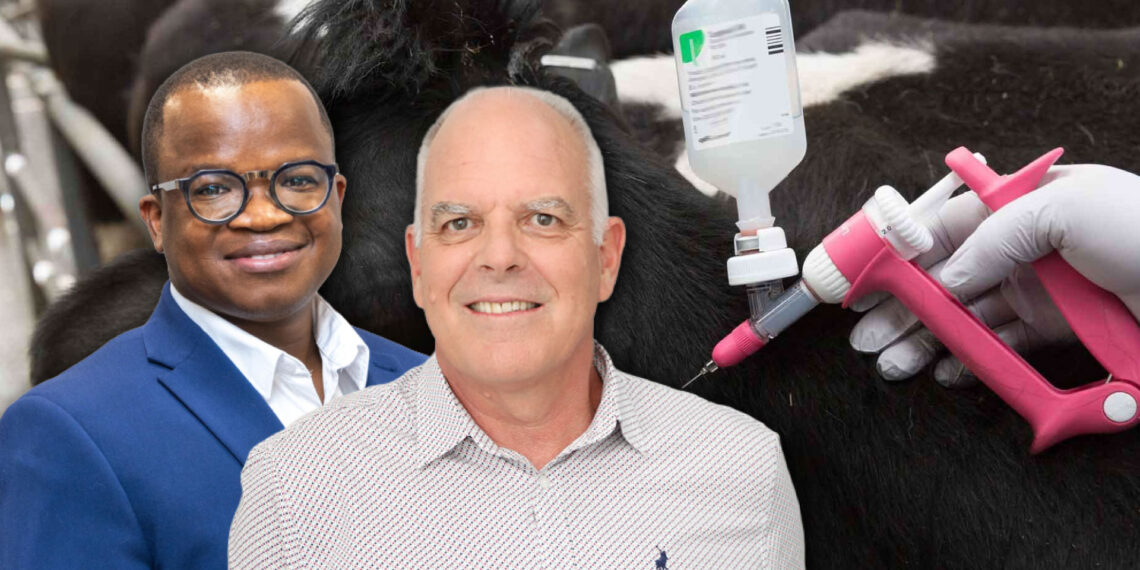
As frustration mounts among farmers, experts urge calm and cooperation in tackling FMD. Agricultural economists Johann Kirsten and Wandile Sihlobo emphasise that only scientifically grounded, state-regulated vaccination aligned with global standards can protect South Africa’s livestock industry and help reclaim its FMD-free status.
The foot-and-mouth disease (FMD) amongst cattle in South Africa has spread aggressively since 2019, affecting eight of the country’s nine provinces and severely disrupting the commercial livestock value chain in many areas.
The disease will result in lost gross production value and also impacting on animal welfare. The emotional toll on livestock and dairy producers is massive. Many producers will face financial disaster. It is therefore no wonder the industry role players and farmers are up in arms and very angry.
This is well understood, but what is worrying is that everybody seems to be a sudden expert in the disease, while there are only a few experts and veterinarians in South Africa who have dealt with previous outbreaks of FMD successfully. We have sat down with one expert, Dr Gideon Brückner, to get his views on the current mudslinging and accusations being thrown around.
Requirements for FMD-free status
He immediately drew our attention to the rules and guidelines of the World Organisation for Animal Health (WOAH) on the treatment of FMD. South Africa is a signatory to this agreement and must comply with the rules if it ever wants to get its FMD-free status back again. (Dr Brückner was also the head of the WOAH for many years after completing years of service as the director of veterinary services in the department of agriculture).
He agrees totally with the decision by the state to control vaccine production and imports. Minister John Steenhuisen is absolutely right in doing this. There is more than enough support for it in the WOAH international standards of which SA is a member, as well as in the Animal Diseases Act of 1984.
There are, therefore, more than enough aspects from international agreements that go against the unsubstantiated claims made by Sakeliga and Saai.
The essence of the argument is that there is no objection if private veterinarians assist with the vaccination, but the procurement of vaccines and
monitoring of where, what and how many animals have been vaccinated must be strictly monitored by the state to maintain its reputation and standards internationally, if the plan is to, after the waiting period is over, to apply again for South Africa to be declared free of foot-and-mouth disease with vaccination by the WOAH.
If there is no order and no controlled processes, we will never get that important status back again, and our export markets for red meat will remain closed! More importantly, however, if poorly inactivated vaccines are purchased by anybody, it can introduce unwanted FMD viruses that could cause more than a national disaster.
This is because all split-hoofed animals in South Africa (including wildlife) are naïve to any other FMD virus except the SAT 1,2, and 3 strains and thus all highly susceptible. In particular, the O strain that is not present here and can cause chaos because it is a highly virulent virus that is highly contagious and is also very pathogenic in pigs (this is the same virus that was illegally introduced into KZN in 2001 and that we were able to eradicate quickly through total slaughter).
WOAH guidelines
There are suspicions that it may have already been in the vaccines illegally imported from Kenya. From all the anger expressed on social media, it is clear to us that very few people know about the WOAH’s guidelines on vaccines. We provide some relevant extracts from their guidelines to ensure people can understand that there is some legal merit for the state’s actions:
Chapter 1.1.8 of the WOAH Terrestrial Manual provides clear directions on each government should deal with a disease and the release of vaccines.
Before release of a vaccine for use in a country, relevant regulatory approval must be requested from and be assessed and authorised by the competent authority to ensure compliance with local product regulatory requirements.
Starting materials to be used, manufacturing steps, in-process controls and controls on the finished product before release by a responsible person should be described in the dossier for relevant regulatory approval, as should be the necessary tests to demonstrate quality, safety, and efficacy of the vaccine.
After the relevant regulatory approval has been granted by a competent authority, the industrial production can be launched in a manufacturing site which is authorised by the competent authority in accordance with national requirements and having the relevant equipment, facilities and personnel for production and controls. The manufacturing site should be inspected on a regular basis by experienced official inspectors.
Related stories
- An FMD-free future: Pipe dream or reality?
- Red meat value chain takes centre stage at Agri X Fusion
- Steenhuisen to quit DA top job: What lies ahead for agriculture?
- Agri graduates warned: Choose courses and colleges wisely
A section in the manual specifies clearly how vaccines should be administered:
All veterinary vaccines administered to animals should be tested for field safety and, if feasible, for efficacy in the field, before being authorised for general use. Field studies are designed to demonstrate safety and efficacy under conditions of normal environment, care and use, and should detect unexpected reactions, including mortality that may not have been observed during the development of the product.
Under field conditions there are many uncontrollable variables that make it difficult to obtain good efficacy data, but demonstration of safety is more reliable. The tests should be done on the host animal, at a variety of geographical locations, using appropriate numbers of susceptible animals.
The test animals should represent all the ages and husbandry practices for which the product is indicated; unvaccinated controls must be included. The product tested should be two or more typical production batches/serials. A protocol should be developed indicating the observation methods and the recording methods.
Chapter 3.1.8 of the Terrestrial Manual on FMD vaccines provides further clear direction on strain selection.
Appropriate vaccine strain selection is an important element in the control of FMD and is necessary for the application of vaccination programmes in FMD-affected regions as well as for the establishment and maintenance of vaccine antigen reserves to be used in the event of new FMD incursions.
The decision to change or include new strains in vaccine formulations is a multifaceted process and, among other issues, experimental, epidemiological and field observations should be considered.
Vaccination against one serotype of FMDV does not cross-protect against other serotypes and may also fail to protect fully or at all against other strains of the same serotype.
A national crisis
We finally need to correct the false claims made by many organisations and clarify why the state controls FMD Vaccination First, FMD is a controlled animal disease under the Animal Diseases Act (Act 35 of 1984) and requires the state to act and control. Clause 20 of Act 35 is also of specific relevance in relation to the development and manufacturing of vaccines.
The designation of a disease as a controlled animal disease is because any unregulated vaccination can:
- Mask infection
- Spread virus mechanically
- Undermine surveillance
- Jeopardise WOAH FMD‑free status.
The national strategy stresses that vaccination must be part of a “centrally managed, technically rigorous programme”. Obviously, the poor record of the department of agriculture and its provincial departments in managing the FMD disease and other important matters related to animal biosecurity has played in the hands of the hysteria and the unfounded accusations.
The officials in the department have not done themselves any favour and have, in a way, contributed to the crisis.
As we have highlighted in our book “The Uncomfortable Truth About South Africa’s Agriculture”, the problems with animal biosecurity in South Africa have been compounded by persistent institutional failures, including fragmented governance, weak coordination between national and provincial authorities, and systemic challenges in vaccine production, procurement, and distribution (e.g., cold-chain infrastructure failures and ageing equipment).
The FMD outbreak is a national crisis and will impact all livestock farmers, from the very small livestock keepers to the large feedlots and will have a negative impact on the growth of the industry. It is time that we are responsible and that only the experts talk about vaccine and disease matters.
It is also time that the department, for once and for all, gets their act together and works collaboratively with people that can manufacture, distribute and apply the vaccines.
- Professor Johann Kirsten and Wandile Sihlobo are with the department of agricultural economics at Stellenbosch University. The views and opinions expressed in this article are those of the author and do not necessarily reflect the views or positions of Food For Mzansi.
READ NEXT: Tariffs bite, but SA wine exports show resilience