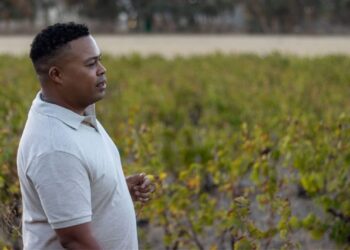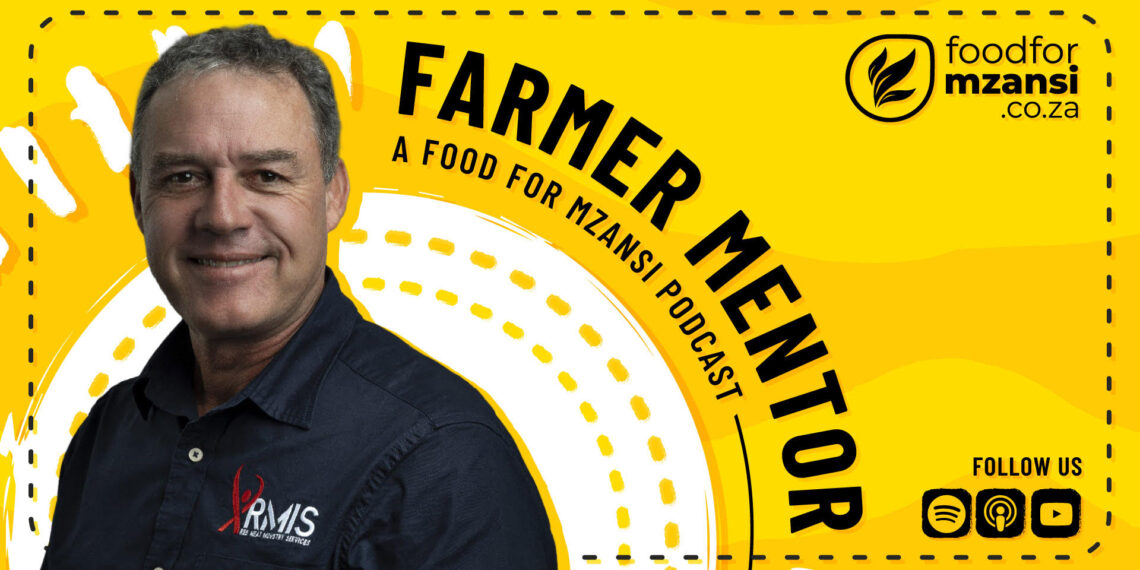
Farming wasn’t Craig Carter’s first career choice, but it became his lifelong purpose. In this episode of our Farmer Mentor series, he shares how he turned a mountainous landscape into a thriving weaner calf production system.
Craig Carter’s journey into farming wasn’t straightforward. Growing up in the small mining town of Danhauser, he initially followed in his father’s footsteps and trained as an electrician after completing his schooling.
Farming had always been a distant dream, one he never imagined would become reality. That changed after he married Chantal, who came from a farming family. When Chantal’s father passed away shortly after their marriage, Carter stepped in to help manage the family farm near Dundee, KwaZulu-Natal, marking the beginning of a 25-year journey in livestock farming.
Carter’s entry into farming was shaped by both opportunity and necessity. The farm land he inherited with his wife was largely mountainous, and the larger-framed Simmentaler cattle from her father’s herd were not well suited to the terrain.
Over time, he adapted by selecting medium-framed breeds such as Bonsmara and Brangus, which thrived under the farm’s conditions.
“I love the Bonsmara animals. We’ve introduced some Brangus as well, just because I love that type of animal. The medium-framed types have done very well for us on our terrain.”
Today, he runs a successful weaner calf production system, supplying both backgrounding systems and feedlots with carefully selected cattle.
Related stories
- Govt steps up FMD fight with mass cattle vaccination plans
- The Beyoncé of cattle: Linda lets her Brahmans do the talking
- Lerato’s legacy: Black sheep becomes broiler queen
- Protect your livestock: Dos and don’ts for the rainy season
Building a sustainable production system
Vertical growth has been central to Carter’s approach. Without access to additional land, he focused on optimising the land he already owned.
“You’ve got to always try to use your land optimally. To clear a hectare of bush is cheaper than buying an extra hectare of land,” he advises. Measures included controlling bush encroachment, establishing pastures, and redesigning camps to improve grazing efficiency.
Carter emphasises the importance of aligning breed with environment, careful selection of heifers, and keeping the family aligned on farm objectives. “It’s a lot of hard work, a lot of passion, a lot of turning over your pennies, and you’ve got to love what you do.”
Droughts, floods, and fluctuating market conditions have all tested his resilience. “Droughts taught me so much about how to adapt, how to just ride out the wave and see what plans can be made,” Carter reflects.
Investing in infrastructure such as boreholes, fencing, and watering systems has been crucial in mitigating the impacts of severe weather, ensuring the farm remains productive even in challenging seasons.
Carter sends weaner calves weighing 180–220 kg to auction, where feedlotters and backgrounding farmers purchase them. In some cases, calves are grown out to 260–280 kg to optimise returns for feedlot buyers.
“You’ve just always got to try and stay outside of the curvature system. When everybody’s selling weaners, you shouldn’t be selling weaners. Then it becomes a supply-and-demand issue.”
He stresses the importance of understanding market timing, noting that advice from experienced mentors can be invaluable in maximising profitability.
Passion, faith, and legacy
For Carter, farming is more than a business; it is a calling. His guiding principle is the stewardship of the land, ensuring that the farm is productive, sustainable, and a learning platform for future generations.
He emphasises passion, faith, and gratitude as essential traits for any farmer. “If you go into any business chasing money, it’ll run from you. Walk in with faith, passion, and gratitude, and you’ll endure the highs and lows,” he advises.
His ultimate goal is to leave behind a legacy of good stewardship and inspiration for young farmers. “We are stewards; we should be good stewards of the land. If we are, many things will come our way. That is the legacy I want to leave, for young farmers to see that I cared for the land and animals.”
Beyond his own farm, Carter has been actively involved in organised agriculture and development initiatives, including work with the RMIS and co-operative Genex in South Africa. Through mentoring and guidance, he continues to support new-era farmers, reinforcing the importance of collaboration, knowledge-sharing, and passion in building a stronger agricultural sector.
READ NEXT: Agbiz outlines outlook for grain and fruit industries