Wednesday, April 15, 2026
SUBSCRIBE
21 GLOBAL MEDIA AWARDS
Food For Mzansi
  • News
  • Changemakers
  • Lifestyle
  • Farmer’s Inside Track
  • Food for Thought
No Result
View All Result
  • News
  • Changemakers
  • Lifestyle
  • Farmer’s Inside Track
  • Food for Thought
No Result
View All Result
Food For Mzansi
No Result
View All Result
in Inspiration

Hardy goats and hard work are Njabulo’s recipe for success

Njabulo Ngema’s dedication to livestock farming began as a boy, inspired by his grandfather’s goats. He started small, using a stokvel to fund his 30 pregnant ewes. Today, his Philinjabulo Business Enterprise focuses on hardy Savannah, Boer, and Kalahari Red goats

by Vateka Halile
19th December 2025
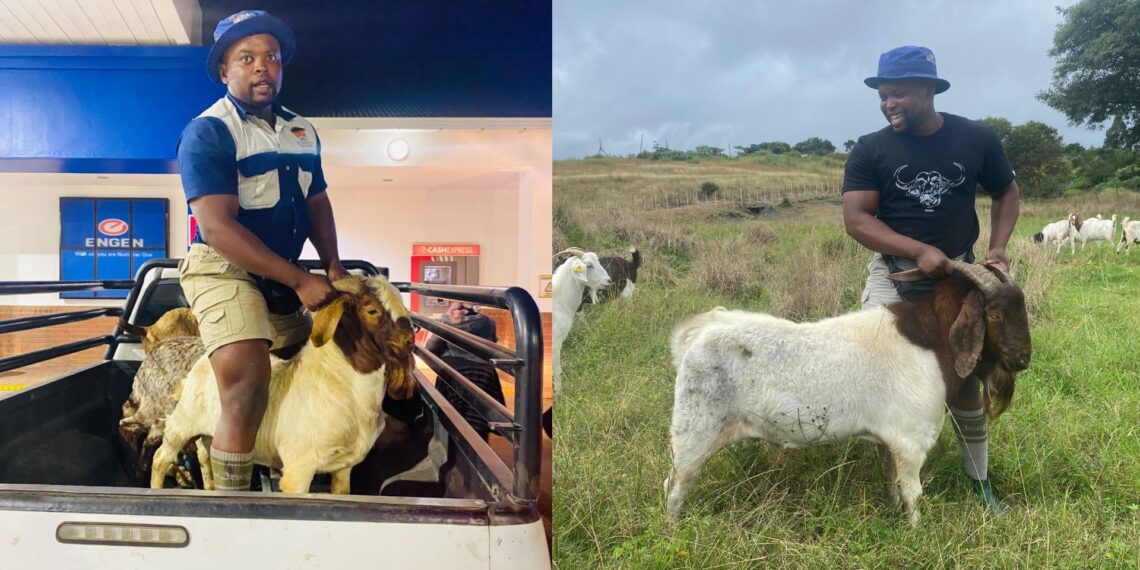
Nothing beats the joy a farmer feels when sales start coming in from their own farm. Inspired by his late mother and grandfather, Njabulo Ngema built a thriving goat farming enterprise in Vryheid, KwaZulu-Natal. Photos: Supplied/Food For Mzansi

Nothing beats the joy a farmer feels when sales start coming in from their own farm. Inspired by his late mother and grandfather, Njabulo Ngema built a thriving goat farming enterprise in Vryheid, KwaZulu-Natal. Photos: Supplied/Food For Mzansi

Share on FacebookShare on TwitterShare on WhatsApp

Njabulo Ngema’s dedication to livestock farming began as a boy, inspired by his grandfather’s goats. Today, his Philinjabulo Business Enterprise, focusing on hardy Savannah, Boer, and Kalahari Red goats, not just pays the bills but also pays homage to his roots. 

Ngema had to grow up quickly, learning independence from a young age. Losing his mother as a child made that independence even more necessary, but her lessons stayed with him, shaping the person he would become. 

His love for animals was constant. That childhood passion grew into a commitment to livestock farming, guiding him as he hones his skills, builds his name, and contributes to his community in Vryheid, KwaZulu-Natal.

Nurturing a love for animals

Having multiple homes is something many people experience growing up. For Ngema, this meant moving between suburban Claremont in north KwaZulu-Natal and the rural life of his grandmother Margaret Ngema’s home in Vryheid. 

His grandfather, Milton, farmed goats, and watching him care for them left a lasting impression, teaching Ngema patience and dedication.

When he lost his mother in 2017, his world was shaken, but he was supported by his family, including his aunt, who encouraged his growing passion for animals.

“Life changed for me when I lost my mom in 2017, and I had to relocate to Vryheid. That move exposed me to rural life full-time. My aunt Nomxolisi Ngema sent me to college because she said it would help me better understand farming. I have loved animals since I was a child,” he shares.  
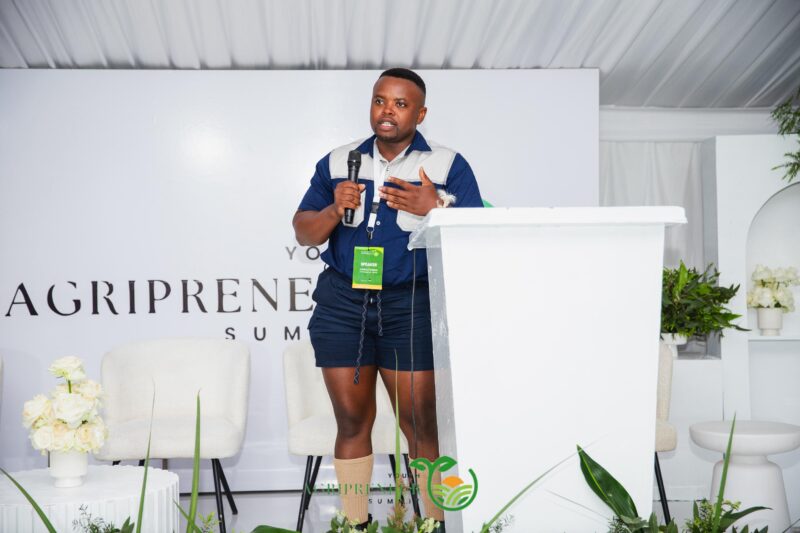
Njabulo Ngema says showing up and representing your brand is powerful marketing on its own. Photo: Supplied Food For Mzansi

Ngema studied farming management at Mthashana TVET College in Ulundi from 2018 to 2019. 


Related stories
  • A new breed of farmer: Mmadipilo blends Brahmans and tourism
  • Tshwagong: Raising Brahmans, building dreams, feeding Mzansi
  • Goat farming: Key steps to get you started and grow
  • Why Kalahari Red goats are winning over SA farmers

Goats that grow dreams

In 2020, Ngema completed his practical training at Ncome Correctional Services in Vryheid, where he gained hands-on experience in piggery, beef production, crop production, tractor driving and basic production workshops.

These skills, he says, have helped him prevent losses by knowing which diseases are common, when to vaccinate, and how to spot early symptoms before an outbreak occurs. 

“It was an eye-opener. The theoretical knowledge guided me in the right direction for planning and management.”

While doing his practical training, Ngema started a stokvel, which later helped him launch his business, Philinjabulo Business Enterprise. His gogo also contributed funds.

He started with 30 goats, mainly Savannah, Boer and Kalahari Red. Ngema explains that 28 of the females were pregnant, and he bought two rams, one large and one small. Each pregnant female cost R4 000, the large ram cost R1 000, and the smaller one was R500. 
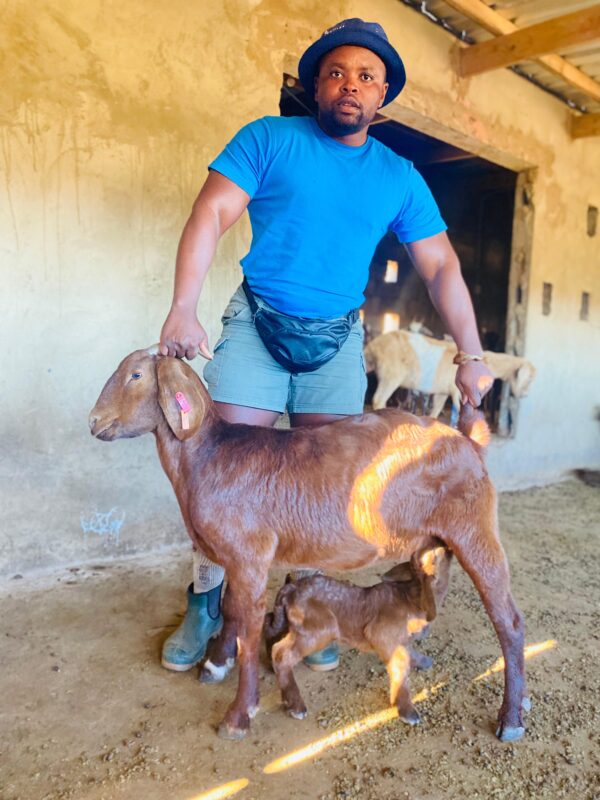
Njabulo Ngema says taking time to understand the climate of your farming region can help avoid major losses. Photo: Supplied/Food For Mzansi

He notes that Savannahs are good for meat production, just like Kalahari Reds, and both breeds are hardy.

“They are in demand for slaughter, especially in December when people host traditional ceremonies such as weddings and umembeso.” 

He adds that Savannah goats are also sought after by traditional healers because white goats without spots are rare.

Ngema continues to receive strong support through word of mouth from his community in Nkande Reserve, as well as from Emondlo, Kingsley, Nquthu and surrounding areas.

Looking after his herd’s health

Although his goats graze on communal land, Ngema says his nephew ensures they return home on time. “They go out to graze in the field and come back at 4 pm,” he adds. 

Immediately upon their return, each goat is given a ration of pellets with crushed maize for trace minerals. 

Ngema emphasises that, alongside feeding, keeping up with vaccinations and general care is key to goat farming. His livestock routine includes providing mineral blocks, dipping animals for ticks, and giving the right feed for optimum performance. 

He explains that in autumn and winter, the routine remains the same, but the feed changes; they receive lucerne bales. Pregnant goats are given a specially formulated feed along with crushed maize. “What I enjoy most is taking care of livestock, mixing animals to crossbreed, and improving genetics,” he says.

He vaccinates all his goats according to age and season. Regarding deworming, Ngema says he treats young animals every 6–8 weeks and then deworms the others as necessary.
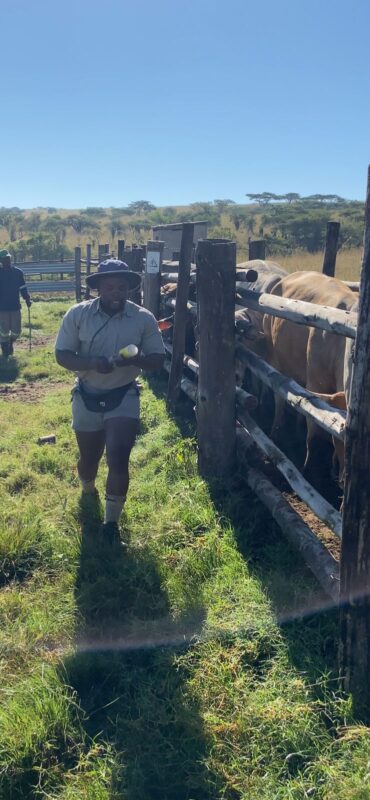
Njabulo Ngema says he picks up a lot by learning from other farmers. Photo: Supplied/Food For Mzansi

Future in the making

Ngema tells Food For Mzansi that even people with 9-to-5 jobs are struggling financially, so starting something on the side is important. 

“Have a solid plan with projections to minimise unfavourable outcomes,” he advises. “You must be disciplined with money. This is not a 100 metre race but a marathon, so patience is needed.”

He hopes that his Philinjabulo Business Enterprise will one day supply packaged meat, fresh and dried, to shisanyama spots and local restaurants.

“If I could get funding, I would venture into agro-processing by setting up my own feedlot and abattoir for beef cattle.”

But for now, he looks after his herd and immerses himself in the joys of goat farming.

READ NEXT: Ditlopo builds future with Boer goats and Brahmans

Sign-up for the latest agricultural news delivered straight to your inbox every day with Mzansi Today!

Vateka Halile

Vateka Halile grew up in rural areas of Cofimvaba in the Eastern Cape. She was raised in a traditional family setting and found writing to be a source of comfort and escape. Vateka participated in an online citizen journalism course through Food For Mzansi, and her passion for health and medicine-related stories was born. Her dedication to community work and love for social justice and solidarity spaces is evident in her quality time with the community when she isn't working.

Tags: Commercialising farmerGoat farmingInspire meKwaZulu-Natal

Related Posts

100 ha of hope: Aphiwe revives family farming legacy in Engcobo

100 ha of hope: Aphiwe revives family farming legacy in Engcobo

13th April 2026
Poultry and potatoes power Fort Hare graduate’s farming vision

Poultry and potatoes power Fort Hare graduate’s farming vision

10th April 2026

Big dreams on his ‘Tiny Farm’: Setjhaba’s 300-hectare success

Jobless to boss: Sihle Petela grows jobs and crops in Mthatha

Sabelani Co-op gives Bongani Nkosi purpose and a future

Dignity in the vineyards: How DONUTS wine changed SA farms

Agrolimo Farms: Tebogo turns schoolyards into Soweto’s pantry

Bongeka’s backyard business grows from 100 to 3000 broilers

Rooibos cosmetics offer growth path for agripreneurs
Lifestyle

Rooibos cosmetics offer growth path for agripreneurs

by Vateka Halile
11th April 2026

Rooibos isn’t just for tea anymore. South African agripreneurs are tapping into its antioxidant power to create skincare products with...

Read moreDetails

Rainbow expert shares blueprint for poultry farming success

11th April 2026
Poultry and potatoes power Fort Hare graduate’s farming vision

Poultry and potatoes power Fort Hare graduate’s farming vision

10th April 2026
The business of farming: How to make your farm bankable

The business of farming: How to make your farm bankable

10th April 2026
Western Cape pledges R22m for drought-hit livestock farmers

Western Cape pledges R22m for drought-hit livestock farmers

10th April 2026

EC agripreneur turns pineapple waste into sanitary products

Agri leaders urge farmers to think beyond production

No market access, no future: The heavy cost of FMD

Sugar industry hopeful as phase 2 of master plan launches

Rooibos cosmetics offer growth path for agripreneurs

Join Food For Mzansi's WhatsApp channel for the latest updates!

JOIN NOW!
Next Post
Drones to data: Africa’s food future lies in smart systems

Drones to data: Africa’s food future lies in smart systems

THE NEW FACE OF SOUTH AFRICAN AGRICULTURE

With 21 global awards in the first six years of its existence, Food For Mzansi is much more than an agriculture publication. It is a movement, unashamedly saluting the unsung heroes of South African agriculture. We believe in the power of agriculture to promote nation building and social cohesion by telling stories that are often overlooked by broader society.

AgriTrends: SA farmers adapt as global shocks reshape agriculture

Every drop counts: Managing precision irrigation for export citrus

Four lessons from Colombia to fix South Africa’s land reform

Sugar industry hopeful as phase 2 of master plan launches

100 ha of hope: Aphiwe revives family farming legacy in Engcobo

Didiza calls for radical shift in youth land access and finance

  • Awards & Global Impact
  • Our Story
  • Contact Us
  • Cookie Policy
  • Privacy Policy
  • Copyright

Contact us
Office: +27 21 879 1824
News: info@foodformzansi.co.za
Advertising: sales@foodformzansi.co.za

Contact us
Office: +27 21 879 1824
News: info@foodformzansi.co.za
Advertising: sales@foodformzansi.co.za

  • Awards & Global Impact
  • Our Story
  • Contact Us
  • Cookie Policy
  • Privacy Policy
  • Copyright
No Result
View All Result
  • News
  • Changemakers
  • Lifestyle
  • Farmer’s Inside Track
  • Food for Thought

Copyright © 2024 Food for Mzansi

This website uses cookies. By continuing to use this website you are giving consent to cookies being used. Visit our Privacy and Cookie Policy.