Linda Mthalane knew the odds were stacked against her when she started farming cattle. She was young, a woman, and had spent most of her life working in the corridors of a four-star hotel.
On top of that, she had married into a deeply traditional family where cattle farming was long considered a man’s domain. What could she possibly know about handling large animals, performing vaccinations, dehorning, or negotiating livestock sales? The village whispered.
Today, as the director of Nkonyane Yenkosi Farming (Pty) Ltd, she has built a brand trusted among feedlots and buyers alike. Her Simbra and Brahman cattle fetch top prices purely based on her reputation.
“I didn’t think that there was space for me in the farming world. I didn’t think that there was anything I could add to the business,” she says, referring to the communal farming business her husband, Bonginkosi Nkosi, owned.
“I was terribly wrong,” she says, bursting into laughter.
Nkonyane Yenkosi Farming is home to approximately 200 breeding cattle, where Mthalane oversees all aspects of the farm’s operations. She admits making a few expensive mistakes along the way, but wouldn’t have it any other way.
“I remember not sticking to our vaccination plan as strictly as I should have. We lost eight pregnant mothers. We bought them for R25 000 each. It was an expensive mistake, but it was a mistake that will never happen again,” she says with conviction.

The numbers were numbering…
Originally from Durban, KwaZulu-Natal, Mthalane moved to Dundee after a 10-year career in the corporate hospitality sector. After marrying her husband, she invested her savings into the family farm following the impact of Covid-19 on her previous career.
“I really enjoyed what I was doing. I was part of management… and then 2019 came. And gosh, everything changed. All of our hotels were closed down. Our hotel only had a skeleton staff.”
During this time, Mthalane and her husband frequently visited cattle auctions.
Related stories
- Debt-free farming: Saunderson’s path to feedlot prosperity
- Farming in the fast lane: Tshilidzi races ahead in dairy
- Limpopo communal farmer reaps crossbreeding success
“One day, we drove past an auction. Curious, we stopped to watch. The entire drive home was silent. We couldn’t believe what we’d seen. Was that really the price animals fetch?”
With over 60 cattle waiting back home, the Mthalane’s started making calculations. “Haybo, imali engaka? We started doing the math. And the numbers were numbering.”
It was enough to convince her to go into farming.
A brand that outshines the competition
The shift required a total lifestyle change. After doing their research, the couple threw everything at it and identified land to buy. “But then we realised we couldn’t do both at the same time. We sold almost all our animals in order to meet the payments for the farm.”
They secured the farm and started with just eight cattle, selling a few occasionally to make ends meet and repair fencing. “We lived modestly but managed. We even sold my car and one of the two he had at the time,” she shares.
The hard work and sacrifice paid off for Mthalane, selling her cattle at auction markets.
“Bidders stand on their feet to compete for our animals.”
She credits her hospitality background for their success, adding they’ve heavily invested in building their business brand.
“We make sure that the name of the business is more important than our names. The purpose is not for us to shine, but for the business to stand alone, so that our children can also carry on from where we left off.”
Mthalane says the Metropolitan Collective Shapers programme helped her shape a brand that speaks for itself, adding that some feedlots now come directly to her, bypassing auctions and middlemen.

The Beyoncé of cattle
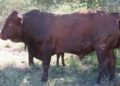
Having a strong brand is only part of their success. High-quality cattle is what truly matters at the end of the day, Mthalane believes. In her region, she is one of the very few farmers breeding Simbra cattle, a hybrid between Simmentaler and Brahman cattle. She also breeds pure Brahmans.
A strong brand helps, but Mthalane believes quality cattle matter most. “I’m telling you, if you had to see my white Brahmans, the Beyoncé of all cattle, they are absolutely gorgeous,” she shares.
“When they go into the ring at the auction, the bidders stand on their feet to compete for our animals.”
However, if you want your Brahman to be the Beyoncé of the auction ring, you have to invest in them, she advises. That means proper feeding, vaccinations, care, and dehorning. They need to shine and look their best.
“Brahmans are heavier and yield more meat per carcass, which gives us an advantage. When we take them to auction, they often bring in more than other breeds.”

Stay humble, keep learning
Mthalane says getting here has been far from easy. There were many challenges in the beginning, especially as a woman from the city stepping into a rural, male-dominated space.
“In this area, men often don’t believe women belong in farming. I remember asking a worker to show me how to drive the tractor. He was so uncomfortable, he left and never returned that day, later telling my husband he wouldn’t be caught on a tractor sitting so close to a woman, let alone teach her.”
There were also cultural barriers. In a traditional Zulu household, women aren’t even allowed near the kraal, as it’s considered a sacred space for ancestors.
“My husband had to build a separate kraal. One for ancestral observance and another commercial kraal where I could work.”
Even outside the farm, it was tough. At auctions or association meetings, it felt to Mthalane like a boys’ club. “I struggled to find my voice.”
“I have found my voice. But I think it was important for my work to speak for itself first.”
In her success, Mthalane remains teachable, always asking questions when she is unsure.
“Be teachable and don’t rush. I know the excitement of a new idea makes you want everything to happen now, but farming takes time. It’s not a quick-win industry,” she advises.
Mthalane encourages farmers to start where they are. Not every journey begins with owning land. Some start with leasing, borrowing space, or working on just one hectare. And that’s okay, she says.
“Most importantly, stay humble and open. Learn from everyone, including your herdsman, the old man down the road with decades of experience. The moment you think you know it all, you stop growing.”
READ NEXT: Protect your farm: Legal landmines you can’t afford to ignore
Sign up for Mzansi Today: Your daily take on the news and happenings from the agriculture value chain.