Tuesday, November 24, 2026
SUBSCRIBE
22 GLOBAL MEDIA AWARDS
Food For Mzansi
  • News
  • Changemakers
  • Lifestyle
  • Farmer’s Inside Track
  • Food for Thought
No Result
View All Result
  • News
  • Changemakers
  • Lifestyle
  • Farmer’s Inside Track
  • Food for Thought
No Result
View All Result
Food For Mzansi
No Result
View All Result
in Climate Change

Climate change: What is South Africa’s role?

The message on climate change is clear: 'Every country must be part of the solution,' says UN secretary-general António Guterres. The latest IPCC’s Synthesis Report on climate change is a wake-up call for South Africa where fossil fuels are still widely used

by Staff Reporter
23rd April 2023
Add FFM on Google
Climate change: What is South Africa’s role?

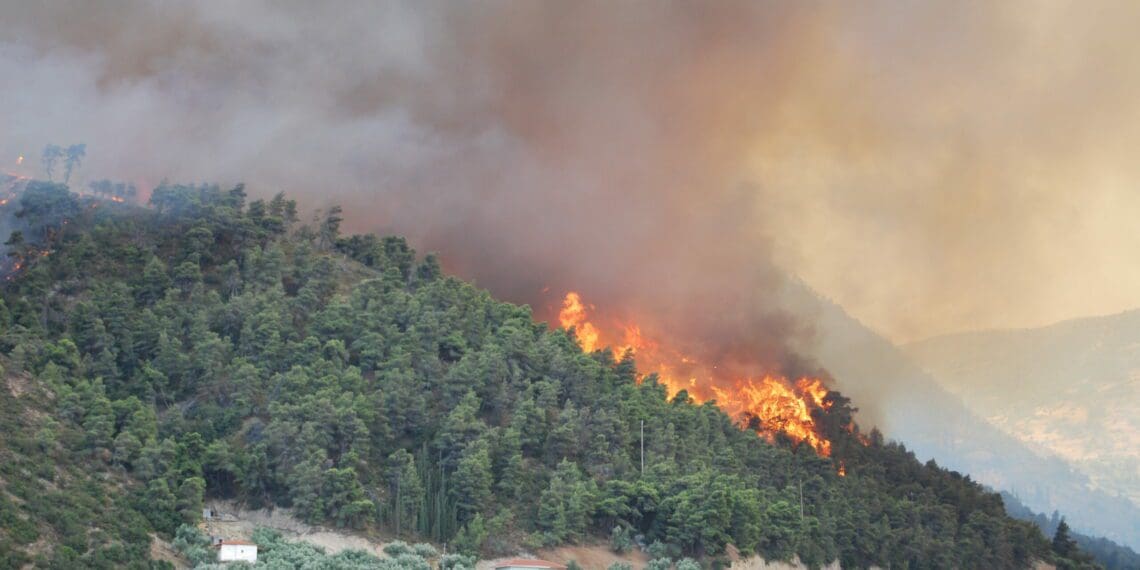
The latest IPCC’s Synthesis Report on climate change is a wake-up call for South Africa where fossil fuels are still widely used. Photo: Lotus R

Share on FacebookShare on TwitterShare on WhatsApp

Time is running out to limit runaway and irreversible damage, say scientists in the latest IPCC’s Synthesis Report. Every country must be part of the climate change solution, including South Africa, reports the Green Economy Journal.


The world’s leading scientists have delivered a “final warning” on the state of the planet, as climate pollution continues to soar and populations suffer escalating heat and weather extremes.

The IPCC’s Synthesis Report draws together key findings of the preceding three main sections, providing a comprehensive review of global knowledge of the climate. “There are multiple, feasible and effective options to reduce greenhouse gas emissions and adapt to human-caused climate change, and they are available now,” explain the scientists. However, time is running out to limit runaway and irreversible damage, they warn. 

Responding to the report, UN Secretary-General António Guterres said: “The climate time bomb is ticking. But today’s IPCC report is a how-to guide to defuse the climate time bomb. It is a survival guide for humanity. As it shows, the 1.5°C limit is achievable. But it will take a quantum leap in climate action.”

Every country and every sector must now “massively fast-track” climate efforts to rise to the scale of the challenge ahead, he added.

Act now to halt an escalating crisis

Nearly half the world’s population is living in the danger zone of climate impacts, and Africa is a hotspot of vulnerability to climate extremes. Already, unpredictable weather is driving famine, disease and poverty and inhibiting progress toward human well-being. And in the absence of rapid, deep and sustained climate mitigation and adaptation actions, losses and damages will continue to escalate across the continent, states the report.

However, taking bold climate action now can limit the damage, and IPCC Chair Hoesung Lee emphasises the opportunities available with globally coordinated efforts. “Mainstreaming effective and equitable climate action will not only reduce losses and damages for nature and people, but it will also provide wider benefits,” said Lee.

“This Synthesis Report underscores the urgency of taking more ambitious action and shows that, if we act now, we can still secure a liveable sustainable future for all.”

South Africa’s role in fighting climate change

South Africa is one of just four emerging nations that has set a net zero by 2050 target. However, Minister Mantashe’s plans to rely on polluting coal and gas far into the future and industry lobbying to weaken climate plans are at odds with urgent action for climate damage mitigation. 

While reaching net zero emissions by 2050 remains crucial, the Synthesis Report also makes clear that immediate action to halve emissions by 2030 must take priority. The policy and investment decisions that South Africa makes today are therefore vital, and Guterres summarises the fundamental steps nations need to take to keep 1.5°C alive:

  • No new coal, the phasing out of coal by 2030 in OECD countries and 2040 in all others 
  • Ending all international public and private funding of coal
  • Ensuring net-zero electricity generation by 2035 for all developed countries and 2040 for the rest of the world
  • Ceasing all licensing or funding of new oil and gas
  • Stopping any expansion of existing oil and gas reserves
  • Shifting subsidies from fossil fuels to a just energy transition
  • Establishing a global phase-down of existing oil and gas production, compatible with the 2050 global net-zero target

As South Africa continues to fall back on polluting and expensive fossil fuels rather than invest in the green transition, it takes itself – and the world – further down the path of dangerous climate change. “Every country must be part of the solution,” says Guterres. “We have never been better equipped to solve the challenge, but we must move into warp-speed climate action now. We don’t have a moment to lose.”

  • This article was published on the Green Economy Journal.

READ NEXT: Africa: Climate change doccie exposes disparity

Sign up for Mzansi Today: Your daily take on the news and happenings from the agriculture value chain.

Add FFM on Google Follow FFM on Google News

Staff Reporter

Researched and written by our team of writers and editors.

Tags: carbon emissionsClimate change
How Alkelp is turning seaweed into biostimulants that deliver value on the farm
Advertorial

How Alkelp is turning seaweed into biostimulants that deliver value on the farm

by Staff Reporter
20th November 2026

PARTNER CONTENT: As farmers face pressure to produce more with fewer inputs, plant biostimulants are becoming vital to modern crop...

Read moreDetails
A broad, plowed farm field stretches toward a distant tree line under a bright blue, partly cloudy sky.

Climate risk is business risk: How farmers can prepare for El Niño

20th November 2026
Why South Africa’s wheat industry is under investigation

Eight-year harvest low threatens survival of SA wheat farms

20th November 2026
A smiling bearded man walks along a rural path surrounded by a large flock of white goats.

Business-first mindset drives success for EC mohair farmers

19th November 2026
A farmer in a plaid shirt and cap standing in a wheat field while reviewing data and charts on a digital tablet.

You’ve collected the data. Now what?

19th November 2026

African markets offer fresh growth opportunities for SA rooibos

Beyond timber: How farmers can profit from multi-purpose trees

Beyond the bottle: How black-owned wines can win market share

AgriSA, IFC partner to streamline sustainable farm finance in SA

Top matric achiever skips varsity to build thriving farm from scratch

Join Food For Mzansi's WhatsApp channel for the latest updates!

JOIN NOW!
Next Post
This week’s events include a funding opportunity for Gauteng agro-processors, a cattle and farm sale, a Gather To Grow session on Twitter, goat farming training, and a farmers market. Photo: Supplied/Food For Mzansi

This week’s agri events: 24 to 28 April 2023

THE NEW FACE OF SOUTH AFRICAN AGRICULTURE

With 21 global awards in the first six years of its existence, Food For Mzansi is much more than an agriculture publication. It is a movement, unashamedly saluting the unsung heroes of South African agriculture. We believe in the power of agriculture to promote nation building and social cohesion by telling stories that are often overlooked by broader society.

Why seasonal rainfall averages don’t guarantee maize yields

Top matric achiever skips varsity to build thriving farm from scratch

Beyond timber: How farmers can profit from multi-purpose trees

This week’s agri events: 23 – 27 November

When to plant fodder radish for better livestock feed in droughts

Private partnerships unlock millions for land reform beneficiaries

  • Awards & Global Impact
  • Our Story
  • Contact Us
  • Cookie Policy
  • Privacy Policy
  • Copyright

Contact us
Office: +27 21 879 1824
News: info@foodformzansi.co.za
Advertising: sales@foodformzansi.co.za

Contact us
Office: +27 21 879 1824
News: info@foodformzansi.co.za
Advertising: sales@foodformzansi.co.za

  • Awards & Global Impact
  • Our Story
  • Contact Us
  • Cookie Policy
  • Privacy Policy
  • Copyright

Chat Options

About this assistant

This feature generates automated answers summarised from Food For Mzansi articles. By using it, you are interacting with an AI system (provided by Google), not a human. AI can make mistakes. Please refer to the source articles for verification and citation purposes.

Our staff do not check or moderate Lerato’s answers in advance, but may review some later. Our journalists continue to write and edit all the articles Lerato uses as sources.

To estimate unique and returning web users, we store a random browser ID in this browser. WhatsApp users are counted by phone number. The same person using both channels may be counted twice.

I'm Lerato, your AI assistant!
No Result
View All Result
  • News
  • Changemakers
  • Lifestyle
  • Farmer’s Inside Track
  • Food for Thought

Copyright © 2026 Food for Mzansi