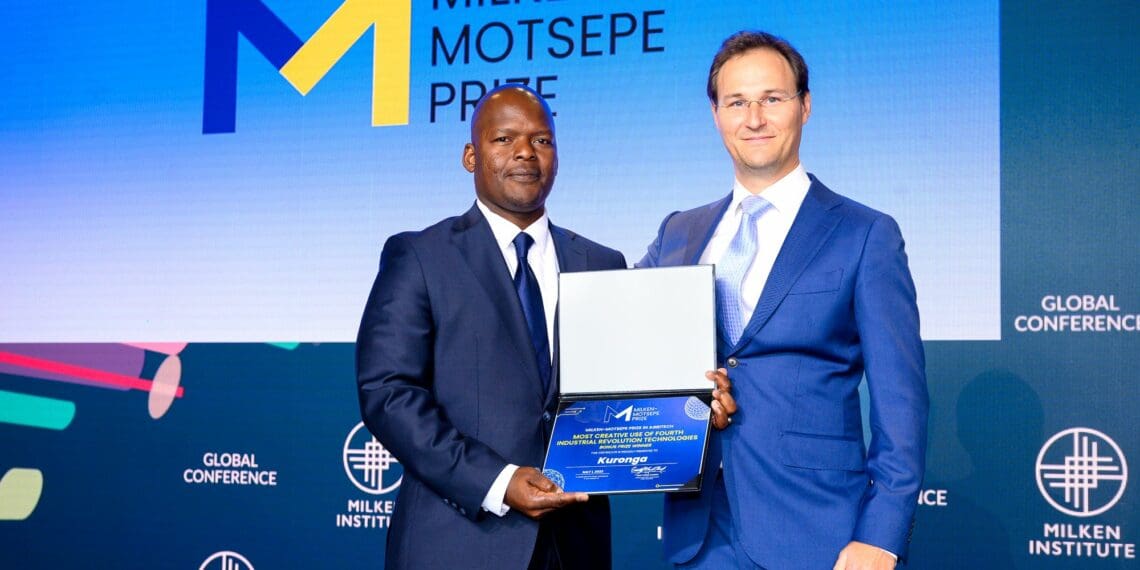
Kuronga app developers Tendai Chitapi and Oliver Windram recently bagged the Milken Mostepe Prize, one of the biggest agritech prizes in the world.
Food For Mzansi caught up with the winning duo to hear more about their award-winning app and future plans. They discuss how their app is bringing farmers and buyers together, climate change, and the future of Kuronga in Africa.
Sinenhlanhla Mncwango: $100 000 is a big prize, what are your plans with this money?
Tendai Chitapi: $100 000 is a big prize. We really need a lot more to be able to achieve the kind of growth and scale that we want and need. So, we are still fundraising but this $100 000 does give us a springboard.
We are still in fundraising mode and we’re looking for about $2 million to be able to really get the kind of capacity and scale and be able to really accelerate our development. We want to refine our user interface (UI) to drive technical development and technological development, platform development and AI development, and user onboarding. I think those are the key elements that this chunk of money is going to help us achieve.
What does the big win mean for the Kuronga app and both of you?
Tendai Chitapi: It’s really been such a positive validation and reinforcement of the work we’re doing. It’s not always easy to know whether what you’re doing and what you’re working on is the right thing.
The fact that we were recognised on such a major global stage in such a highly competitive sort of programming process, I think really was such a positive and powerful reinforcement and motivation to Oliver and me for the work we’re doing.
I really must take my hat off to the Milken Motsepe Prize for putting together and building this platform to make innovators more visible. We’ve really been exposed and opened to some high-quality conversations with high-quality people. I think now we’re more visible and more credible to investors and that’s been amazing.
Which agricultural problems does Kuronga solve?
Oliver Windram: The main problem we’re trying to solve here is port commercial engagement, particularly of small-scale farmers with buyers in various product markets. We’ve done a lot of work around why this may occur but the thing we’ve sort of gravitated towards based on the research we’ve done, is that one of the biggest issues that lead to poor commercial engagement between a farmer and a buyer is a lack of communication.
To understand the farmer’s side of the kind of quality that a buyer expects, one of our key insights is that they literally are a buyer for every grade of say, safe edible produce. You just need a way of connecting those buyers with a particular supplier or farmer based on what they’re producing.
So, we’re helping farmers essentially grade their product, their crop at the farm gate before they even leave for market, so they know which market they should be sending their produce to.
As close friends in business, you must fuss and fight a lot?
Tendai Chitapi: So we are generally, I think, very easy going laid-back people. I think we’re very emotional, very soulful. We’ve never let our egos get in the way, we are not driven by some egotistical sort of motivation. That’s never really been a challenge for us.
We’re always identifying problems and seeing how we can come together to help each other to solve them. We’ve always managed to come up with very sensible solutions to disagreements.
We both want to achieve the same goal, which is to uplift and empower small-scale farmers in Africa and then use technology and harness the power of AI to do that.
What are some of the biggest lessons you have learned?
Oliver Windram: I’d say the first one, most people learn when they launch a startup and keep going. Persistence pays off and you’ve got to be ruthlessly persistent in so many aspects of what you’re doing.
There are a lot of people that are quite willing to sort of tell you how you should be doing things. There will be a lot of people that try to encourage you to take shortcuts when you launch a startup but it always comes back to bite you in the end. So, you must be mindful of when you’re launching a startup
I think we’ve got a long journey ahead of us, but we are going in the right direction, which I think is the thing that excites me most now.
What does the future look like for Kuronga?
Oliver Windram: In five years from now we want to get to about 100 000 users in South Africa. Once we have that, we want to start looking at expanding into different countries in sub-Saharan Africa. This is a very common challenge and issue throughout much of Africa and for small-scale farmers.
We’ve got plans for very large-scale growth. And I think what people don’t often think about is that we’re improving the land-use efficiency of farmers.
We’re excited about what we’re doing at Kuronga because we could dramatically improve food security throughout Africa and across the world and that could make a huge contribution towards climate resilience and sustainability.
ALSO READ: ICYMI: Khula! and Absa to revolutionise agritech
Sign up for Mzansi Today: Your daily take on the news and happenings from the agriculture value chain.