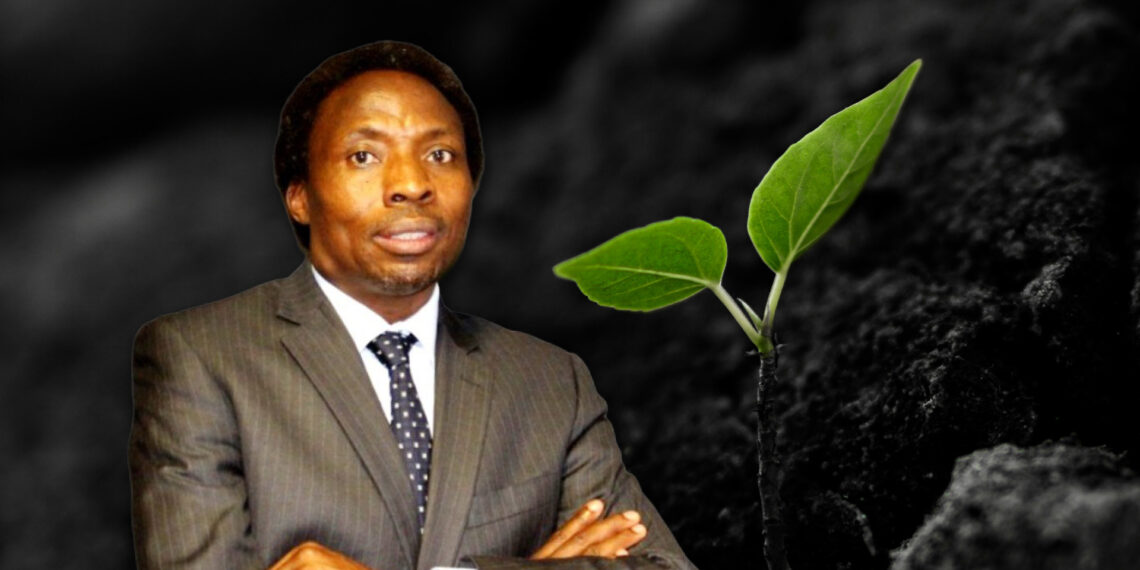
Agriculture depends 100% on nature, yet degradation is rising. Dr Ndeke Musee, the founder and director of Beyond GenBeta Solutions Pty, explains why restoring soil, biodiversity, and ecosystems isn’t just good ethics; it’s good business.
Nature sits at the heart of our food production. Actors along the food systems value chains are the largest custodians of our shared nature. Therefore, a common understanding of what “nature” means is central in managing how each actor’s operations and decision-making across the agricultural value chains causes impacts, the level of risks they pose, and what opportunities this creates.
To embrace nature, therefore, is central to strengthening agricultural resilience fit to guarantee food and nutrient security to society. And, to create value for actors and customers without breaching the planetary boundaries (PBs).
What is nature?
The word “nature” is widely used in our daily lives, whether by the public, policy- and decision-makers, scientists, or business personnel, including actors in the agricultural value chains.
As such, many “meanings” are attached to what nature or the environment is. Strikingly, this is also true even among different agricultural sub-sectors. This raises concern as sub-sectors in the agricultural sector are interrelated and interdependent, let alone actors across a given value chain(s).
To create value using science-based solutions in food systems, it is essential to establish a common understanding of what “nature” means or is it to actors from farm to fork. Indeed, the word is difficult to define, and its meaning is therefore dependent on the context in which it is used. (“Actors” refers to role players within the agricultural value chain of the commodity of focus (e.g., farmers, processors, retailers, customers, etc.), auxiliary service providers (e.g., investors, insurers, rating agencies, financial institutions), and regulators.)
Related stories
- Respecting planetary boundaries protects SA food future
- Agroecology: Transforming agriculture with nature’s wisdom
- Farming with nature: Southern Cape farmers shine in new TV series
According to the International Union for Conservation of Nature (IUCN), nature is defined as “encompassing both the non-living components (i.e., geodiversity, water, soil, minerals, air) and the living components (i.e., plants, animals, microorganisms) of the natural world”.
It provides a foundation that links nature and the PBs. Therefore, it helps to advance the implementation of science-based solutions not just in agriculture, but also in other economic sectors.
The definition fuels the need to be creative in shaping how to navigate the contours of sustainability to meet societal needs without transgressing PB’s limits. Moreover, it points out why we need to consider additional earth systems (e.g., water, biodiversity, land) beyond climate change.
Nature and food systems
From this definition, biodiversity is a sub-component of nature and serves two core functions. As a source of ecosystem services (e.g., regulate climate, prevent natural disasters, provide clean water, pollination, and healthy soils). At the same time, it is a protector against environmental change-linked pressures (e.g., climate change, water deficits, or biodiversity loss).
Both functions form part of ensuring resilient food systems.
These services, however, have been undervalued. Yet, they form the controlling factors that empower our ability to feed ra ising population, and supply sufficient nutrients to society.
Is that achievable without compromising sustainable profitability and breaching the PBs? Simply stated, yes.
Farmer and nature protection
In South Africa, so far, our food value chains across crops, livestock, horticulture, and vegetables have largely managed to meet the growing national demand and provision of supplies to global markets.
However, as we look ahead, there is an urgent need to reimagine our food systems so that they operate within the limits of nature’s capability to sustain such growth.
Since the farm is the primary food producer, farmers are the core face in the protection and restoration of nature’s health status. Hence, the farm forms the primary area where implementation of PBs is critical.
Over the years, nature’s health in many farms and surrounding environments has sharply declined, and is on a downward trend. As a result, yields per unit area are declining, input costs per unit area are on a sharp rise, the ability to support livelihoods is getting weakened, and the increasing inability to service credit from lenders by many actors.
For instance, over the last two decades, nature’s health for many farms – if considered from a human health analogy – would require care for recovery under similar conditions as those provided in the hospital intensive care unit. In turn, this would run into billions of Rands for their full rehabilitation, necessary to achieve desired yields.
Hence, farms need to preserve nature as rehabilitation costs are prohibitive, besides other downside impacts.
Why?
The agricultural sector is among the handful of sectors that are 100% dependent on nature to generate value. Additionally, about 80% of the supply chain for the agriculture and agroprocessing sectors has a strong dependency on nature.
Value of nature to agriculture
But what is the true value of nature to agriculture?
Nature offers many benefits to agriculture. These include, but are not limited to, soil fertility, feed and fodder production, recreation (tourist attraction, wildlife, etc.), flood regulation, provision of water and air, pollination, nutrients cycling, pests and diseases control, carbon sequestration, and more.
An excellent illustration of the value of nature to humanity is well expressed by Frank Elderson, a Member of the Executive Board of the European Central Bank, back in 2023.
He stated, “Destroy nature and you destroy the economy. This is not some kind of a flower power, tree-hugging exercise. This is core economics. This is core financial stability… Even if I couldn’t care less about the planet, even if I couldn’t care less about biodiversity, I would say the exact same things”.
Hence, the true value of nature, e.g., to agriculture, is indeterminable as its inherent worthiness extends outside of humanity’s use.
To elevate the status and visibility of nature, role players like scientists, conservationists, and the public and private sectors have adopted the concept of natural capital. Natural capital consists of natural resources, e.g., land, plants, animals, water, and minerals.
This allows us to estimate nature’s value as relates to use by humans, and facilitates how we quantify the economic value of nature to agriculture.
Such analysis affirms why environmental health is essential to meet social and economic needs, e.g., food security, support livelihoods, remit revenue to the exchequer through taxes, and meet nutritional requirements.
For example, according to the World Wide Foundation Report of 2022, pollination by honey bees to South Africa’s crops was valued at over 10,3 billion Rands annually to the economy. At a global scale, between 1995 and 2011, the economic value of pollinators’ services to both commercial and non-commercial food production was estimated at 351 billion dollars per year.
These estimates, however, exclude monetary benefits associated with climate suitable for agriculture, land fertility (arable land), and freshwater use. In both cases, the economic valuation of nature for agriculture is at best underestimated. They also exclude the multiplier effect from agricultural earnings when spent at higher-tier economic sectors – a demonstration of the breadth and significance of nature’s value to society.
What is needed
More importantly, however, nature-based benefits are only accessible to agriculture when ecosystems remain intact. This means nature can withstand external pressures rooted in a stable and resilient Earth system as a foundation for the provision of ecosystem services to the agricultural sector.
Key takeaways:
- Need for an agreed definition of nature. Enhances consistent data management from farm to fork or cup – a prerequisite for effective implementation of PBs.
- Nature value in agriculture is invaluable. Need to incorporate nature into the core farming strategy and associated operations across the value chain.
- Nature protection offers beyond monetary value, and should form part of the consideration in food systems value chains.
*Dr Ndeke Musee is the founder and director of Beyond GenBeta Solutions Pty (BGβS) and holds a doctorate in chemical engineering science from Stellenbosch University. BGβS has developed a beta version: Agricultural Planetary Boundaries Audit Framework (AgPBAF), designed to assess environmental sustainability across the crops, horticulture, vegetables, and livestock value chains from farm to fork, considering the unique South African context. The views and opinions expressed in this article are those of the author and do not necessarily reflect the views or positions of Food For Mzansi.
READ NEXT: Sugar imports threaten local industry and rural jobs