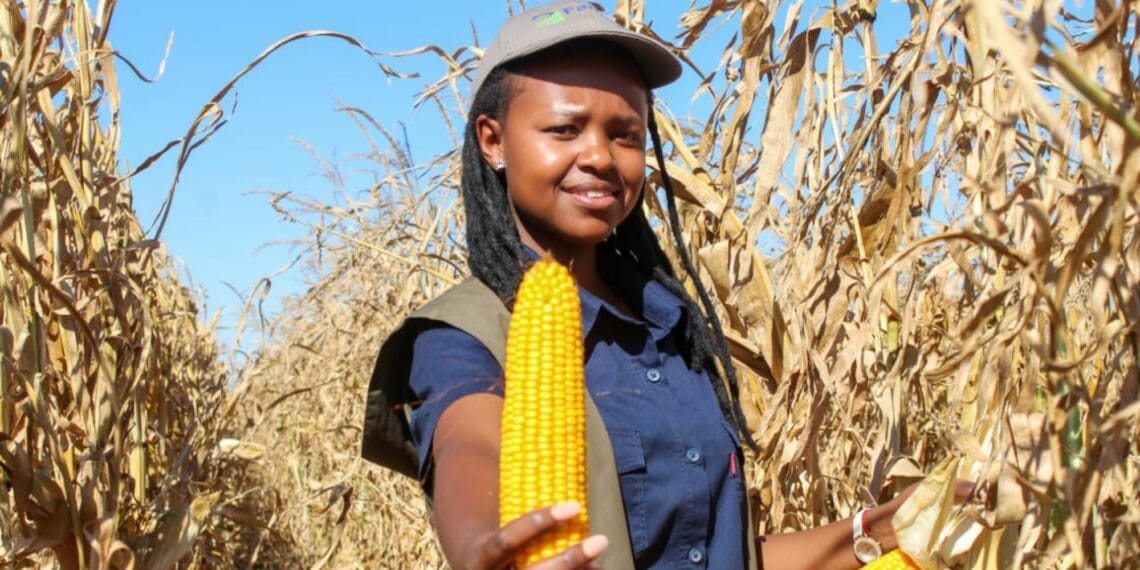
Since its inception in 2016, FarmSol, in partnership with South African Breweries (SAB), has supported 475 women farmers across the country, with the number of women in the programme growing annually.
FarmSol supports thousands of smallholder and up-and-coming farmers by providing them with market access, innovative funding, extension services and mechanisation solutions.

The agribusiness company aims to turn smallholder farmers into sustainable commercial producers, and since its inception, has granted more than R700 million in production loans across eight provinces in South Africa.
Aron Kole, managing director of FarmSol, says that farming is a challenging occupation that requires resilience and the ability to think on your feet. Women for centuries have demonstrated they can be successful farmers, but examples of them are few and far between, which is also why their success is such a big priority for FarmSol.
“It is a well-documented fact that women have been historically prevented from reaching their full potential as farmers, due to challenges relating to land ownership, access to funding, social dynamics and services not being tailored to the unique requirements of women.
“Many of these barriers and constraints still exist and more needs to be done to create an environment where women are provided with more opportunities and resources in the sector.”
Mentorship is important
One of the farmers in the FarmSol programme, Minkie Kgopa, four years ago exchanged her career as a business consultant to farm on their family farm near Lichtenburg in the North West, and is a testament that more women are discovering their passion for agriculture and entering the sector.
She says that the agricultural industry can be quite lonely for a woman, and it is difficult to find people to learn from or mentors. She, however, was fortunate to have people like her dad and FarmSol to help her from the start.
Since she started farming she has learnt two major lessons. Firstly, the importance of having a fertile and healthy soil and secondly, to keep going and focus on the things you can do.
“The past season has been really challenging, with the rain making it difficult to get in the lands to work the soil and skyrocketing input costs wreaking havoc with my financial planning. None of this could be planned for.”
She adds that in times like these it does not help to go sit in a corner and feel sorry for yourself. “You need to keep going and make new plans as you go, as there are so many livelihoods, not just your own family but also those of your workers and their families, depending on your success.”
This year, Kgopa expects her sunflower production to be slightly higher than last year and maize production to be roughly the same.
Creating your own path
Njabulo Mbokane started farming right after high school in 2016, all alone and with no knowledge. “I could not get a job and saw a business gap in agriculture, so decided to farm. Initially, I googled everything I needed to know and planted 2 ha of soybean as a trial, which failed dismally because I used herbicides that destroyed everything because of my lack of knowledge.”
Thereafter, she formed a partnership with Elijah Ntuli, who was part of the FarmSol programme, and became one of her mentors. The partnership allowed her to plant 15 ha of soybeans.
With her newfound knowledge, she decided to rent a nearby farm, where she planted non-GMO maize as part of the FarmSol programme and went on to win the SAB/FarmSol Young farmer of the Year competition in 2018 and 2019.
She identifies access to land as one of her greatest challenges: “I started out on a plot in Carolina in Mpumalanga and has since moved to farms in various other areas in the province.”
For her, each season brings its own challenges, but this season was extremely unusual and expensive especially because of all the rain experienced during the harvest.
“We had to get additional tractors in to help with the harvest and even manually harvested some of the soybeans to minimise production losses, which significantly increased our labour costs. On top of this, fuel costs more than doubled over the past year,” she says.
One of the biggest lessons Mbokane learnt so far is that you need to be prepared for the next season: “You need to be ready for anything and learn from your past mistakes to better deal with future challenges.”

Commitment is crucial
Promise Ntuli and her brother, Nqobiziswe, managed to secure a lease agreement for a 100-ha farm in 2018, Bankkop Fere, Free State, from their dad Simanga Ntuli.
The siblings later applied to join the FarmSol development programme and in 2019 secured a loan at 0% interest to plant 50 ha of non-GMO yellow maize.
“I was so happy and excited, but reality kicked in when we had a tough first year as farmers. We planted too late, because we struggled to secure the right implements on time, and then there was a drought leading to a poor harvest. We were unable to settle our debt and I felt terrible,” Ntuli remembers.
With lessons-learned, they managed to secure another FarmSol loan in 2020, allowing them to establish 100ha of non-GMO yellow maize with better results.
“Young people should realise that there are many opportunities in farming, but it takes commitment and patience to be successful,” Ntuli says.
Nobantu Radebe farms on 44ha of family-owned land in the Sedibeng District in Gauteng. Their business, Emangelengeleni Enterprises, is a mixed farming operation, consisting of yellow maize, vegetables and broilers.
“We appreciate the market access we got to SAB through the FarmSol programme, as market access is a crucial aspect of sustainable farming and a huge challenge in the absence of sufficient volumes,” she says.
ALSO READ: From financial advisor to farming on 600 hectares!
Get Stories of Change: Inspirational stories from the people that feed Mzansi.