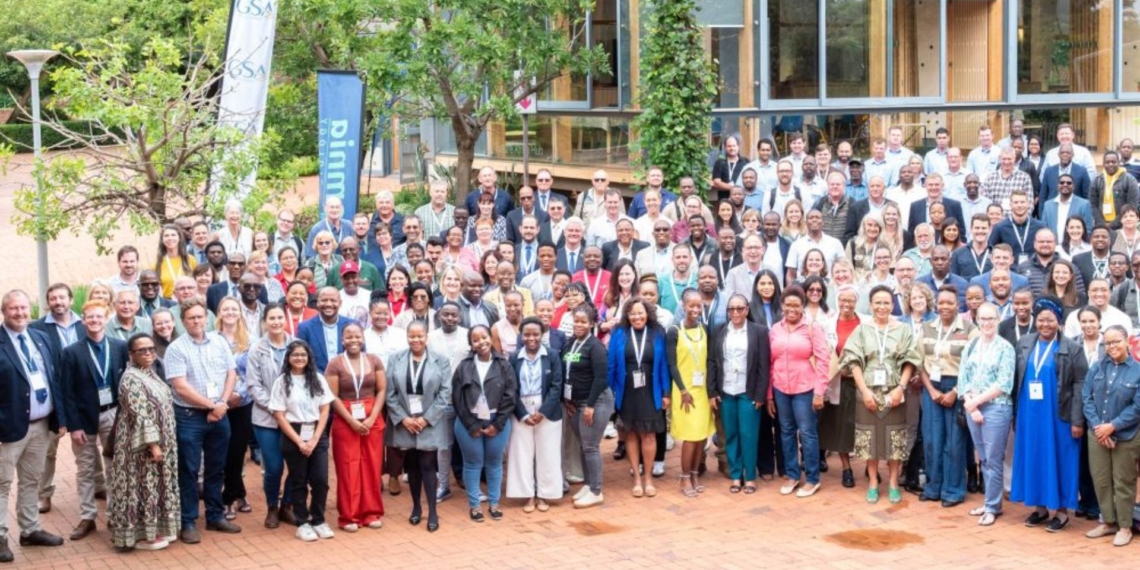
Improving farmer profitability, accelerating access to new technologies and strengthening collaboration across the agricultural value chain were key themes discussed during the recent Grain SA Research Meeting in Pretoria, Gauteng.
Marius Boshoff, managing director of Villa Crop Protection, said the speed at which new technologies reach farmers can have a major impact on productivity and profitability.
“Any profitable business essentially comes down to output minus input, divided by time. If we could reduce the time it takes to bring new technology to South African farmers by even 20%, it would make a significant difference,” Boshoff said.
The sooner, the better
South Africa represents a small share of the global crop protection market. Boshoff noted that an enabling environment is needed to attract investment and speed up the introduction of new technologies.
Boshoff said the country also relies heavily on imports, with about 99% of synthetic active ingredients sourced internationally. Before Covid-19, companies operated on a just-in-time supply model, but global supply disruptions led to increased stockpiling and widespread overstocking by 2023.
Despite these challenges, Boshoff said significant innovation is still taking place, with a range of new active ingredients expected to reach international markets in the coming years.
“The question is whether these technologies will reach South Africa quickly enough to benefit our farmers,” he said.
Related stories
- Unified vision key to driving innovation in SA’s grain industry
- Why the environment is the real boss of farming
- South Africa eyes bumper grain and soybean crops
- Three years on: Is the master plan delivering for farmers?
Biological solutions gaining ground
Changing consumer preferences and regulatory trends are also reshaping the crop protection sector, with investment in biological solutions increasing significantly in recent years. Boshoff noted that while the biological market is growing rapidly, about half of its value still lies in biostimulants, and consistent pest and disease control performance from biological products remains a developing area.
He added that highly hazardous chemical products are gradually being phased out and that the industry will continue searching for effective alternatives.
Looking ahead, Boshoff believes digital technologies will play a major role in accelerating innovation.
“Artificial intelligence is already helping scientists discover new molecules; this could significantly speed up the development of new crop protection technologies,” he said.
Johannes Nel, an agronomist at Omya Idwala, said the role of agronomists is becoming increasingly complex as agriculture adopts more technologies and data-driven decision-making.
“Agronomists today need to understand a wide range of disciplines. Ultimately, the farmer carries the financial risk, so the advice they receive must be accurate and practical,” Nel said.
Threats putting farmers under pressure
From the producer’s perspective, Richard Krige, vice-chairperson of Grain SA, said farmers operate under constant pressure while managing multiple risks.
“Farmers make decisions every day in highly volatile environments, often with incomplete information. Climate variability, rising input costs, disease pressure and regulatory challenges all affect profitability at farm level,” Krige said.
Krige highlighted that climate is the most significant factor affecting production, accounting for around 80% of farming outcomes and remaining largely beyond farmers’ control. While technologies like conservation agriculture, improved genetics, and data-driven management can help mitigate risk, he cautioned that herbicide resistance is emerging as a serious challenge in some regions.
“In some areas of the Western Cape, herbicide resistance may pose a greater threat to long-term grain production than climate change,” he said.
Krige also raised concerns about delays in the approval of new agricultural technologies and trade policy decisions, which can place local farmers at a disadvantage compared with international competitors.
In addition, he noted that infrastructure constraints, particularly in rural areas, also continue to affect farm profitability. Improvements to rail infrastructure linking grain-producing regions to ports could significantly strengthen the sector.
Despite these challenges, Krige said South Africa’s grain industry remains well-positioned for growth if stakeholders work more closely together.
READ NEXT: Discipline and dirt define Meshack Ndongeni’s farming success