Wednesday, July 22, 2026
SUBSCRIBE
22 GLOBAL MEDIA AWARDS
Food For Mzansi
  • News
  • Changemakers
  • Lifestyle
  • Farmer’s Inside Track
  • Food for Thought
No Result
View All Result
  • News
  • Changemakers
  • Lifestyle
  • Farmer’s Inside Track
  • Food for Thought
No Result
View All Result
Food For Mzansi
No Result
View All Result
in News

Gender pay gap: ‘Not yet uhuru for women in agriculture’

by Noluthando Ngcakani
29th March 2021
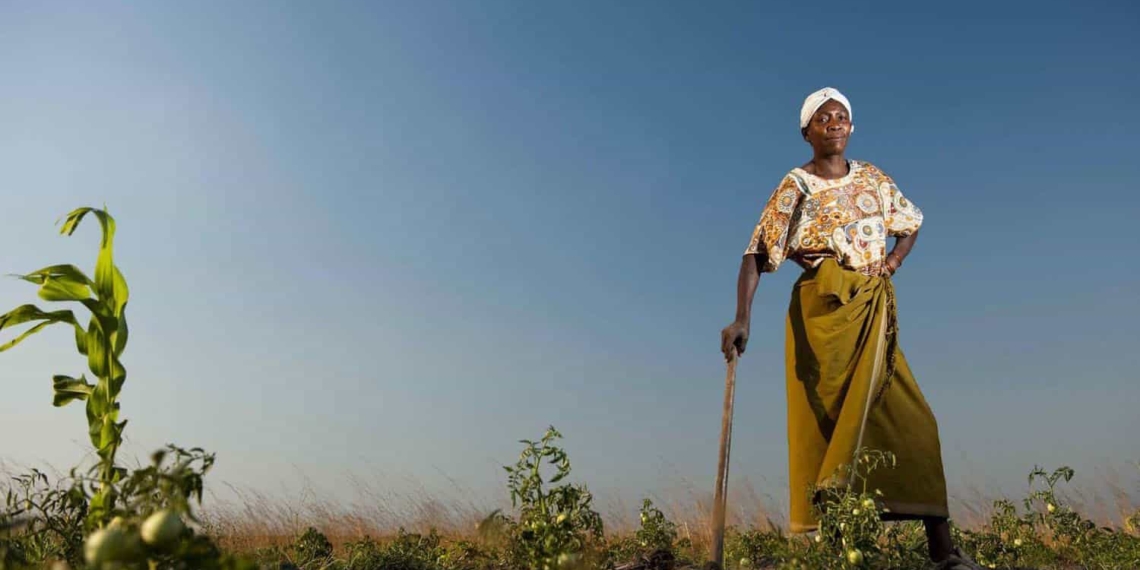
Women play important and varied roles in agriculture, but they still don't have equal opportunities when compared to men. Photo: Supplied/Food For Mzansi

Women play important and varied roles in agriculture, but they still don't have equal opportunities when compared to men. Photo: Supplied/Food For Mzansi

Share on FacebookShare on TwitterShare on WhatsApp

Despite the implementation of the new minimum wage a Stellenbosch-based pressure group Women on Farms believe female farmworkers are still often underpaid and overlooked by their employers. This, they say, deepens the gender pay gap.

Agri SA labour specialist Lebogang Sethusha says Stats SA’s 2017 census of commercial agriculture also indicates a big gap between the number of females employed in full-time paid positions compared to male employees.

Minimum wage: Lebogang Sethusha, a labour specialist with Agri SA. Photo: Supplied/Food For Mzansi
Lebogang Sethusha, a labour specialist with Agri SA. Photo: Supplied/Food For Mzansi

Also, women are often overlooked for managerial positions. “There is still a lot of work to be done to address gender equality in the sector and our rural communities where most farms a situated,” says Sethusha.

While it is true that women have an important role to play in the global future of agriculture, men are often given preferential treatment.

Sethusha says, “The implementation is where the discrepancies come in. Women will have lower paying jobs. They are more general workers while senior jobs are reserved for men.”

Accord to Carmen Louw, co-director of Women on Farms, barriers exist for women in agriculture due to perceptions of female farmworkers’ physical strength, self-confidence, motherhood and childcare.

Louw explains that in agriculture, men are often given roles like tractor driver, chemical and pesticide sprayers, supervisors, and managers.

“Those are male jobs and obviously with that comes a higher income. Legally they earn the same, but how jobs are structure is where the differentiation comes in.”

ALSO READ: Women pushing to bridge gender gaps in agri sector

Louw adds that it is also concerning that female farmworkers are mostly seasonal workers which means they can only earn an income for a few months at a time or when the harvest concludes. Permanent workers, who are mostly men, get paid throughout the year.

“The bulk of work that they do is harvesting work where they cut the grapes when they are ready. In the table grape sector, you will find many of them in the pack stores as well, packing grapes in boxes, sorting grapes in boxes.”

‘No interest in gender equity’

Employers seem to have little interest in gender parity and equity, making matters worse for women in agriculture. Louw says sectoral determination does not compel the farmer or employer to introduce and ensure more gender parity in the workplace.

“The agriculture sector is still very much male dominated and patriarchal. They have no interest in gender parity or equity. That is not part of the agenda.

Carmen Louw, co-director of Women on Farms. Photo: Supplied/Food For Mzansi

“There is no plan in place. There is also no legislative guidelines or enforcement to ensure that there is gender parity.”

ALSO READ: King Goodwill Zwelithini: Tribute to a well-loved ruler

“For female farmworkers in search of better opportunities the only way is out.” – CARMEN LOUW, WOMEN ON FARMS

Louw says, “We do not see that it will change in the near future. What we are arguing for is for land to be expropriated and given to women so that they can start their own production and their small businesses to bring more equity to women.”

In order to eradicate existing patriarchy in the sector, Sethusha suggests that there is a need for greater emphasis on skills development to increase employment choices for women in agriculture.

“We need to foster social dialogue on gender equality, promoting the principles of equal pay for equal value in rural communities and growing gender representation in the sector with closing the gender gap in farm ownership for female interests to be prioritised.

“We need policies that are transformative and enhance gender equity to implement the ILO Decent Work Agenda in legislation, a good example being the legislation on employment equity.

Has Covid-19 pushed back gender equality?

According to an international study by market research company Ipsos, the gender pay gap is still seen as important, but divisions exist over whether it is a top priority throughout the globe.

Ipsos SA director and political analyst, Mari Harris. Photo: YouTube

Mari Harris, Ipsos SA director and political analyst, reveals that a study conducted in 28 diverse countries indicates that “online citizens” see closing the gender pay gap as a priority more than the global country average of 36%.

“While studies highlight the disproportionate economic impact of the Covid-19 pandemic on women, citizens of many countries are divided over whether closing the gender pay gap should be a top priority right now.”

In three of these countries, Chile (53%), South Africa (52%) and France (51%), more than half support the idea that the gender pay gap should be addressed imminently.

A much higher proportion of South African women (61%) than men (41%) think that the gender pay gap is important enough to be addressed immediately.

Despite these divisions, there is broad sympathy for the need to address the gender pay gap with half of people (50%) across the 28 countries saying that concerns about the gender pay gap are a response to a real problem.

ALSO READ: Breaking gender barriers in grain farming

Noluthando Ngcakani

With roots in the Northern Cape, this Kimberley Diamond has had a passion for telling human interest stories since she could speak her first words. A foodie by heart, she began her journalistic career as an intern at the SABC where she discovered her love for telling agricultural, community and nature related stories. Not a stranger to a challenge Ngcakani will go above and beyond to tell your truth.

Tags: Agri SAgender equalitygender pay gapIposLebogang SethutshaWomen in AgricultureWomen on Farms
The Forest of Renewal at Rustlers Valley celebrates the intertwined legacies of Frik Grobbelaar, Anton Chaka and Riky Rick, inviting South Africans to restore the land while cultivating hope, belonging and community. Illustration: ChatGPT
Food for Thought

Rustlers Valley offers a blueprint for South Africa’s renewal

by Ivor Price
18th July 2026

As the Rustlers Valley Memorial Forest is launched in the eastern Free State this weekend, Ivor Price reflects on why...

Read moreDetails
Grain SA appoints Mabuza to lead farmer development

Rising stars: 2026 PGP finalists redefining SA grain farming

18th July 2026
Rooibos heads to space in groundbreaking Mzansi experiment

Rooibos heads to space in groundbreaking Mzansi experiment

18th July 2026

Seriti Institute CEO wins prestigious Best Woman 2026 CSI award

17th July 2026
Farmers and brewers call for budget that builds, not breaks

Minister details Land Bank’s success in boosting black farmers

17th July 2026

Smart vineyard irrigation starts below the ground

Deadline looms: Register water use by 23 July or risk penalties

Wits students step up to fight campus hunger

The Karoo’s quiet lesson on trust and truth

This week’s agri events: 20 – 24 July

Join Food For Mzansi's WhatsApp channel for the latest updates!

JOIN NOW!
Next Post
Western Cape minister of agriculture Dr Ivan Meyer considers the ostrich industry as a ministerial priority. He says, “We must continue to ensure that South Africa remains the top ostrich producing country that provides quality ostrich meat, leather, and feathers to the world. By doing so, we support the economy and jobs in the province.” Photo: Supplied/Food For Mzansi

Ostrich industry: Farmers resilient in tough times

THE NEW FACE OF SOUTH AFRICAN AGRICULTURE

With 21 global awards in the first six years of its existence, Food For Mzansi is much more than an agriculture publication. It is a movement, unashamedly saluting the unsung heroes of South African agriculture. We believe in the power of agriculture to promote nation building and social cohesion by telling stories that are often overlooked by broader society.

Smart vineyard irrigation starts below the ground

Treat food processing as essential national infrastructure – Khoury

Farmers urged to embrace uncertainty and build resilience

SA poultry industry calls for urgent bird flu vaccine rollout

Mother’s legacy, neighbour’s grace: Venessa Simelane’s farm story

Deadline looms: Register water use by 23 July or risk penalties

  • Awards & Global Impact
  • Our Story
  • Contact Us
  • Cookie Policy
  • Privacy Policy
  • Copyright

Contact us
Office: +27 21 879 1824
News: info@foodformzansi.co.za
Advertising: sales@foodformzansi.co.za

Contact us
Office: +27 21 879 1824
News: info@foodformzansi.co.za
Advertising: sales@foodformzansi.co.za

  • Awards & Global Impact
  • Our Story
  • Contact Us
  • Cookie Policy
  • Privacy Policy
  • Copyright

Chat Options

I'm Lerato, your AI assistant!
No Result
View All Result
  • News
  • Changemakers
  • Lifestyle
  • Farmer’s Inside Track
  • Food for Thought

Copyright © 2024 Food for Mzansi

This website uses cookies. By continuing to use this website you are giving consent to cookies being used. Visit our Privacy and Cookie Policy.