Around 23% of South African children experience severe food poverty, according to Unicef. This often shows up in classrooms as fatigue, poor concentration and missed learning opportunities.
While the National School Nutrition Programme provides daily meals to nearly 10 million learners, school and community food gardens can also play an important role in supporting nutrition, healthy eating and better learning outcomes.
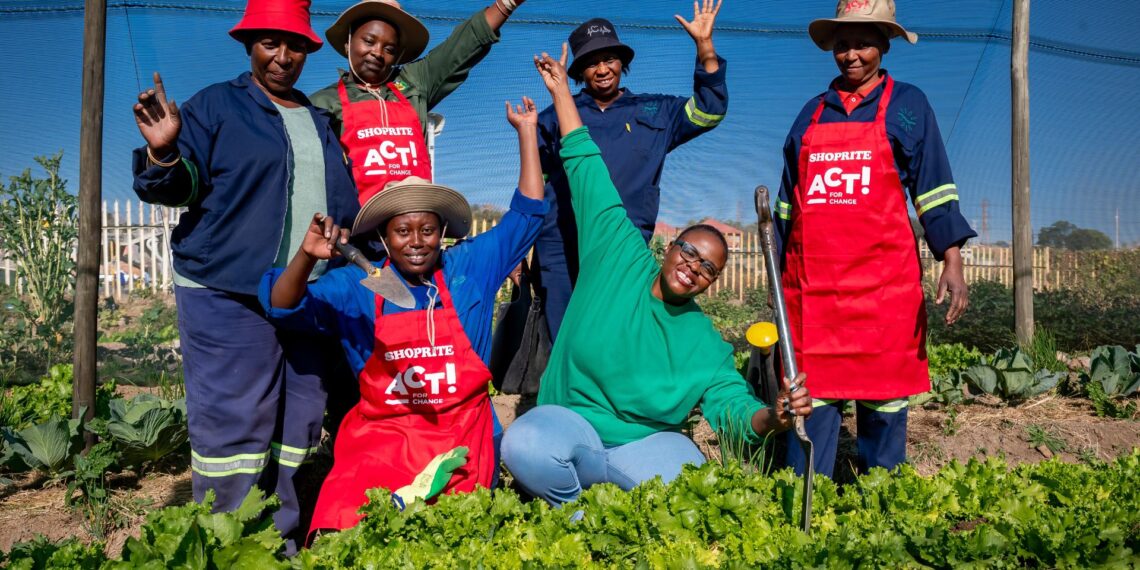
Through its Act For Change community food garden programme, Shoprite invests in community food gardens as a long-term approach to strengthening local food systems, including by enhancing gardens linked to schools and contributing to broader food and nutrition support efforts.
Food for the community
Sanjeev Raghubir, chief sustainability officer at the Shoprite Group, said when learners are nourished, they are better able to engage in the classroom, schools function more effectively, and communities are more resilient.
“Beyond the plate, community gardens can provide learners with a tangible connection to where food comes from, reinforcing basic concepts of nutrition, sustainability and environmental care.
“Even when learners are not directly involved in maintaining the gardens, exposure to food growing on or near school grounds can influence long-term attitudes towards healthy eating and the environment,” Raghubir said.
Related stories
- Shoprite launches R1-million food garden competition
- KZN MEC calls on churches to start food gardens to fight hunger
- UFS secures R10m grant to fast-track local climate action
- ARC sustains excellence with fourth top employer title
Community-based gardens supported by Shoprite’s Act for Change illustrate this impact. One example is the Umthambeka Drop-in Centre in Thembisa, where nutrition forms a core part of the centre’s psychosocial support services.
Established as part of community upliftment and bolstering food security, the garden not only supports the centre’s feeding efforts but also distributes fresh vegetables to vulnerable households with learners.
Job creation and food security
Working in partnership with Shoprite, Food and Trees for Africa and the department of agriculture, the centre connects the community to backyard farming projects and skills training opportunities. Harvesting takes place regularly, depending on crop cycles, with some produce sold to local vendors to help sustain the project.
Cohdelia Pilusa, centre manager and founder of Umthambeka Drop-in Centre, said parents and guardians are really involved in keeping the garden going.
“It also gives work to three people, so they can support their families. And it’s helping everyone get fresh vegetables more easily, so people can eat healthier meals,” Pilusa said.
Another school-linked food garden supported through Act for Change can be found at Modulaqhowa Primary Co-operative Limited in the Free State, founded by local women to address unemployment and food insecurity, which produces vegetable seedlings and fruit trees while supplying fresh produce to the community.
The co-operative also works with schools and early childhood centres, introducing learners to plant care and environmental stewardship and strengthening local support systems around education.
“Backing and sustaining these gardens, providing food to learners, enables young students to focus on education, easing pressure on families navigating the costs of a new school year and recognising the role communities play in sustaining children’s well-being.
“As the school year finds its rhythm, these gardens remain a steady presence in the background, strengthening the foundation for effective learning,” Pilusa said.
READ NEXT: Davos boosts confidence in Mzansi’s agricultural trade