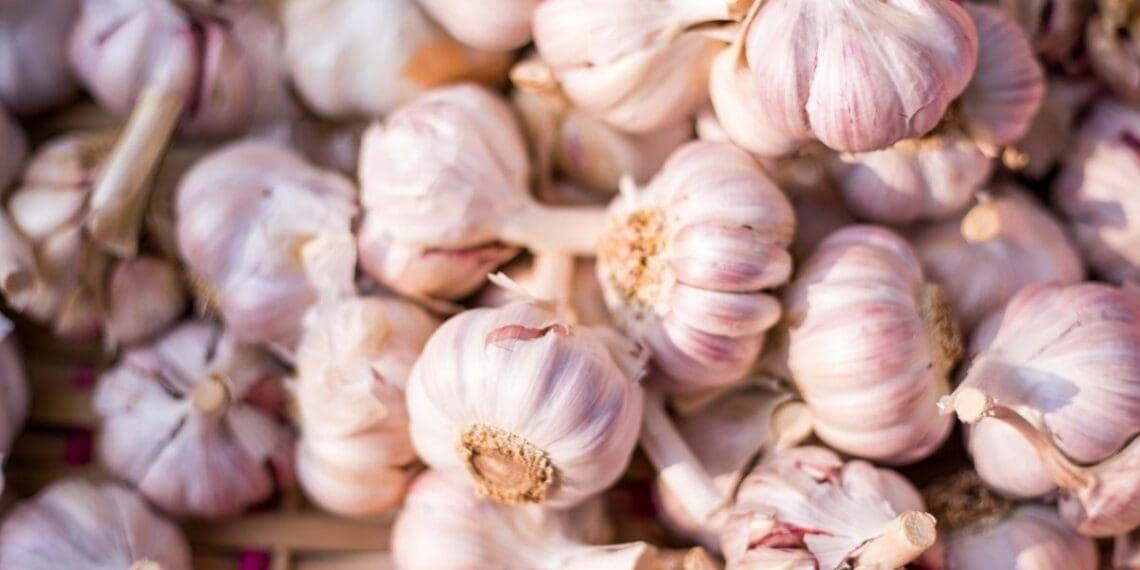
A staple in everyone’s kitchen, it is hard to imagine life without garlic. The plant, which originated in Europe, has been used in medicinal remedies for over 5 000 years and is used in everything from gourmet dishes to immune booster tonics today. It is grown all over the world, with China supplying most of the world’s tonnage.

In South Africa, the garlic market offers many opportunities. Jacques Terblanche, the co-founder of Graceland Garlic, says most of the garlic produced in South Africa is produced for the domestic market. He says there are opportunities for exporting as well, though the export market is not really that big.
“Garlic is selling at record prices at the moment in supermarkets. The farmer does not get these prices, though. Most of the garlic is sold on the municipal market and to food processing companies.”
Terblanche’s passion for garlic farming is evident. He co-founded Graceland Garlic with his father, Dereyck, in 2013, growing a small business venture into a lucrative business.
“I’m a disabled person and I wanted an income, so we started the business about 10 years ago. I’m by nature a very passionate person, and I told all my friends about garlic farming. They started planting garlic on their own fields.”
Terblanche says his friends were not able to make a success of their garlic endeavours, but after many mistakes, he was able to succeed. Through Graceland, Terblanche provides farmers with various garlic seeds and guidance on farming with the plant.
“I didn’t do everything right. I just kept on going, I persevered. And that’s why I succeeded. Today we’ve established Graceland Garlic, and it’s situated in Springs, Gauteng. It’s a very big garlic business. One of two that sells proper garlic seed.”
Planting season is almost over
According to this guide by the department of agriculture, forestry and fisheries, garlic seeds need to be planted between February and May, depending on your climate. Terblanche says that for most of the country, planting season is over.
“Garlic planting season is in February and March, except for the Western Cape. There you can plant until April and May. It’s very important to stick to this planting window in order to be successful.”
The plant is propagated by cloves, and as a winter crop, prefers cooler temperatures. It needs to be planted at a depth of about 50mm and can be planted on a raised bed or on flat ground.
Terblanche explains that it can grow nearly anywhere, but that it flourishes in the cold. “Garlic is frost resistant and grows in almost any climate. We plant all over South Africa, but the main areas to plant garlic in South Africa is in the Karoo and the Bushveld of South Africa. It likes the cooler temperatures and the cooler areas.”
Day length has a drastic effect on your garlic plants as well, says Terblanche. “Garlic needs shorter days in winter in order to form bigger bulbs.”
Getting your soil right
Like any plant, garlic needs well-nourished soil. To make sure your plants flourish, add compost to it before planting so that the soil is more fertile and the structure of the soil is improved.
Garlic, says Terblanche, likes a loose soil. “It can be planted in a clay soil, but you just have to make sure that you don’t overwater it. Because garlic wants to stay moist and not wet. If it’s wet, it will rot.”
The plant is known to need a high amount of nutrients, but Terblanche recommends that farmers get their soils tested before they apply a fertiliser regime.
“You’ve got to analyse your soil to determine what your pH should be, and to correct the pH, [you have] to put the correct fertiliser in the soil.”
Proper irrigation is also an important part of garlic growing. The plant does not have a very deep root system, which is why it would be easy to overwater. It also loses water fairly easily in dry, hot weather, which is why mulching – where you add a layer of organic material over your plants – is important in these conditions.
Good seed = good quality plants
While garlic does not thrive under nets or shade covering, it does attract a fair amount of expenses, including irrigation and fertiliser. Particularly expensive, is the cost of proper seed, adds Terblanche.
“The seed is very expensive because you’ve got to make sure that your seed is disease-free. There are many farmers who make the mistake [of going] to the market and buying garlic to plant and that garlic is doomed to fail. By law, the imported garlic has to be radiated and that makes it sterile.”
Terblanche also highlights that farmers sometimes sell seed that is not disease-free. This is why it is so important to buy seed from a good supplier.
He explains that garlic farming is labour intensive around planting and harvesting time, pushing up costs. “Between planting and harvesting, you have little very little labour, but planting and harvesting is very labour intensive.”
Diseases and pests
The most common cultivars in South Africa, according to Terblanche, are the Egyptian white, the Egyptian pink, and the Giant variants. He says the Egyptian cultivars grow for about seven months before they are harvested, but the Giant variety needs to mature for about nine months.
“These are the most common in South Africa, but there is a myriad of exotic garlic that’s imported [and that] doesn’t climatise to our conditions here.”
As with anything else, your garlic variety should be chosen based on your market, how adaptable it is to your particular climate, and how resistant it is to diseases in your area.
Terblanche advises garlic farmers to be particularly aware of the types of fungi the plant can contract. “There are a couple of funguses that garlic can get, and some of it is very difficult to get rid of. It is transferred by seed when humans walk from one field to another, and also insects can transfer it.”
Fungi that typically occur in garlic include brown rust, white bulb rot, and pink root.
Ultimately, farming with garlic includes many facets you need to consider. There is one thing, however, that Terblanche recommends you consider before doing anything else.
“You have to find a market. Because you can produce the greatest crop, but if you don’t have a market, it doesn’t help.”
ALSO READ: Here’s what you should know about hemp farming
Sign up for Farmer’s Inside Track: Join our exclusive platform for new entrants into farming and agribusiness, with newsletters and podcasts.