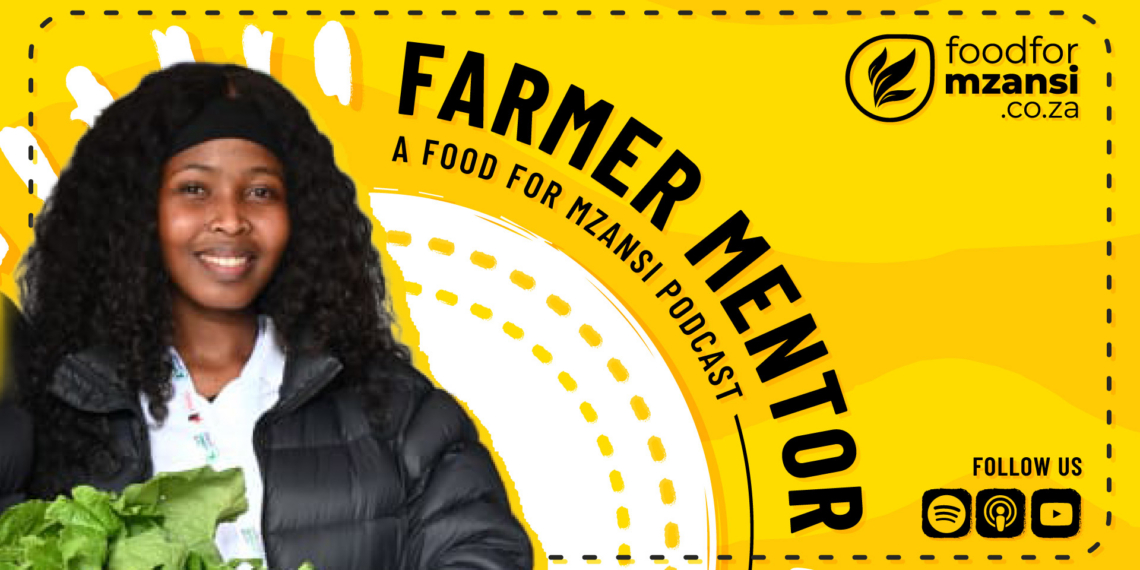
After facing early losses, Reneilwe and Lerato Selialia brought in financial management, mapped out rotational harvests, and expanded market routes to supermarkets and regional fresh produce markets. She shares their journey and key lessons in this Farmer Mentor edition.
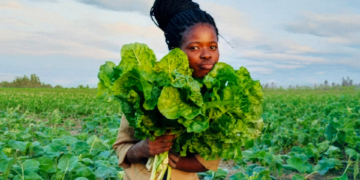
For Reneilwe Selialia, building a farming business, Kopana Holdings, has been a journey of learning, networking and putting knowledge into practice. After starting with potato production in 2025, Selialia and her husband, Lerato, have expanded into spinach, onions and sweet potatoes.
The couple produces vegetables in Randfontein, Gauteng, where they have built relationships with fellow farmers and drawn on their knowledge and experience to strengthen their farming operation.
For Selialia, one of the most important lessons for new farmers is to recognise what they do not know and actively seek knowledge from others.
“We had to kind of grapple our feet and just grab hold of any knowledge that we could from everybody surrounding us,” she says.
Related stories
- Palesa proves small-scale farming can feed communities, retailers
- Master farming first: Jotham’s formula for multi-stream income
- Scaling to success: Moleke Maphila’s path from student to farmer
- Simphiwe Hlubi: Why multi-stream income is the future of farming
Understand what you are working with
Before starting production, the couple conducted soil tests to understand their land. The results showed that the soil was generally suitable, although potassium levels were high, prompting them to adjust the nutrient balance before planting.
Water management has also become an important consideration. Prolonged dry conditions meant they had to invest more heavily in irrigation, while problems with their equipment provided practical lessons along the way.
The experience has encouraged the couple to explore ways of protecting production from weather-related disruptions, including plans to introduce structures that could create more controlled growing conditions.
Build your market before the harvest
One of Selialia’s key lessons is that producing a crop is only one part of running a successful farming business. Farmers also need to build relationships with potential customers and understand where their produce will be sold.
After their first potato harvest, the couple supplied two markets but were left with a significant volume of potatoes. Some of the produce spoiled, while some was retained as seed for the next harvest.
They have since focused on expanding their market reach by approaching different markets in Johannesburg, the Vaal and Rustenburg, while also exploring opportunities with supermarkets.


Networking has been central to this process. A connection with someone who had previously sold produce at a market eventually helped the couple register at the Vaal market and introduced them to a wider market system.
“Because of now asking the right questions and speaking to people, we then found out we could actually spread across the other markets,” she says.
Plan for continuous production
For farmers supplying markets, Selialia notes that production planning should extend beyond the current harvest.
“It’s literally rotational farming,” she explains. “As soon as you harvest, you should already have planted the next harvest.”
With crops taking around two to three months to mature, depending on the crop, successive plantings need to be planned carefully to maintain a consistent supply.
Keep a close eye on the numbers
Understanding the financial side of farming has also become an important part of the learning process.
They brought an accountant on board to help them understand cash flow and calculate true production costs. This helped them identify that their first potato harvest had been produced at a loss.
Selialia says expenses such as seed, travel and toll fees can easily be overlooked when farmers focus primarily on production and sales. The couple now uses this information to establish minimum selling prices and set budgets for travelling to different markets.
Start humbly and keep learning
For young farmers who may feel overwhelmed by everything they need to learn, Selialia’s advice is straightforward: start, but remain humble.
“Jump into it, but jump into it humbly,” she recommends.
She encourages new farmers not to rely solely on online research and technology, but to engage with people with practical experience and remain open to learning from different sources.
“Human interaction is very important. Learn from people.”
For Selialia and her husband, the long-term goal is to build Kopana Holdings into a farming business that can be carried forward by future generations.
“It’s less for us, but more for Legacy,” she says.
READ NEXT: How SA farmers can crack retail and unlock market access