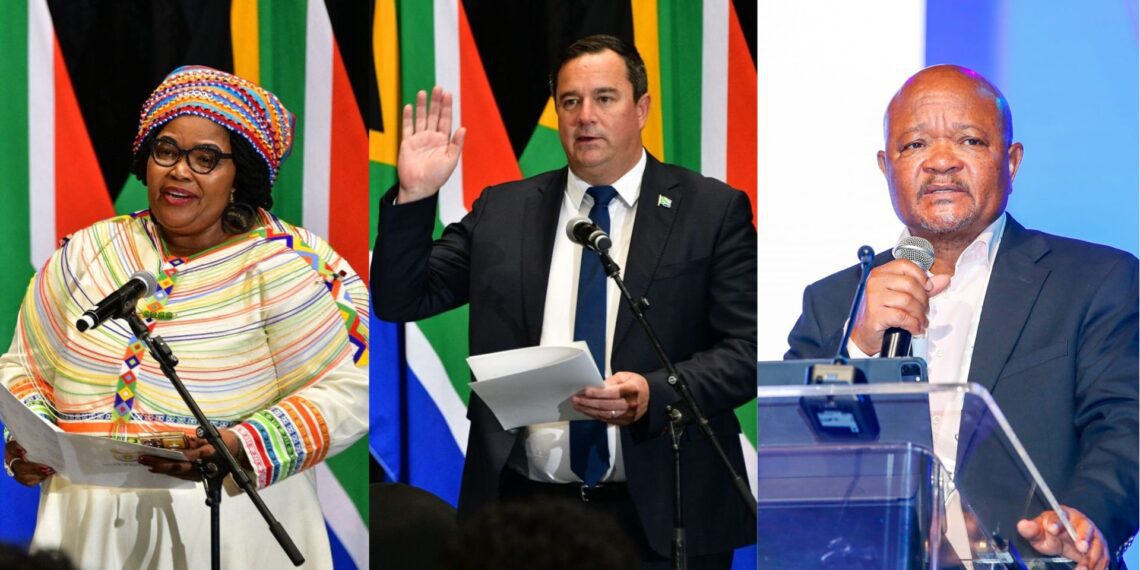
On 3 July 2024, South Africa witnessed the formation of a government of national unity (GNU) following the national and provincial elections, where no political party won an outright majority. A year later, cracks are starting to show in the GNU, especially between the ANC and the Democratic Alliance.
This follows a string of disagreements, with the most recent being the dismissal of the deputy minister of trade, industry and competition, Andrew Whitfield, shaking relations between the two parties.
Reflecting on the first anniversary since ministers took the oath of office, agricultural leaders, stakeholders in the water and sanitation sector, and police activists spoke to Food For Mzansi on the performance of the political heads in different ministries.
Not happy with ministers
Executive manager of WaterCAN, Dr Ferrial Adam, said the water and sanitation minister, Pemmy Majodin, has not been as present as they had anticipated, considering the pressing water challenges the country is facing.
“I think as a leader, she has not been as present as is needed to understand the crisis that we are facing as the country. As national government, we know they are doing stuff and things, but I think it will need more presence for a leader in such a big portfolio.
“Leadership needs to be seen – from the department that is dealing with a huge challenge that we are faced with, visibility is key,” she said.
Farm crime activist Petrus Sitho said that although they have met with the minister of police, Senzo Mchunu, they are not satisfied with how the department is dealing with issues affecting farmers.
Related stories
- One year later: Rural farmers left behind in GNU promises
- Agriculture sector calls for growth and trust from GNU in 2025
“Stock theft is increasing. I can tell you, as someone who is on the ground, that farm killings are happening,” he said.
Referring to the minister of agriculture, John Steenhuisen, Sitho noted, “There are farmers who are struggling to feed their animals, and we have not seen anything from the department of agriculture to help and empower those farmers. We have written to his department to engage him on how we can help, but there has not been any response,” he said.
Satisfied, so far
Meanwhile, South African Farmers Development Association (Safda) executive chairperson, Dr Siyabonga Madlala, said the organisation has been satisfied with the work Steenhuisen and the minister of land reform and rural development, Mzwanele Nyhontsho, have done thus far in their respective portfolios.
“In February 2025, Safda participated in an engagement arranged by minister Steenhuisen with small-scale farmers in the sugar industry in which he expressed his unwavering commitment to smallholder farmer development and sustainability.
“Recently, we attended the G20 Working Group on Food Security hosted by the department of agriculture, where our interaction with minister Steenhuisen was impactful and promising, laying a strong foundation for a better future for Safda and its members.
Related stories
- Steenhuisen: ‘Ubuntu key to global food and climate crisis’
- King Misuzulu, Nyhontso unite to resolve Ingonyama Trust issues
“Minister Nyhontso has equally demonstrated strong support for Safda. We have had multiple engagements with him, and he actively participated in both Safda’s and departmental events, including the official launches of the Farmer Production Support Units (FPSUs) in Swayimane in KwaZulu-Natal Midlands and Jozini, in uMkhanyakude, north of KwaZulu-Natal.
“His dedication to improving the socio-economic conditions of small-scale farmers has been unwavering.”
Dr Siyabonga Madlala
National African Farmers Union (Nafu) president, Motsepe Matlala, said Steenhuisen appears to be a hands-on minister. “He has already been to many places in the sector. It is also fair to acknowledge that we have not invited him to our conferences or occasions as well. However, given time, we think he could add value to the divided sector.
“On minister Nyhontsho, we believe if the minister is given time and support, the minister can move the land question forward to a historical conclusion, especially because no land solution has as yet been found,” he said.
Matlala added that all the ministers have given their all in light of the political developments in the country. He urged ministers to make their departments work for farmers and be accessible.
“We should try by all means not to politicise agriculture. We need people who will create a good environment for farmers to flourish,” he said.
READ NEXT: Africa demands fairer trade, stronger US partnerships