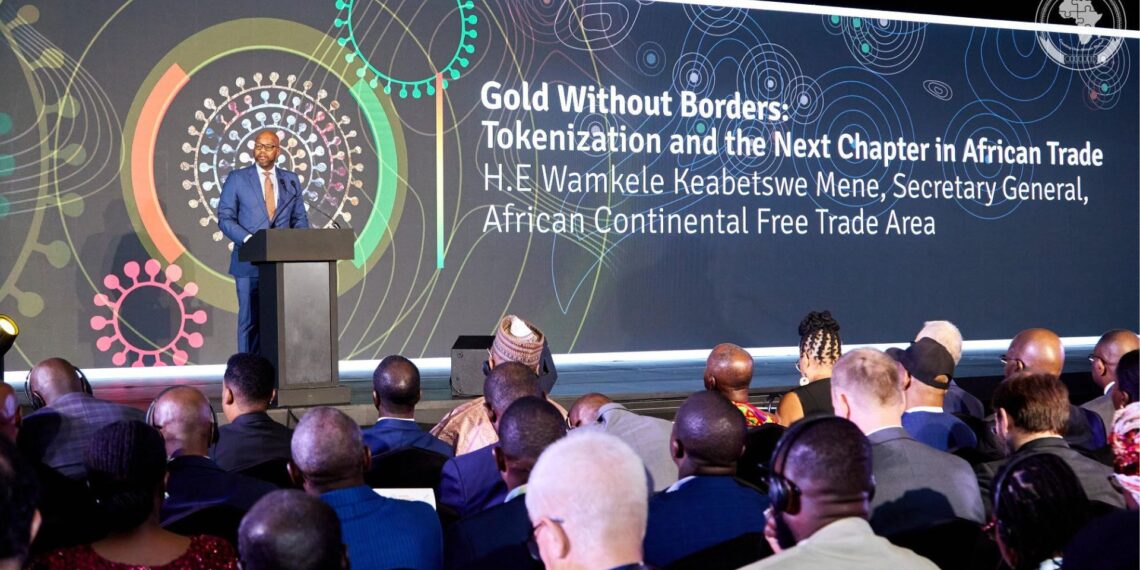
African leaders have boldly called for co-creation between the continent and the United States (US), as the end of the 90-day negotiating period for better tariffs from the Trump administration looms.
During the US-Africa Business Summit held in Angola, the secretary general of the African Continental Free Trade Area (AfCFTA), Wamkele Mene, said the investments that were made in the African Growth and Opportunity Act (Agoa) over the decades benefitted both smallholder farmers on the continent, factories, as well as US investors.
“Through our collective efforts, guided by clarity of purpose and mutual respect, we believe that we have an opportunity to forge ahead in the new US-Africa trade and investment relations with Agoa, at its core.
“This calls for engagement to reinforce the global trading system, the multilateral trading rules that underpin the fairness of trade, open markets for avenues for sustainable development, and a rules-based system with the World Trade Organisation credit score protecting both large and small economies,” he said.
Africa’s agri-food potential
Mene said the objective for Africa is to deepen continental integration, ensuring continuity and predictability of trade, particularly trade between the United States and African countries.
“The evolving landscape of US trade policy and reaffirmed the AfCFTA’s role in positioning Africa not only as a competitive global trading bloc, but as a co-architect of a rebalanced global trade system,” he said.
Related stories
- African free trade ‘must benefit Mpumalanga farmers’
- Leaders urge stronger intra-African trade in agriculture
- Wesgro hails China’s zero-tariff trade boost for Africa
The summit discussed the importance of agriculture on the continent and how Africa’s agri-food sector, employing over 60% of the continent’s workforce and a major contributor to gross domestic product, holds immense potential for modernisation, global integration, and enhanced supply chain efficiency.
“The United States, with its advanced technology, capital, and expansive consumer market, offers a complementary partnership. This dialogue aims to bridge these strengths, tackling challenges such as market access barriers, value-chain inefficiencies, supply chain disruptions, and investment gaps to drive equitable, sustainable prosperity, and strengthen the agri-food supply chain from production to distribution.
“It is important to integrate trade policy alignment, sustainable investment strategies, and supply chain optimisation to address the interconnected opportunities of market access, agribusiness development, and resilient supply chains in US-Africa agri-food systems,” the summit said in a statement.
‘African leaders must find each other’
Deputy minister of trade, industry and competition, Zuko Godlimpi, said the continent’s hard line was drawn around resisting the tide of undermining existing trade rules.
“The miscalculation of reciprocal tariffs, as well as resisting the insistence on bilateral negotiations with each African country as opposed to Africa bargaining as a group. The African Continental Free Agreement is our roadmap to Africa’s shared prosperity,” he said.
Meanwhile, Botswana’s president, Gideon Boko, said as African leaders, there is a great need to find each other, trade with one another, and build unity, for it is only through collaboration and economic integration that they can truly transform the lives of people.
“To fully unlock Africa’s potential, we must invest aggressively in digital infrastructure, fibre optic networks; discussions held reaffirmed the urgency to accelerate these efforts at a continental scale, with collaboration at the centre,” he said.
READ NEXT: New generation, new struggles: Young farmers fight on
Sign up for Mzansi Today: Your daily take on the news and happenings from the agriculture value chain.