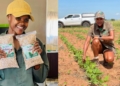
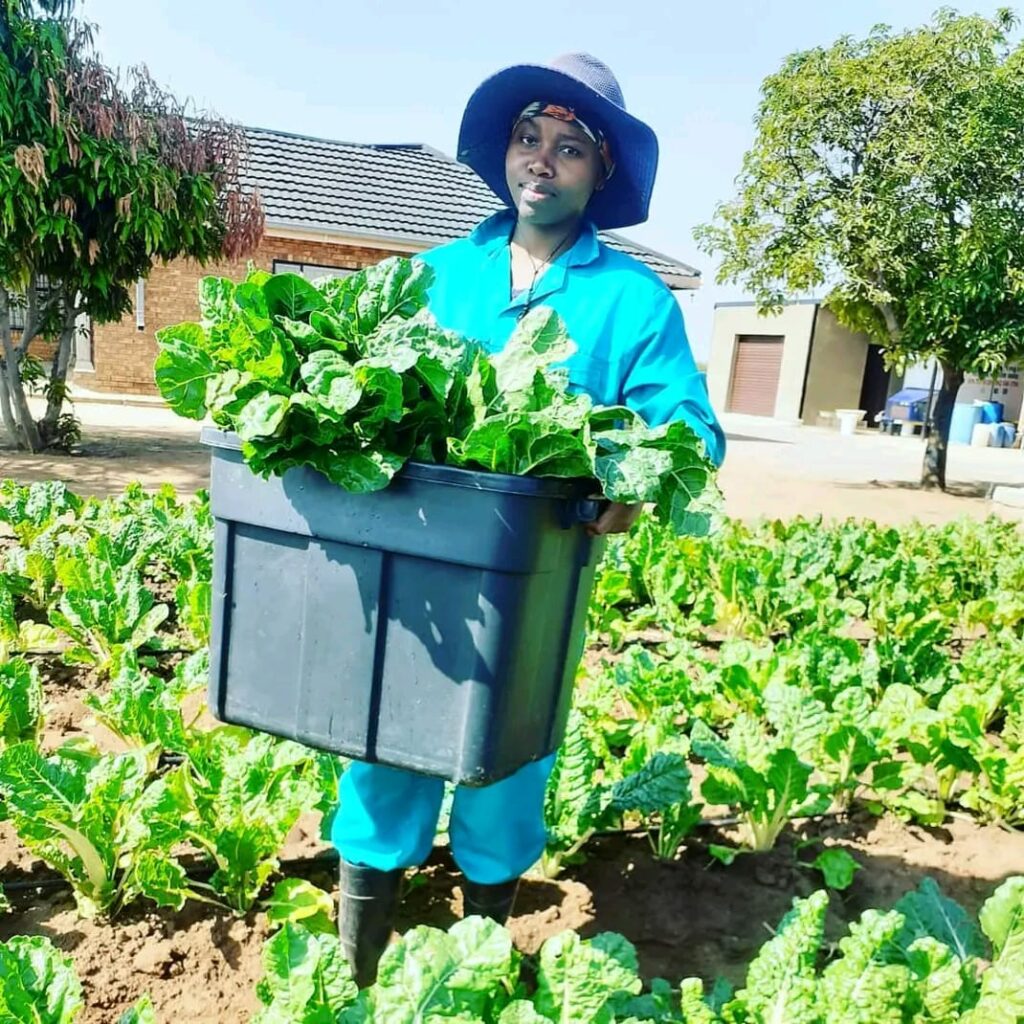
Every morning before the sun rises over the flat plains of Hammanskraal in Gauteng, the first thing Tsakane Ngobeni does is check on her plants.
“I greet them, scout for pests and insects and diseases,” she says. Come sundown, she does the exact same thing. “I do the same routine, scout them, and say good night. I’m like besties with my crops.”
Ngobeni farms on a four-hectare family plot where she cultivates spinach, carrots, cabbage, beetroot, mustard beans, onions, butternut pumpkin, and cowpeas in summer. Cowpeas are more popular with the locals who enjoy her dried morogo, she tells Food For Mzansi.
“My grandmother used to plant and eat morogo known as African spinach. Now the very same plant produces me money. She left me with knowledge and I am now able to carry on where she left off,” says Ngobeni.
A passion ignited
When she was in high school, she fell in love with agricultural sciences and developed a deep fondness for the subject.
“I didn’t want to be a farmer, I wanted to be a food scientist or a food technologist. I wanted to be involved in anything that had to do with food.
“When I applied at different universities, I was accepted for agricultural crop sciences at the University of North West. Then I went with it because at home we live on a 4.5-hectare plot. To me, it seemed like God was aligning me to agriculture because I am now using the same plot to plant my crops and produce food,” Ngobeni explains.
She attended Saddlers Agricultural High School and later the North-West University where she completed a diploma and BSc in agricultural crop sciences. Currently, she is in the process of completing her master’s in life sciences at the University of South Africa (Unisa).
READ NEXT: Niche success: These agripreneurs are changing the game
Nurturing roots
Ngobeni explains that she grew up with her family and grandmother using portions of the plot to plant maize and other traditional crops like cowpeas and nuts.
She then identified a gap and realised that she could improve her home farm. So, she decided to volunteer at a moringa farm where she was given space to produce vegetables for them.
That experience prompted her to start planting vegetables at home and she started a business called Tsakane Agri-Produce 2020 when Covid-19 started.

“In my area, they like that type of dried morogo very much so I pick, dry it, and then sell it to them,” she adds.
She has strategically scattered all her crops on about half a hectare each.
“I produce all my crops on about half a hectare each and sell my produce to Spar, United Meat and Chicken, Tswane Green Market, Roots Butchery, a local market in the community, and Copland who buy from me and sell.
“When we harvested in the recent summer, it was good because my green peppers, tomatoes, and butternuts came out in good numbers. Currently, I have been transplanting a lot of my spinach because of the weather challenges so I am only able to harvest spinach now.
“When it comes to climate, our area is semi-arid and sometimes it’s too hot without rain, and we’re on flat surfaces without surrounding mountains. The climate is very dry sometimes and [we have] less rain.
“Now the weather conditions are becoming cooler, but we also have a very cold winter and the winter does affect our crops. We only pray that winter does not affect us too much, same goes for the summer. But this year we have not received enough rain,” Ngobeni shares.
READ NEXT: Mother’s hustle inspires Maseko’s farming TikTok triumph
Staying inspired
Despite all the challenges, she says doing what she loves keeps her motivated to continue, nonetheless. The support she receives from her family and community members makes her want to carry on and not give up.
“I realised that without me they would not be able to get vegetables because they would have to spend about R40 to travel in two taxis. I love that I get to produce food for my community and family members, which is fresh off the ground,” she says.
The hot and dry climate has been her main challenge, but her father bought her a borehole which alleviated the water issues on the farm. However, due to the heat and the lack of shade netting, she finds herself still struggling to reach maximum produce.
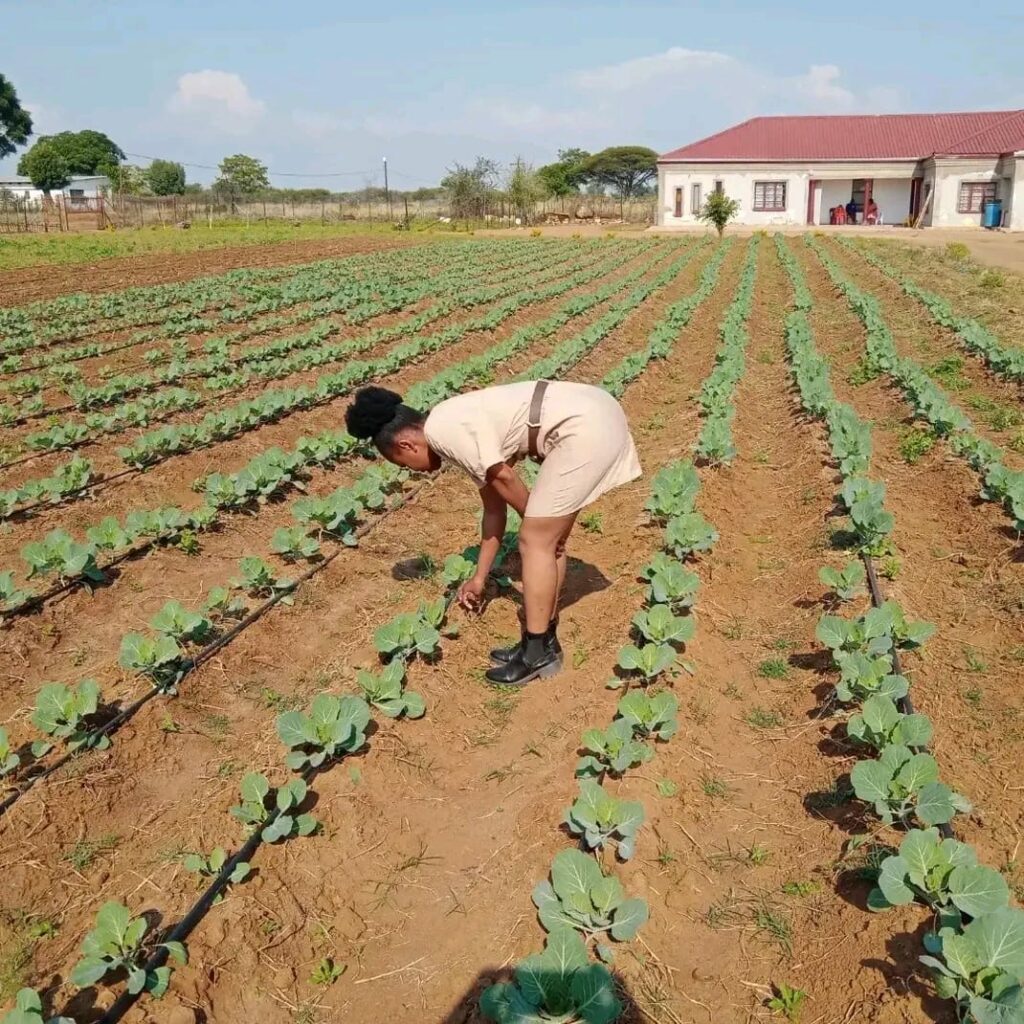
“I managed to go around the no-water situation. However, because of the heat, even the borehole itself is not enough because we need water from the rain,” says Ngobeni.
“I keep going because of my love for what I do, and I push myself by wanting to continue what I do. If I work hard enough, I’ll be able to afford another borehole and shade nets for my farm so that I can have maximum yield.”
Balancing act
Balancing her master’s research in Life Sciences focusing on moringa storage and agro-processing with her personal life and the farm has not been easy. She explains to Food For Mzansi that she has had to add another year because of the pressure.
“It was hard for me because I would go to the farm, and when I got home, I was very tired. I could not focus on school, but fortunately, I submitted my dedication last month. It was not easy because I had to add another year to be able to complete my schoolwork. Me balancing my life and schoolwork and business was not easy,” she says.
Looking ahead, Ngobeni sees herself as an agro-processor, and opening an agricultural training school.
“This year I have started accepting students for leadership programmes and now I want to expand on that and transfer skills to students and community members so that they ‘ll be able to grow their food,” she says.
READ NEXT: FS AgriCareers roadshow leaves 1 000+ learners spoilt for choice
Get Stories of Change: Inspirational stories from the people that feed Mzansi.