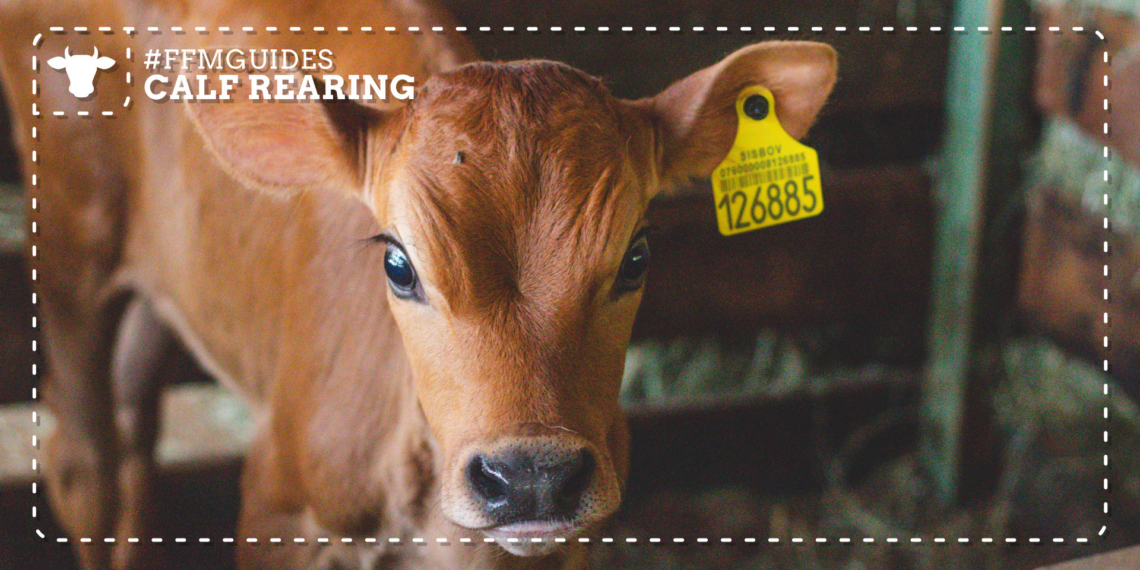
The first hours of a calf’s life can have a lasting impact on its health, growth, and future productivity. From the quality of the cow’s nutrition before calving to how quickly a newborn receives high-quality colostrum, effective early management remains one of the most important foundations of successful beef and dairy production.
To help farmers navigate this critical period, Mampuru Madiga, an agricultural consultant and stud breeder, and Pholisa Bidla, a commercial cattle farmer.
1. The birth weight benchmark
Success starts on day one. Every calf should be weighed at birth to establish an accurate baseline for its subsequent liquid feeding and health programmes.
Producers must look at the big picture from the very beginning. As Madiga puts it: “Without a good cow, you cannot have a quality calf at weaning. We need to take it back to the foundation where it all starts.”
- Feeding by weight: The volume of milk or milk replacer a calf requires is directly tied to its physical mass. The standard regional guideline, supported by the KwaZulu-Natal department of agriculture and rural development, is to feed between 8% and 10% of the calf’s total body mass daily.
- Target birth weights: According to the KwaZulu-Natal Department of Agriculture and Rural Development Beef Production Basic Guide, a calf’s birth mass should strictly fall between 8% and 10% of the mean cow mass. By weaning, calves should ideally reach approximately 42% of the mean cow mass where no supplementary feeding is provided.
Related stories
- The ‘Golden Hour’: Managing a newborn calf’s first hours
- Calf rearing: Why the first few hours define your future herd
- Prevent calf abortions through proper cattle vaccinations
2. The 60-day “double up” rule
A gold standard for healthy neonatal development is for a calf to double its birth weight by 60 days of age. Bidla agrees with this timeline:
“At 60 days, a calf is supposed to have doubled its birth weight. It is essential to continuously measure weight and closely observe the behaviour of the calf as it grows.”
According to technical guidelines for average-sized breeds, producers should target the following weight milestones:
- Weeks 0 to 4: 25 kg to 50 kg
- Weeks 4 to 8: 50 kg to 75 kg. During this phase, Bidla points out that because the rumen is not yet fully developed, calves remain highly vulnerable and sensitive, making careful nutritional management vital.
- Weeks 8 to 16: 75 kg to 140 kg

3. Monitoring methods: Scales vs. estimates
While a digital livestock scale is the most accurate tool available, alternative methods can effectively track growth progress if on-farm equipment is limited.
- The digital scale: Provides the precise data required to calculate average daily gain (ADG) and adjust feed rations accurately.
- The weigh tape: Wrapping a calibrated weigh tape around the calf’s heart girth offers a reliable, low-cost estimate of physical mass.
For intensive dairy rearing, calves should ideally be weighed weekly to allow for individual feed adjustments based on their growth response. However, even under extensive beef conditions on the veld, Madiga notes that, at a minimum, a farmer should weigh animals once a month to effectively track weight fluctuations and identify whether an animal is gaining or losing condition.
4. Visual success indicators
The scale only tells part of the story. Successful producers use visual appraisal to catch underlying health issues before they impact weight gain.
“You can easily see if an animal is responding positively simply by looking at the condition of its coat, its eyes, and its general health status,” says Madiga.
The healthy calf:
Displays a smooth, shiny coat, bright, clear eyes, and alert, curious behaviour.
Warning signs:
Watch out for “cherry eyes” (often caused by severe fly infestations), a decreased appetite, or a fuzzy, thick, and dull coat.
The tell-tale signs of poor growth (“unthrifty” look):
Calves with delayed colostrum intake often fail to build an immune baseline. Madiga observes that delayed colostrum intake weakens the milk reflex, allowing the system to absorb pathogens that take a heavy toll on health. Visually, these animals develop a classic “big belly” (or potbelly) appearance, where the abdomen distends abnormally while the chest and hindquarters remain thin and skeletal due to muscle wasting.
5. Weaning by weight, not just the calendar
Producers should never wean based solely on the calendar. A calf is ready for the transition to solid food only when its complex stomach system is sufficiently developed. Madiga highlights that from six weeks onwards, the rumen has developed enough for the calf to efficiently digest solid feed.
To ease this transition, Bidla advises introducing creep feed 30 to 40 days before weaning to bridge nutritional gaps and reduce weaning stress. Madiga adds that offering a high-energy, highly palatable starter feed acts as a form of comfort eating that helps smooth the transition.
- Dairy calves: Technical guidelines note that milk feeding can be safely discontinued when the calf is consistently consuming a solid concentrate benchmark of roughly 0.4 kg to 0.5 kg of palatable, high-energy calf starter meal per day.
- Beef calves: For beef calves, solid creep feed is typically introduced between 2 and 4 months of age, as the dam’s milk supply alone is no longer sufficient to meet the calf’s total energy demands.
- The 50% rule: Many extensive beef breeders aim to wean based on the frame size of the dam. As Madiga shares from his experience: “When the calf reaches around 40% to 50% of the mother’s weight, we wean them off.”
Striking this balance protects both animals; keeping the calf close to the mother during the transition helps it handle weaning stress, whereas abrupt, premature separation without an energy buffer causes severe growth checks.
Don’t miss these articles focused on calf rearing:
READ NEXT: Growing women’s role in agriculture demands urgent land access