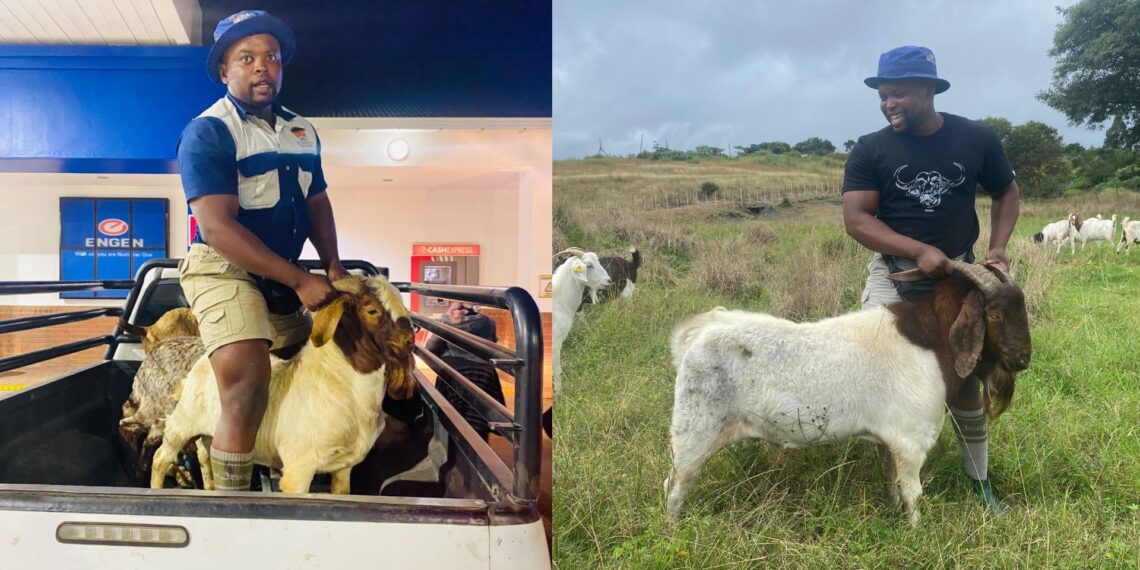
Njabulo Ngema’s dedication to livestock farming began as a boy, inspired by his grandfather’s goats. Today, his Philinjabulo Business Enterprise, focusing on hardy Savannah, Boer, and Kalahari Red goats, not just pays the bills but also pays homage to his roots.
Ngema had to grow up quickly, learning independence from a young age. Losing his mother as a child made that independence even more necessary, but her lessons stayed with him, shaping the person he would become.
His love for animals was constant. That childhood passion grew into a commitment to livestock farming, guiding him as he hones his skills, builds his name, and contributes to his community in Vryheid, KwaZulu-Natal.
Nurturing a love for animals
Having multiple homes is something many people experience growing up. For Ngema, this meant moving between suburban Claremont in north KwaZulu-Natal and the rural life of his grandmother Margaret Ngema’s home in Vryheid.
His grandfather, Milton, farmed goats, and watching him care for them left a lasting impression, teaching Ngema patience and dedication.
When he lost his mother in 2017, his world was shaken, but he was supported by his family, including his aunt, who encouraged his growing passion for animals.
“Life changed for me when I lost my mom in 2017, and I had to relocate to Vryheid. That move exposed me to rural life full-time. My aunt Nomxolisi Ngema sent me to college because she said it would help me better understand farming. I have loved animals since I was a child,” he shares.

Ngema studied farming management at Mthashana TVET College in Ulundi from 2018 to 2019.
Related stories
- A new breed of farmer: Mmadipilo blends Brahmans and tourism
- Tshwagong: Raising Brahmans, building dreams, feeding Mzansi
- Goat farming: Key steps to get you started and grow
- Why Kalahari Red goats are winning over SA farmers
Goats that grow dreams
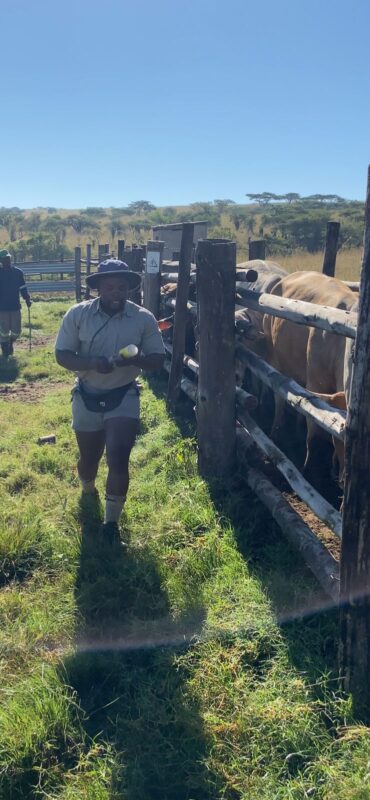
In 2020, Ngema completed his practical training at Ncome Correctional Services in Vryheid, where he gained hands-on experience in piggery, beef production, crop production, tractor driving and basic production workshops.
These skills, he says, have helped him prevent losses by knowing which diseases are common, when to vaccinate, and how to spot early symptoms before an outbreak occurs.
“It was an eye-opener. The theoretical knowledge guided me in the right direction for planning and management.”
While doing his practical training, Ngema started a stokvel, which later helped him launch his business, Philinjabulo Business Enterprise. His gogo also contributed funds.
He started with 30 goats, mainly Savannah, Boer and Kalahari Red. Ngema explains that 28 of the females were pregnant, and he bought two rams, one large and one small. Each pregnant female cost R4 000, the large ram cost R1 000, and the smaller one was R500.
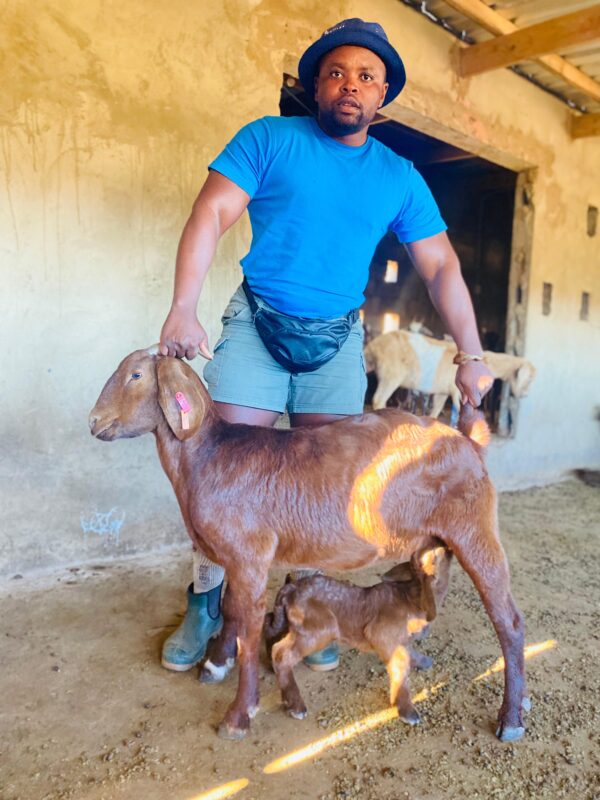
He notes that Savannahs are good for meat production, just like Kalahari Reds, and both breeds are hardy.
“They are in demand for slaughter, especially in December when people host traditional ceremonies such as weddings and umembeso.”
He adds that Savannah goats are also sought after by traditional healers because white goats without spots are rare.
Ngema continues to receive strong support through word of mouth from his community in Nkande Reserve, as well as from Emondlo, Kingsley, Nquthu and surrounding areas.
Looking after his herd’s health
Although his goats graze on communal land, Ngema says his nephew ensures they return home on time. “They go out to graze in the field and come back at 4 pm,” he adds.
Immediately upon their return, each goat is given a ration of pellets with crushed maize for trace minerals.
Ngema emphasises that, alongside feeding, keeping up with vaccinations and general care is key to goat farming. His livestock routine includes providing mineral blocks, dipping animals for ticks, and giving the right feed for optimum performance.
He explains that in autumn and winter, the routine remains the same, but the feed changes; they receive lucerne bales. Pregnant goats are given a specially formulated feed along with crushed maize. “What I enjoy most is taking care of livestock, mixing animals to crossbreed, and improving genetics,” he says.
He vaccinates all his goats according to age and season. Regarding deworming, Ngema says he treats young animals every 6–8 weeks and then deworms the others as necessary.
Future in the making
Ngema tells Food For Mzansi that even people with 9-to-5 jobs are struggling financially, so starting something on the side is important.
“Have a solid plan with projections to minimise unfavourable outcomes,” he advises. “You must be disciplined with money. This is not a 100 metre race but a marathon, so patience is needed.”
He hopes that his Philinjabulo Business Enterprise will one day supply packaged meat, fresh and dried, to shisanyama spots and local restaurants.
“If I could get funding, I would venture into agro-processing by setting up my own feedlot and abattoir for beef cattle.”
But for now, he looks after his herd and immerses himself in the joys of goat farming.
READ NEXT: Ditlopo builds future with Boer goats and Brahmans