Saturday, September 5, 2026
SUBSCRIBE
22 GLOBAL MEDIA AWARDS
Food For Mzansi
  • News
  • Changemakers
  • Lifestyle
  • Farmer’s Inside Track
  • Food for Thought
No Result
View All Result
  • News
  • Changemakers
  • Lifestyle
  • Farmer’s Inside Track
  • Food for Thought
No Result
View All Result
Food For Mzansi
No Result
View All Result
in Lifestyle, News

Harvesting in the heat? Tips to protect your skin

South Africa's summer heralds a busy period for farmers and their workers as harvesting season kicks off. This also comes with dangers given the harmful effects of the sun. To help them all stay protected, farmers share some tips to keep everyone safe as temperatures hit new highs

by Vateka Halile
4th January 2024
Harvesting in the heat? Tips to protect your skin

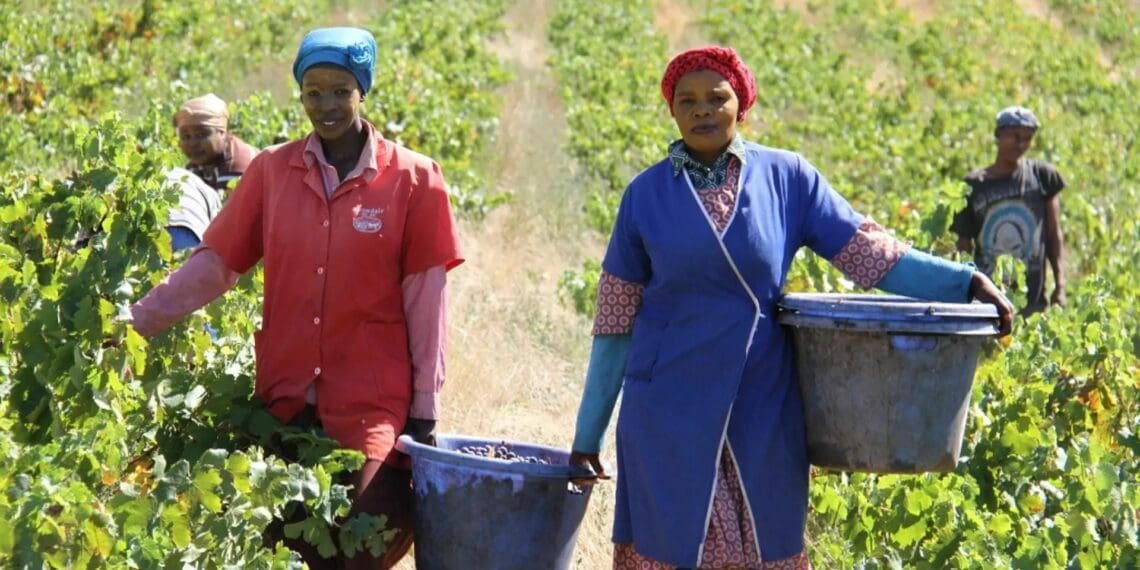
In South Africa, women are consistently overrepresented in unemployment, earn up to 35% less than men, and are disproportionately impacted by poverty. The Rural Women's Assembly is calling for food justice and decisive policy action. Photo: Supplied/Zandwijk Wine Farm

Share on FacebookShare on TwitterShare on WhatsApp

Across South Africa, farms are gearing up for harvesting season. This means that farmers and their employees will be spending long hours under the blazing hot summer sun, picking fruit or tending to crops making skin protection vital.

Which is why preventing heat stress amongst farmworkers is top priority for farmers, especially this time of the year.

Food For Mzansi spoke to several farmers and farmworkers who shared their top tips on how to avoid becoming ill from heat while harvesting this season.

Mzansi’s traditional make up

According to Athizintle Nkaqa, owner of Flying Eagle farming in Flagstaff in the Eastern Cape, sun protection is an important feature on her farm. Nkaqa said, usually this time of the season women can be seen rocking imbolo on their skin to protect them from the sun.

Imbolo, letsoku, ibomvu – whatever you may call it – is a usually red ochre that is processed into powder and then blended into a paste which is then used as body paint by both men and women.

“When I spray in the field utilising chemicals, I cover my face to protect my face from being hurt by the toxins.

“It doesn’t stop there; I also wear gloves, work suits, or long-sleeved gear, and I apply sunscreen to my face and visible areas while wearing safety shoes.”

Nkaqa said staying dehydrated is important, which is why she always takes a bottle of water with her into the field.

Hemp lotion and protective gear

Phiwokuhle Myoyo, a cannabis and hemp farmer in the Eastern Cape, said her job requires her to sit in the field and tend to her crops the entire day. This makes protecting her skin a top priority for her.

However, instead of turning to Mzansi’s traditional face mask, she makes use of a different kind of protective mask.

“I use a cannabidiol (CBD) and methylsulfonylmethane (MSM) [infused] lotion manufactured from hemp. [This is] combined with our hemp oil, one of the items that we manufacture at our Eastern Cape Provincial Heritage Resources Authority in the Amathole district, Eastern Cape,” Myoyo explained.

These items, she added, protect her skin long after spending days in the sun. She also applies it as aftercare.

In addition to this, Myoyo also wears a long-sleeved work uniform to shield herself from insects. She claims that the cream and oil mixture protects her all day without causing her to sweat.

Abitzfarming supervisor Justin Mwadala, from the Western Cape, is all too familiar with protective gear while working on the farm.

“We have plenty of water on hand, and on sunny days, we cover up with long garments and hats for shade.”

Exposure to the sun without a hat is likely to result in headaches, he explained.

More tips to avoid heat stress and skin damage on farms:

  • Monitor temperature and humidity, and workers’ responses at least hourly in hot environments.
  • Schedule heavy work and tasks requiring personal protective equipment (PPE) for the cooler hours of the day.
  • Acclimatise workers gradually to hot temperatures.
  • Shorten the length of work periods and increase the length of rest periods.
  • Give workers shade or cooling during breaks.
  • Halt work altogether under extreme conditions.
  • Make sure employees drink at least the minimum required amounts of water to replace body fluid lost through sweating.

ALSO READ: Mzansi feels climate change in their pockets

Sign up for Mzansi Today: Your daily take on the news and happenings from the agriculture value chain.

Vateka Halile

Vateka Halile grew up in rural areas of Cofimvaba in the Eastern Cape. She was raised in a traditional family setting and found writing to be a source of comfort and escape. Vateka participated in an online citizen journalism course through Food For Mzansi, and her passion for health and medicine-related stories was born. Her dedication to community work and love for social justice and solidarity spaces is evident in her quality time with the community when she isn't working.

Tags: Commercialising farmerEastern CapeFarmworkersharvestingInform meWestern Cape
News

Aucamp outlines strategy for biosecurity, trade, and infrastructure

by Tiisetso Manoko
2nd September 2026

In an exclusive interview with Food For Mzansi, agriculture minister Willie Aucamp outlines his vision to accelerate the AAMP, tackle...

Read moreDetails
Tobias Doyer, CEO of Grain SA. Photo: Supplied/Grain SA Facebook

Rising costs, climate risk push Swartland wheat farmers to the brink

2nd September 2026
Sick spuds: No need to panic as SA’s potatoes are banned in Zim

Potato turning point ahead as onions double in price year-on-year

1st September 2026
Early calf care: Key growth targets every cattle farmer must track

Early calf care: Key growth targets every cattle farmer must track

1st September 2026

How to align your farming cycles with long-term financial success

1st September 2026

Tough times, hardy cattle: Why Mzansi farmers are choosing Nguni

Mamelodi farmers learn how to test soil with just a bottle and spade

Early calf care: Key growth targets every cattle farmer must track

Aucamp outlines strategy for biosecurity, trade, and infrastructure

Gauteng farmers urged to harness massive urban market

Join Food For Mzansi's WhatsApp channel for the latest updates!

JOIN NOW!
Next Post
Cautious optimism as agri graduates look to secure jobs

Cautious optimism as agri graduates look to secure jobs in 2024

THE NEW FACE OF SOUTH AFRICAN AGRICULTURE

With 21 global awards in the first six years of its existence, Food For Mzansi is much more than an agriculture publication. It is a movement, unashamedly saluting the unsung heroes of South African agriculture. We believe in the power of agriculture to promote nation building and social cohesion by telling stories that are often overlooked by broader society.

Honoured roots: A father’s legacy, a daughter’s farming dream

Gauteng farmers urged to harness massive urban market

Foot-and-mouth crisis hits SA dairy industry with R1-billion loss

Tough times, hardy cattle: Why Mzansi farmers are choosing Nguni

Dragon fruit thrives in KZN valley despite tough national season

Government hikes sugar import price, but industry warns of gap

  • Awards & Global Impact
  • Our Story
  • Contact Us
  • Cookie Policy
  • Privacy Policy
  • Copyright

Contact us
Office: +27 21 879 1824
News: info@foodformzansi.co.za
Advertising: sales@foodformzansi.co.za

Contact us
Office: +27 21 879 1824
News: info@foodformzansi.co.za
Advertising: sales@foodformzansi.co.za

  • Awards & Global Impact
  • Our Story
  • Contact Us
  • Cookie Policy
  • Privacy Policy
  • Copyright

Chat Options

I'm Lerato, your AI assistant!
No Result
View All Result
  • News
  • Changemakers
  • Lifestyle
  • Farmer’s Inside Track
  • Food for Thought

Copyright © 2024 Food for Mzansi

This website uses cookies. By continuing to use this website you are giving consent to cookies being used. Visit our Privacy and Cookie Policy.