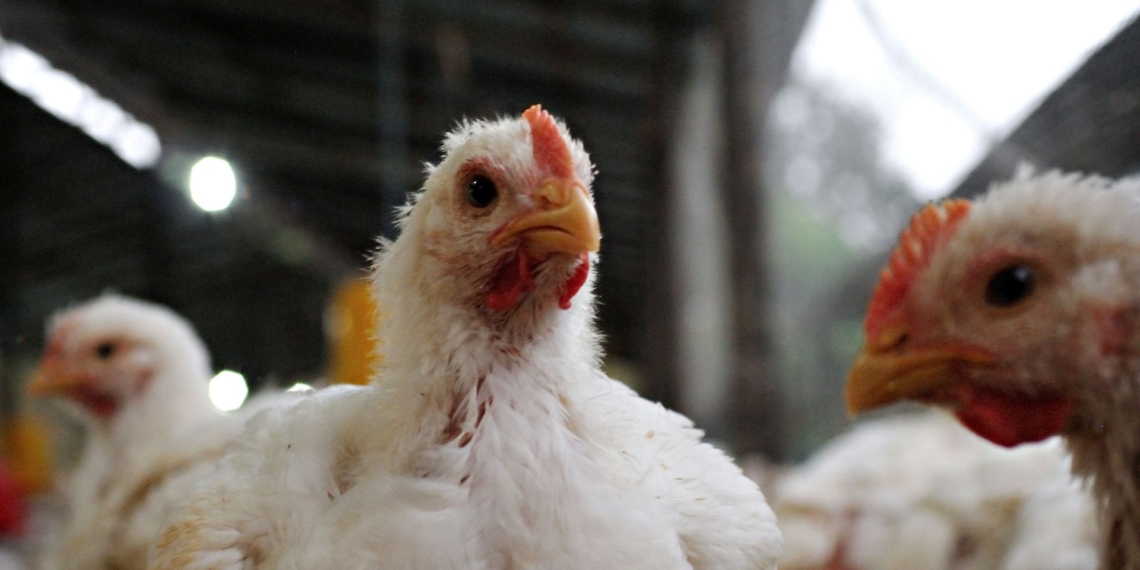
South Africa’s poultry industry is urging the government to expedite approval of practical vaccination protocols against highly pathogenic avian influenza (HPAI), warning that biosecurity measures alone will not be sufficient to prevent another devastating outbreak.
Speaking during a recent webinar hosted by FairPlay, industry leaders and producers agreed that while farms have significantly strengthened biosecurity since the 2023 bird flu crisis, vaccination must become part of a broader disease management strategy to safeguard food security, jobs and export markets.
Izaak Breitenbach, general manager of the Broiler Organisation at the South African Poultry Association (SAPA), said the industry has spent the past three years working with government to facilitate vaccination, but progress has been slower than anticipated.
“There is a lot of attention on foot-and-mouth disease at present because it is affecting our cattle. But highly pathogenic avian influenza is no less important. The difference is that we do not currently have the disease, which means we still have an opportunity to prevent a future crisis,” he said.
Breitenbach explained that SAPA submitted a Section 23 application in April 2026 after objecting to the vaccination protocols issued by the Directorate of Animal Health.
“Our concern was not about lowering standards. We want scientifically proven biosecurity and monitoring protocols that the majority of producers can realistically implement,” he said.
Related stories
- Relief for poultry farmers as govt allows bird flu vaccination
- Govt and industry unite for phase 2 of Poultry Master Plan
- State delays choke SA’s multi-billion rand poultry export potential
- Poultry industry on edge as winter bird flu threat looms
Although the previous minister announced that the industry’s recommendations had been considered, Breitenbach said SAPA is still awaiting formal feedback and has since approached the new minister of agriculture to continue discussions.
Biosecurity remains essential, but has limits
The technical executive for agriculture at Astral Foods, Obed Lukhele, said biosecurity remains the foundation of bird flu prevention, but international experience has shown it cannot eliminate all risks.
“The conventional way to prevent and control bird flu is through biosecurity, movement control and culling infected birds. But worldwide it is now accepted that biosecurity on its own is not sufficient. Vaccination is another tool that should support biosecurity.
Lukhele said HPAI remains a notifiable disease because of its significant trade implications and highlighted the increasing threat posed by the current H5N1 strain.
He emphasised that vaccination should be science-based and supported by robust surveillance systems. According to Lukhele, using the correct vaccine alongside continuous monitoring would help control the disease while maintaining export opportunities, an approach that is increasingly being adopted as international best practice.
Lessons from the 2023 outbreak
Commercial poultry farmer John Fourie said the 2023 outbreak fundamentally changed the way producers manage their farms.
“Biosecurity stopped being something we focused on only during outbreaks. It became part of our everyday culture,” he said.
He explained how practical improvements, such as dedicated inside and outside footwear, stricter access controls, improved cleaning protocols and faster reporting of suspicious disease, have become routine across many farms.
However, he acknowledged there are limits to what producers can achieve.
“There comes a point where we simply cannot biosecure our way out of every risk. Wild birds do not respect farm boundaries.”
John Fourie
Fourie said vaccination should complement, rather than replace, strong biosecurity measures. He stressed that effective outbreak preparedness is built through the daily decisions farmers make, the standards they consistently uphold and a farm culture that prioritises disease prevention long before an outbreak occurs.
Lukhele also called for stronger state veterinary capacity, including improved surveillance of wild birds and backyard poultry.
“We need a robust wild bird surveillance programme and stronger veterinary services. At the moment, we do not fully understand the level of risk in backyard poultry or wild bird populations,” he said.
Asked what message he would give the minister of agriculture, Breitenbach said engagement with industry should be the immediate priority.
“The first step is for the minister to meet with the industry to understand the complexity of South Africa’s second-largest agricultural industry.”
READ NEXT: Drought and heatwaves force SA maize farmers to adapt or switch