The saying “you are first and foremost a grass farmer” is a reminder that managing your pasture effectively is just as important as managing your animals. Effective rangeland management is at the heart of successful livestock farming.
With increasing pressure on land resources, unpredictable weather patterns and the rising cost of supplementary feed, farmers need practical strategies to maintain healthy pastures while optimising animal performance.
One such strategy is the use of grazing camps, a structured approach that allows farmers to balance livestock needs with pasture recovery.
Grazing camps are a proven method of improving pasture health, reducing feed costs and ensuring year-round nutrition. Rangeland scientist Patrick Rakau from the Agricultural Research Council (ARC) shares insights on how to plan and manage grazing camps for maximum benefit.
What are grazing camps?
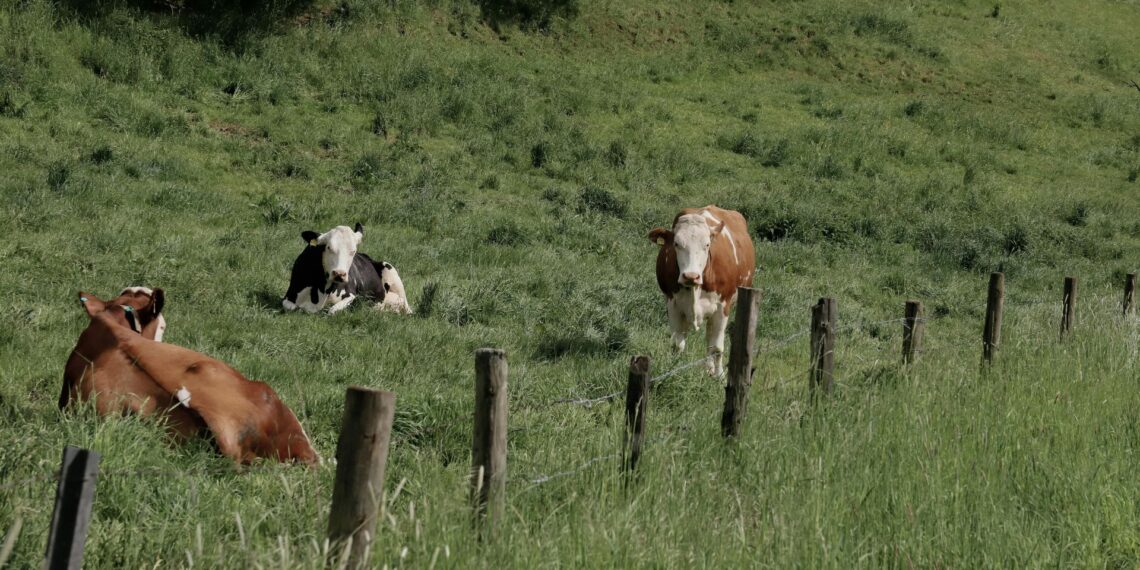
Grazing camps are fenced sections of rangeland designed for controlled livestock grazing. Instead of allowing animals to roam freely, land is subdivided and livestock are rotated through each camp according to a planned system.
Related stories
- Ten tips to establish grazing pasture and boost profits
- Optimise your pastures: A guide to effective rotational grazing
- Sustainable grazing is key to livestock success
- Purpose in pastures: Dale Hutton’s journey to dairy excellence
Why it matters:
- It controls grazing pressure
- Prevents overgrazing of palatable species
- Allows plants time to recover
“Animals, like people, select what tastes best first. If left uncontrolled, they will graze palatable species heavily, then move to semi-palatable, and finally unpalatable species. Grazing camps force livestock to utilise all species, giving palatable plants a chance to recover,” Rakau explains.
Assessing your land
Before dividing your land into camps, understand your field conditions:
- Identify dominant species and their palatability
- Calculate the carrying capacity of your land
- Determine the stocking rate based on the field condition
“Well-planned camps provide sufficient nutrients for livestock throughout the year. If your land is dominated by unpalatable species with low crude protein, you will need to spend money on supplements to maintain your animals’ body weight,” Rakau notes.
Factors to consider when setting up camps
When dividing your land, several elements affect the success of grazing camps:
- Field type and soil: Sour, mixed or sweet veld; soil type affects vegetation and water retention.
- Topography: Slope influences run-off and soil erosion.
- Rainfall patterns: Local rainfall determines how quickly pasture regrows post-grazing.
- Camp size and water access: Livestock must have access to drinking water.
“[Communal] farmers should work in groups to purchase fencing. Without proper separation, livestock will roam freely, defeating the purpose of rotational grazing,” Rakau advises.
Implementing a rotational grazing system
A four-camp rotational system is recommended:
- Rest one camp during the growing season (e.g. November-January).
- Rotate livestock through the remaining three camps for the rest of the year.
- The rested camp becomes an “ICU” (intensive care unit) for animals needing high-quality feed.
“This system ensures that each camp recovers fully, providing enough fodder for winter and early spring. Even if your herd is small, resting one camp in the growing season is critical,” Rakau explains.
Rakau shares a stocking rate tip: Calculate using the field condition score and carrying capacity. Adjust the number of animals per camp to prevent overgrazing.

Monitoring and adjusting grazing
Observing livestock behaviour and pasture condition is key:
- Watch for bare patches, which indicate overgrazing of palatable species.
- Monitor animal movement to see if livestock are over-concentrating in one area.
- Remove animals if the grasses are overgrazed.
“Once animals start removing the plant canopy where nutrients are stored, the grass cannot photosynthesise and may die. To maintain pasture health, palatable species must be given time to recover and reproduce,” he says.
Farmers should assess veld conditions annually to track pasture health and adjust stocking rates where necessary. Here is a guide from the ARC on calculating veld condition scores.
Rakau advises farmers with an expert assessment to establish their camps and then recheck their land each year. Using a benchmark area in each camp can help monitor species composition, allowing farmers to detect whether palatable species are declining.
This serves as a signal to reduce stocking rates or adjust grazing patterns. Rakau notes that proper management of natural pastures in this way is far more cost-effective than relying on supplements or establishing newly planted pastures.
Key benefits of grazing camps
- Maintains palatable species and pasture diversity.
- Reduces feed costs and reliance on supplements.
- Improves livestock nutrition and weight gain.
- Increases veld condition score and carrying capacity.
“Farming is expensive, but if managed correctly, it is rewarding. Grazing camps give your animals and your land the best chance to thrive,” Rakau notes.
Grazing camps and conservation agriculture
Grazing camps also support conservation agriculture, which focuses on three principles: soil cover, crop rotation and minimum or no tillage.
“When you rest your camps, plants can regrow, reproduce and multiply. Grazing animals contribute to soil health when grazing grasses by pushing carbon back into the soil, activating organic matter and improving soil fertility. This covers the soil, retains moisture and prevents erosion.
“Soil, plants, and animals work hand-in-hand; if managed properly, it’s a natural and sustainable system,” Rakau concludes.
READ NEXT: Agricultural insurance: Common mistakes and how to avoid them