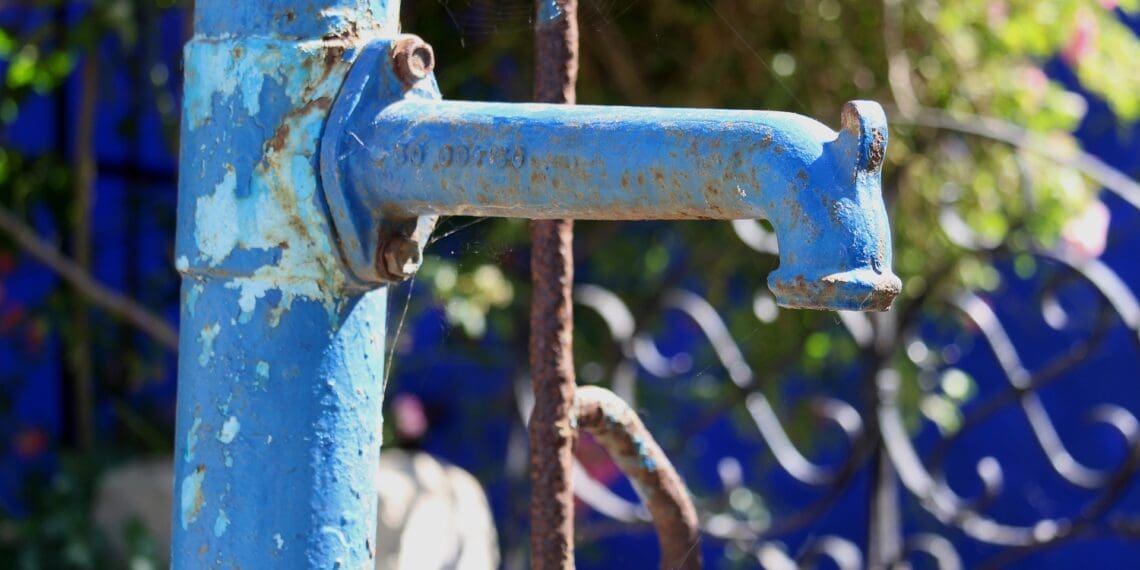
Persistent water shortages in the city of Johannesburg pose a significant threat to agriculture as water reservoirs across the city remains critically low. Farmers worry for their produce and livestock, and what it could potentially mean for food security.
Gauteng’s water crisis has been developing for many years with no signs of any turnaround soon. Many parts of Johannesburg are still without water or have limited supply due to constrained reservoirs and towers.
Critical systems, according to Johannesburg Water, included Meredale and Watervale reservoirs. Other areas with a lower supply encompass Brixton, Yeoville zone, South Hills, Alexander Park, Linksfield, Randjieslaagte and Grand Central.
“I make use of hydroponics, and the use of water does affect us because we cannot water our plants,” said urban farmer Fezile Msomi.
Although the tanks on her farm stores water, small-scale farmers who do not have enough storage and alternative sources have a hard time when there are water cuts.
Load shedding worsens the problem
“I experience problems when we have load shedding,” Msomi told Food For Mzansi. “We can have solar panels, but they can only last so long. So, for only four hours we have electricity, but afterwards, we don’t, and then my plants cannot keep cold.”
Meanwhile, Rustenburg farmer Simon Hartely shared the same sentiments, blaming his most prominent water issues on load shedding. According to him, this already led to the destruction of his borehole pump.
“We had good rain in November last year and January has been a very dry month for us, and this is a time when many people really need water in terms of irrigation. But if there is no electricity to power the irrigation systems, then we have a problem.”
‘Food insecurity will cause ripple effect’
Director at the Centre for Ecological Intelligence, Michael Rudolph, believes that the lack of water poses a major risk to the agricultural sector of South Africa.

He said farmers would be particularly challenged in providing enough food that is also of good quality.
“This would lead to food insecurity,” Rudolph said. “And this is a ripple effect situation. Without enough food, we have food insecurity and then we will have nutrition insecurity.”
Rudolph said without proper meals, the youth is negatively impacted.
The biggest challenge that they face is not having access to enough food and research has revealed that 30% of the population in Johannesburg is faced with food insecurity, he explained.
“Water is key to any agricultural development, so this is a real issue.”
Water-saving methods and alternatives
The Centre for Ecological Intelligence is, however, working on different water-saving methods, namely water harvesting, drip irrigation, solar boreholes, and creating water-saving awareness.
In addition, through the help of engineers from the University of Johannesburg, Rudolph has managed to come up with alternative systems for efficient and effective uses of water.
“The lack of rain, the heat, and the lack of water because of the problem in Gauteng – that makes for a very difficult combination. Particularly small-scale farmers who are very dependent on their limited space to produce so that they can make a living, whereas larger farmers have different options.”
Planned cuts
In the meantime, Johannesburg Water has called on residents to reduce their consumption, adding that it will “significantly assist in the recovery of the affected systems.”
In the coming days, more areas will be affected, especially those in higher-lying areas.
On Tuesday, 7 March from 08:00 to 17:00, some areas in the city will not have water due to a bulk line valve installation.
The affected areas include Kew, The Gardens, Rembrandt Park, River Park, Glenhazel, Sandringham, Silver Mond, Lombardy East, Bramley, Bramley View, Wynberg, Athol Hurst, and Alexandra.
READ NEXT: Is groundwater a solution to Mzansi’s water shortages?
Sign up for Mzansi Today: Your daily take on the news and happenings from the agriculture value chain.