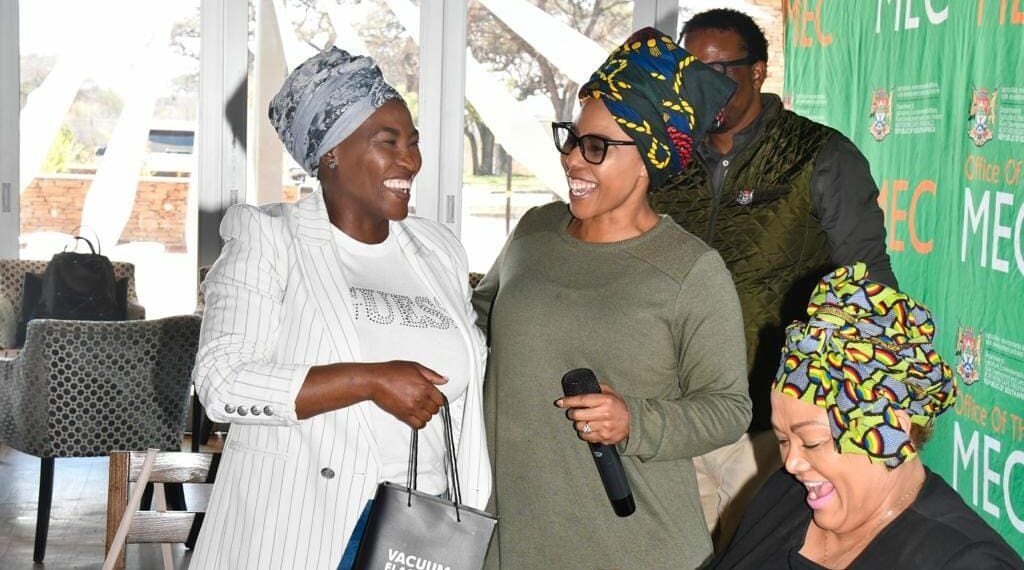
In honour of women in agriculture, Northern Cape MEC for agriculture, environmental affairs, rural development and land reform Mase Manopole praised and acknowledged the hard-working women in her department.
“I would like to take the time to acknowledge your good selves, a group of incredible women who contribute significantly to [the department of] agriculture, environment, rural development, and land reform,” she said during a three-day event hosted in Kimberley.
“Your contributions fuel progress and inspire us to continue breaking barriers and shattering ceilings.”
Manopole explained that since she joined the department, she had the privilege of meeting and conversing with women in the department, as well as the broader agri sector.
READ NEXT: NC farmers’ association celebrates women in farming
‘When women are involved, projects succeed’
She said she noticed that wherever women are, their projects mostly flourish and succeed.
“And the one consistent message that I keep on reiterating to the department and women at large is that I want to see more women, particularly in the sector represented in leadership and management positions, with clear aspirations beyond the current positions they hold.”

Women must form a central part of all efforts to build a more inclusive, equitable, and re-distributive agricultural and environmental economy through deliberate, and intentional empowerment programmes for women, she added.
Importance of women’s empowerment
Manopole believes that empowerment is also about women experiencing the freedom to participate freely in the day-to-day activities and roles of leadership. This freedom must be the collective struggle, she expressed.
“Leadership has been embedded in women. We lead in our homes, our families, our communities. We lead in churches, in stockvels, we lead in small community burial societies, not because we are forced to, because we are capable and talented.”
As a result, these leadership roles that are embedded in women should transcend very well in the workplace, Manopole emphasised.
ALSO READ: It’s time for women to enjoy a bigger slice of CPA pie
Male/female representation
“When I look at our departmental statistics, our current staff establishment comprises 721 employees of which 372 are females and 350 are males.”
She explained that of the seven chief director posts, the department has five males and only two women. Of the 13 director posts, nine are men and four are women. Furthermore, out of 27 deputy director posts in the level 12 category, 18 are men and 9 are women.
Out of 56 deputy director posts (level 11), 30 are men and 26 are women. For assistant directors in the level 10 category, there are 17 men and 10 women. In level 9, there are 33 men and 16 women.
She said the women are only in the majority on level 5-8 positions, which is in a way, entry-level positions. Currently, the figure stands at 229, she said.

“We will not achieve the department’s agenda of transforming women in the sector if we don’t organise ourselves and have these gatherings as women in the department, who are the actual drivers of this agenda,” Manopole highlighted.
Women going into agri-leadership
Manopole urged the attendees to remember those who have paved the way and to remember that the month of August is not only a celebration but a call to action.
“Women need to take their rightful position at the echelon of leadership in our department. It is not a favour, it is where we belong. We are women and leaders in our own right.
“The department extends gratitude to all those who have contributed to the success of this event and to the women who continuously shape our future,” she said.
Manopole said her department will march forward together, ensuring that their collective efforts bear fruit in the fields of prosperity, sustainability, and equality.
ALSO READ: ICYMI: Devastating veld fires leave NW farmers depleted
Sign up for Mzansi Today: Your daily take on the news and happenings from the agriculture value chain.