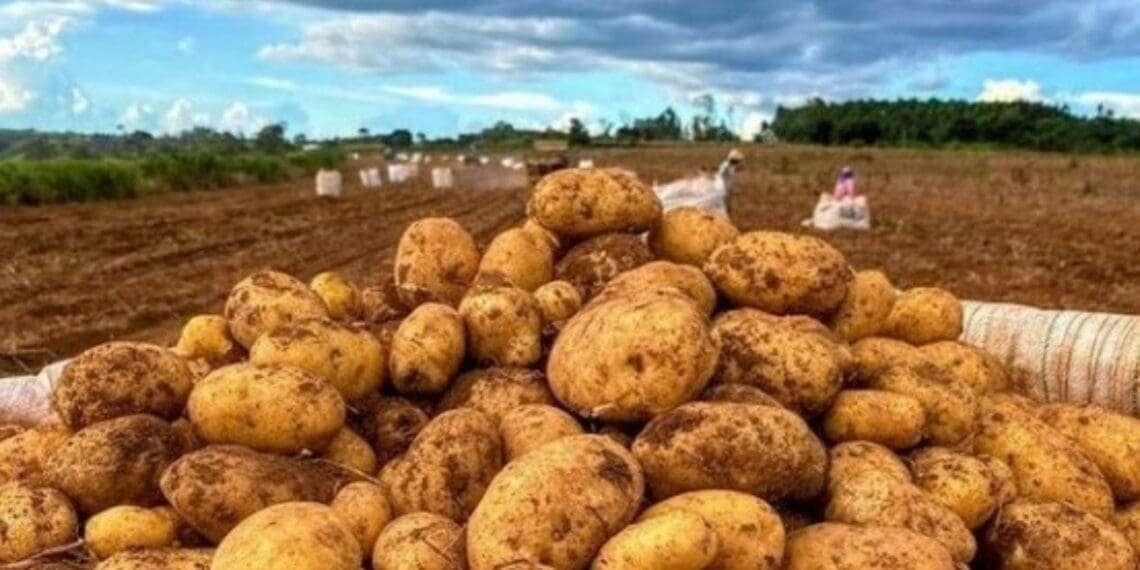
Unlike Kenyan growers, South African potato producers appear to have a better relationship with its local processing and fast food industries. In Mzansi, an average of about 2.6 million tonnes of potatoes are harvested annually, of which 19% is processed into slap chips or crisps for the local market.
Recently, fast food chain KFC in Kenya sparked an uproar when it announced running out of imported potatoes because of global supply chain disruptions. KFC added that it would be unable to offer fries to its customers because they could not import the chains preferred pre-sliced potatoes from Egypt.
The news had unintended consequences with Kenyans taking to social media to admonish the chain for not making use of local potatoes.
The fast food chain has, however, since announced plans to localise its potato supply chain in Kenya.
ALSO READ: KFC Kenya under fire for not using local potatoes
What about Mzansi?
With the spotlight on the industry and the support its growers enjoy, Food For Mzansi spoke with Potatoes SA’s CEO, Willie Jacobs. We wanted to find out whether local producers had run into similar problems and what the current state of the industry looks like.
According to Jacobs, “Currently SA has sufficient levels on the Fresh Produce Markets to meet the demand for fresh potatoes.”
This after bad harvest weather conditions last year caused shortages on some varieties locally. Farmers experienced crop damage due to cold and wet weather, which affected the availability and price of potatoes in the country.
On the back of the Kenyan potato saga, Jacobs said that there are a number of processing companies contracting local potato producers.
“Most of the processing companies contract local potato producers to plant cultivars that are bred and developed to meet the specific requirements for their processing.”
Willie Jacobs, Potatoes SA CEO
These cultivars have specific characteristics, for instance a high percentage of starch as consumers prefer crisps or slap chips that do not turn brown when baked or fried, Jacobs added.
In chips, brown colouration is caused by high levels of sugar in the flesh of potatoes when processed.
“Due to cold weather conditions in 2021, the harvest and quality of some of these processing cultivars were affected. Should there be a need for the processing sector to augment shortfalls, biosecurity reasons and prohibitions on the importation of fresh potatoes only allows for the importation of pre-processed potatoes,” Jacobs said.
Rigorous import policies needed
For Aldrin Lawrence, a potato farmer in Limpopo, the problem sits in the large quantities of potatoes that countries import from other producing countries.
“I feel that imports should only happen if the local farmers cannot meet the required needs. If there is a shortage and farmers cannot produce for the demand that is there, then yes,” he said.
Furthermore, imports have a major impact on a farmers’ business. This, Lawrence believed, is especially the case for smaller growers as it reduces the farm gate price.
Lawrence pointed out that for growers in other countries the blow might insignificant because they are subsidised.
“Here in South Africa, we get nothing, so the input costs are high. You have to sell your product at a certain price in order to break even or to make a small profit,” he said.
Sign up for Mzansi Today: Your daily take on the news and happenings from the agriculture value chain.