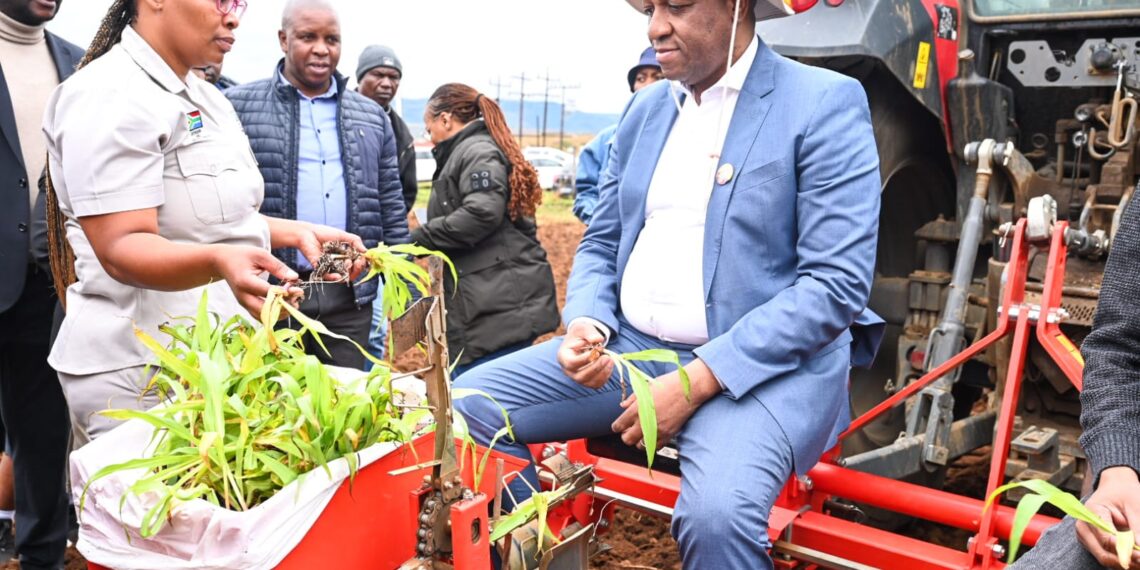
The KwaZulu-Natal government has launched its multi-planting season, setting its sights on tackling poverty and food insecurity, especially in rural areas. Premier Thamsanqa Ntuli and agriculture MEC Thembeni KaMadlopha-Mthethwa have committed to turning underutilised farmland into thriving green spaces filled with crops and vegetables.
Addressing thousands of residents gathered at the Solomon Linda Sportsfield in uMzinyathi District, Ntuli noted the need to revive dormant farmlands. “We envision a green KwaZulu-Natal with crops and vegetables flourishing across the province,” he said. “Farms that are lying fallow must be brought back to full operation.”
KaMadlopha-Mthethwa reinforced the province’s ambitious agricultural goals.
“The success of this multi-planting season will be measured by the greenery visible throughout KwaZulu-Natal. If we don’t see green vegetables and crops along our highways, we will have failed the people of the province,” she said.
The government is also introducing modern farming techniques to boost food security.
Ntuli highlighted the importance of agricultural extension officers collaborating with communities to ensure smooth and productive farming. “Extension and veterinary services need to work closely with our communities to enhance primary animal healthcare and improve animal productivity,” he added.
Supporting schools and farmers
During the launch, local schools in Masinga and surrounding areas received 1 000 seed packs, including maize, beans, and various vegetables, as part of the government’s focus on youth involvement in agriculture.
One of the key beneficiaries of the programme is Gwamanda Farming, which saw 50 hectares of land cultivated through the province’s mechanisation initiative. Alongside this, farmers were provided with essential agricultural inputs, including 150 bags of 50kg base fertiliser and 75 bags of top-dressing fertiliser to enhance crop yields.
Addressing food security challenges
Research from the Human Sciences Research Council reveals that 17% of households in KwaZulu-Natal experience food insecurity, with 4.3% suffering from hunger. KaMadlopha-Mthethwa noted that the department’s interventions are rooted in evidence-based research.
“The findings showed that many people in KwaZulu-Natal go to bed hungry, particularly in the uMzinyathi, Zululand, and Harry Gwala districts,” said KaMadlopha-Mthethwa. “These areas have vast land available but are not being utilised effectively. That’s why our multi-planting season this year targets these vulnerable communities.”
Ntuli also called on communal cattle farmers to ensure that livestock does not graze freely in community areas.
“Cattle roaming in the streets discourages people from planting because their crops get eaten by livestock. We must ensure that cattle remain in designated pasturelands,” he urged.
READ NEXT: Food security is key to Mzansi’s stability, says Steenhuisen
Sign up for Mzansi Today: Your daily take on the news and happenings from the agriculture value chain.