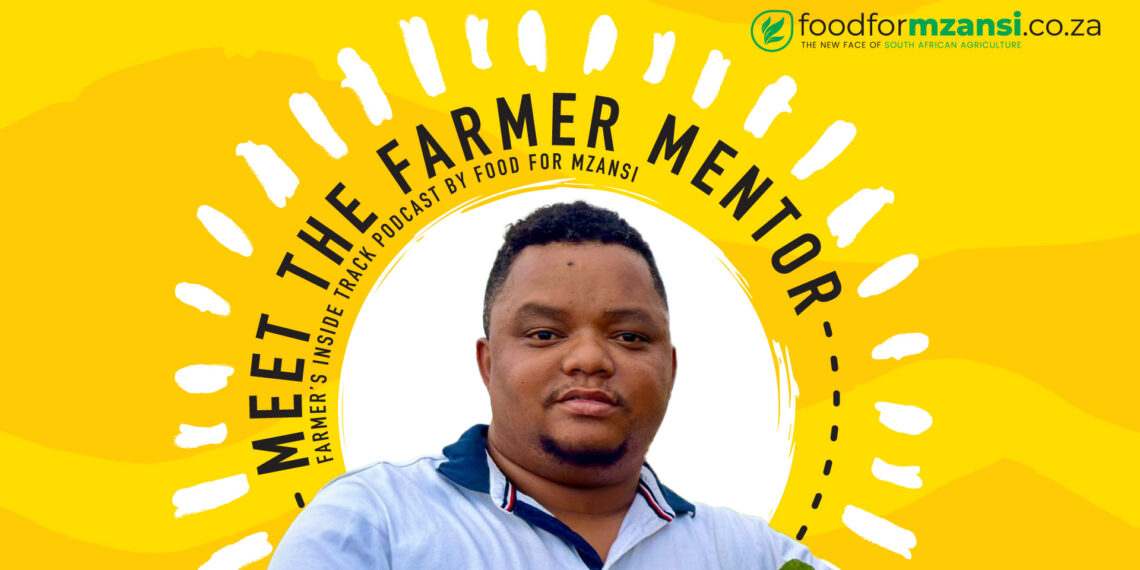
In our Farmer Mentor podcast series on Farmer’s Inside Track, we chat with Free State livestock farmer Zabion de Wee, who also grows sunflowers and watermelons. De Wee shares key farming lessons, his diversification strategy, and his bold plans for the future.
Zabion de Wee is a dynamic Free State livestock farmer who is making waves in the agriculture sector with his diversified farming strategy. Zabion raises cattle, pigs, and poultry, while also growing crops such as sunflowers and watermelons. His ultimate ambition is to become the largest watermelon producer in the Free State.
De Wee’s passion for agriculture began early in his life, though his journey wasn’t always straightforward.
Reflecting on his school days, he shares, “I started out as a bit of a rebel, and my mom decided to put me in a better school. That’s when I discovered an agricultural school, and I fell in love with farm life – the hands-on activities and the idea of working with livestock. That’s where my passion for farming started, and it’s grown ever since.”
He attended Grootfontein College of Agriculture in 2005, where he was one of just five non-white students. De Wee thrived, immersing himself in agricultural subjects and practical work. It was this early exposure to farming that sparked a lifelong interest in livestock, specifically cattle, pigs, and poultry.
After school, De Wee furthered his education at a prestigious agricultural college, where he specialised in Angora goats. “I had a strong background in Merino sheep because of where I grew up, but I wanted to push myself to learn something different, so I focused on Angora goats,” he explains.
However, farming was not just a passion for De Wee – it was also an opportunity to uplift and inspire his community. Coming from a farming background in Trompsburg, a small town in the Free State, he admired local farmers and aspired to one day have a big bakkie with livestock in the back. He knew, however, that education and strategic planning were critical to achieving his goals.
Lessons learned in crop production
De Wee’s farming journey started in earnest in 2019 when he finally secured land after nearly a decade of persistence. This was a turning point, allowing him to scale up his farming operations and diversify his business. “I started with cattle, but I knew from the beginning that diversification would be key to long-term success. I soon added pigs and crop farming to the mix,” he says.
One of the most important lessons De Wee has learned in his farming career is the value of understanding the land. “Respect the area you farm in,” he advises. “Just because you have knowledge about sheep or cattle doesn’t mean it’s going to work in every area. The land and the environment will tell you what can thrive there.”
He experienced this lesson firsthand when he attempted to farm Merino sheep in an area that wasn’t suited for them. “I made huge financial losses,” he admits.
“I was stubborn, thinking my knowledge of sheep would make it work. But the area was just not right for that type of livestock. That’s when I realised the importance of adaptability.”
De Wee has since shifted his focus to crops like sunflowers and watermelons, which thrive in the Free State’s climate. His determination to become the largest watermelon producer in the province is well underway, and he sees huge potential in these crops. “My first year planting watermelons was a flop,” he recalls. “But by the third year, I started to see success. Now, I’m looking to triple my watermelon planting area.”
His commitment to diversification also extends to cash flow management. “Farming can be unpredictable. With cattle, you might only see income once a year. That’s why I’ve added poultry – something that bring in money consistently, month after month. It helps keep the farm afloat during tough times.”
Dreaming big
Zabion’s advice to fellow farmers, particularly those just starting, is clear: “Diversify and plan for the long term. And always have something that provides regular income, like poultry or eggs, to sustain your farm through tough periods.”
Looking ahead, De Wee is excited about the future of farming in South Africa, particularly for new-era black farmers. “I want to make it easier for black farmers to break into the market. It’s not easy but with the right support and determination, we can build something sustainable and successful.”
With his eyes set on becoming a leader in watermelon production and his unwavering passion for agriculture, Zabion De Wee is a shining example of perseverance and innovation in South African farming.
Want to know more? Listen to the full episode of Farmer’s Inside Track.
Option 1: Click here to listen on Spotify (all mobile and other devices).
Option 2: Click here to listen on any Apple device.
READ NEXT: Jerid-Lee’s grape dreams sprout great success
Sign up for Farmer’s Inside Track: Join our exclusive platform for new entrants into farming and agri-business, with newsletters and podcasts.