Terribly frustrated farmers say they are “gatvol” with load shedding, which has brought most farming operations in the country to their knees.
From delays in slaughtering and milking processes, to out-of-stock suppliers, broken irrigation systems, and selling livestock earlier than usual, for less money.
Eskom announced stage 4 and 6 load shedding will continue from Monday until further notice. This means more expenses for farmers at a time when farming businesses are spending more than what they can afford, due to Eskom’s load shedding.
Food For Mzansi spoke to farmers across the country about the impact of power cuts on their businesses. This is what a few of them had to say.
‘I’m losing clients’
“I am gatvol with this load shedding. As a backyard farmer, I am struggling to get the chicks from the hatchery (supplier) because they are affected by load shedding,” said Nqobile Khumalo.

According to the poultry farmer from Warrenton, Northern Cape the quality of the chicks she buys is not what she is used to. Chicks, she explains, need 24 hours of light and heat, therefore limited light affects their growth.
“Load shedding has led to our slaughtering process being a bit slow and ultimately running a risk of losing our clients. With endless power cuts, it now takes time to give our customers the end product.”
For now, Khumalo uses a gas stove to do her slaughtering. This, she said, is also an expensive exercise.
Dairy farmer, without power

The dairy industry is very reliant on water and electricity, hence with the effect of load shedding the milking process is delayed during peak energy shortage times, explained Thabo Skhosana, a dairy farmer in Newcastle, KwaZulu-Natal.
“We run the risk of losing milk due to low temperatures in the refrigerators. We are gatvol because of the on-and-off inconsistencies in the power,” Skhosana said.
As result, Skhosana has opted to use generators more, though they are more expensive in the long run.
“They are very reliable, and we need to keep the operations going to safe jobs and many livelihoods.”
Increased risk of pests
A rooftop hop farmer in Johannesburg, Khaya Maloney, is equally as frustrated. Maloney’s impressive rooftop farms require consistent electricity to grow his temperature-sensitive crop.

“I need electricity to ensure the water pump comes on at a specific time. I need it for the nutrient fertilisation of my crop, to ensure the greenhouse extractor fans are working, and to ensure the humidifiers are pulsating when greenhouse gas goes above a certain heat temperature during the hot summer months,” he explained.
But above this, Maloney said he needed the lights to be on for a specific amount of time after sunset, as this will help the plants grow optimally.
“I must hand feed each plant with the required dosage of nutrients as opposed to automation, and I must leave the farm door open for excessive heat in the farm.
“[This] leaves my crop susceptible to pests and [I end up] using a lot of water because the recycle pump is off during load shedding.”
‘I have accepted my fate’

Phiwokuhle Myoyo from the rural areas of Nkqonkqweni in Berlin, Eastern Cape said as a farmer who uses a drip line irrigation system that requires electricity, she is badly affected.
Her business, Magiliwe Farming Primary Limited Cooperative, is struggling.
“The issue of power outages is affecting me very badly… Now I have to buy petrol and use it so that the work goes well at the farm and this petrol is very expensive.
“In fact, there is nothing I can do about this situation. I have accepted that we are living with power outages. Now we know that during these three hours of power outages, the seedlings and the food on the ground do not get their drops of water,” Myoyo said.
Small generators are not enough

“I am gatvol with the load shedding as my main water supply depends on electricity with the borehole and water pump,” Spheshile Chata, a crop farmer in Dundonald village in Mpumalanga, told Food For Mzansi.
“My spinach has been helped by the rain recently as my water pump mainly works with electricity to pump water to the farm.”
It is tough for Chata, because the on-and-off supply of electricity makes it hard for him to meet supply demands. He has bought a small generator to help the pump for at least an hour to supply water, but that is only an hour, Chata explained.
‘I might have to change industries’
Yasas Jayakody, managing director of Elysian Fields in Tarlton, Gauteng, said if the current load shedding persists, he might not be able to plant his winter crop this year.

“I have to make another plan for winter crop. With broccoli, we have to put it into punnets and wrap them. Wrapping needs a machine. We cannot afford a generator and the additional petrol. Eskom prices have not reduced with their reduced capacity of supply,” Jayakody said.
Jayakody produces green peppers and green beans during summer. He explained that crop irrigation planning and execution is messed up during this planting season.
Elysian Fields irrigate their fields early in the mornings, in a very specific sequence.
“If there is load shedding we have to either skip that day or work longer hours. We were planning on getting cold rooms. But now we must plan to get one that is fully on generator alone,’ he said.
Load shedding, he added, is impacting on their output so much that they have to potentially look at changing industry or moving to a different country.
‘Power cuts bring crime to our farms’
Since the increased levels of load shedding, Khumo Molamu, a sunflower farmer in Weltevreden, North West, has seen an increase in the rate of crime in her area.
“Lately the thieves steal our animals and slaughter them at your farm, that is how cruel they have been. Our equipment are also vulnerable from being stolen. How can we monitor this without putting our lives in danger?”
Molamu said she is considering investing in solar installation as a mitigating factor that will help her in the long run, however, said it is an expensive resource she can hardly afford.
Modern water system needs 24-hour electricity supply

Andile Matukane, a rooftop farmer in Menlyn Mall in Pretoria, Gauteng said all her pumps died due to load shedding.
“I have tried fixing them, [but] load shedding continues, [and] the same thing kept on happening. I have lost a number of produce, and missed out on a number of cycles of production,” Matukane said.
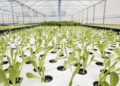
As a hydroponic farmer using an NFT system (a very shallow stream of water containing all nutrients required for plant growth), Matukane requires a 24 hour electricity supply.
“I am using water pumps to pump my water from my tanks to the system, I am gatvol with load shedding. My only option of mitigation is buying new pump which is costly and looking at get solar,” she explained.
Safety concerns, and frustration
Rudi van Vuuren, a crop and livestock farmer from Odendaalsrus, Free State, has also grown irritated by the continuous power cuts.
“We cannot pump water for crop sprayers, our workshop cannot do repairs and function. With load shedding comes security problems, the safety of everyone in the farm becomes at threat,” he said.
Van Vuuren has since bought a costly generator for the farm, and installed a solar system at his home in an attempt to mitigate load shedding.
Death of small-scale farmers

Bhisho-based farmer in the Eastern Cape Siyabulela Skepe said his monthly electricity bill has gone from R500-R800, to spending R500 on diesel per week.
“Just [recently] amaphara (idiots) stole two of my water pumps of which one costs R4 000,” he said.
“The restaurants I’m supplying are ordering way less now, about 60% less than normal because they can’t store the veggies for long. I cannot harvest before delivery as I used to because our refrigerated containers are not working anymore.”
Skepe too, relies on a generator and said he has ordered a few solar panels.

Suppliers are growing frustrated
Maureen Chisane, a crop farmer in West Rand, Gauteng, explained they normally do deliveries in the early hours of the morning. However, with load shedding, they are forced to postpone deliveries.
“This leads to frustrations from our suppliers. When there is load shedding it is difficult to work because we need to take the safety of everyone involved to heart.
“Some suppliers do agree to deliver late, [and] some [don’t]. This is a threat to the operations as we might lose business,” Chisane said.
NC farmer needs water for livestock

“I am gatvol with this never-ending load shedding. We are losing markets because of load shedding,” expressed Louisa Bezuidenhout, a livestock farmer in Upington, Northern Cape.
Bezuidenhout said her water pumps are also not working, this means her animals are not getting the required amount of water they need. This quickly leads sickness, she explained.
“One is forced with selling the animals way before time so that they do not become a burden to me. For them to go to auction, they need to be in a certain way, which has become costly for me to do.”
ALSO READ: Rooftop farmer over the moon as Didiza pops in
Sign up for Mzansi Today: Your daily take on the news and happenings from the agriculture value chain.