Monday, September 7, 2026
SUBSCRIBE
22 GLOBAL MEDIA AWARDS
Food For Mzansi
  • News
  • Changemakers
  • Lifestyle
  • Farmer’s Inside Track
  • Food for Thought
No Result
View All Result
  • News
  • Changemakers
  • Lifestyle
  • Farmer’s Inside Track
  • Food for Thought
No Result
View All Result
Food For Mzansi
No Result
View All Result
in News

Local is lekker: How SAB brews success with SA farmers

In an exclusive chat, South African Breweries' Zoleka Lisa discusses the company's 130-year commitment to SA farmers. She shares how 95% of raw materials are sourced locally, supported by agronomy training and research and development to ensure high-quality barley production

by Patricia Tembo
30th October 2025
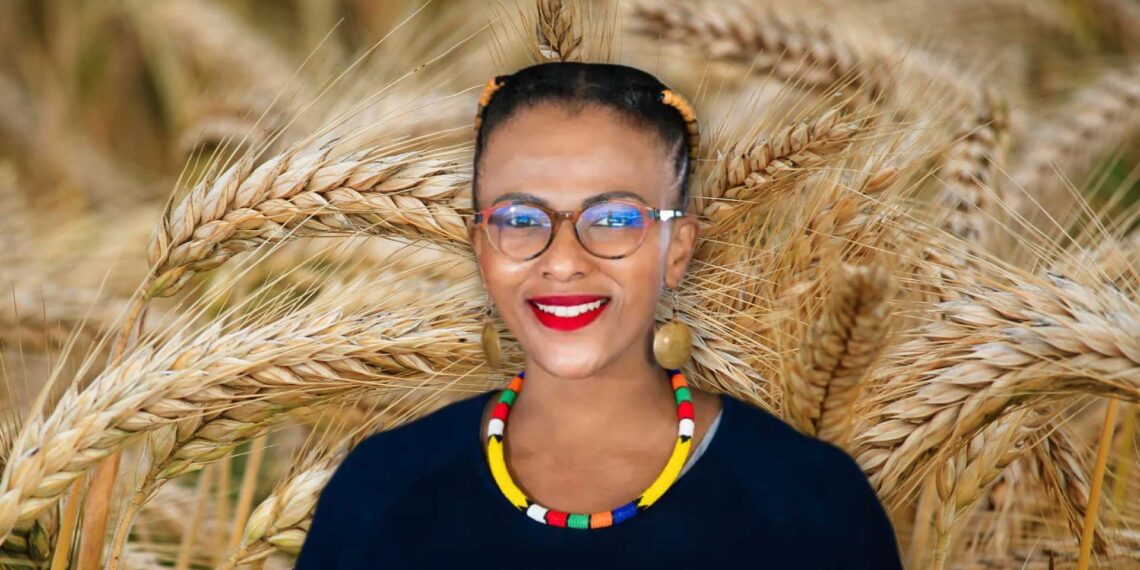
SAB vice president of corporate affairs Zoleka Lisa emphasises that their beers start on local farms with skilled farmers, 95% locally sourced ingredients, and sustainable, circular practices.  Photo: Gareth Davies/Food For Mzansi

SAB vice president of corporate affairs Zoleka Lisa emphasises that their beers start on local farms with skilled farmers, 95% locally sourced ingredients, and sustainable, circular practices. Photo: Gareth Davies/Food For Mzansi

Share on FacebookShare on TwitterShare on WhatsApp

As South African Breweries (SAB) celebrates 130 years of brewing heritage, the company’s leadership continues to emphasise its commitment to responsibility, sustainability, and innovation. This is particularly through initiatives such as SAB Sharp (South Africa Be Sharp), which promotes responsible consumption and active community engagement.

Food For Mzansi sat down with Zoleka Lisa, vice president of corporate affairs at South African Breweries (SAB), for an insightful conversation about the company’s approach to raw material sourcing, brewing innovation, and its close partnership with local farmers.

Patricia Tembo: Can you talk us through the sourcing of raw materials for your alcohol-free lager and how you ensure quality from grain producers?

Zoleka Lisa: Farmers are really the trigger to our brewing process because they provide us with high-quality ingredients. They too are part of the innovation story, because if you think of it, they need to have the right technology, mechanisation, and the like to produce the quality.

What we do with our farmers is we ensure that they’re skilled. We have an agronomy team that is dedicated to equipping them with the latest types of technical training and the like. We have a research and development centre in Caledon, where people run trials, and the farmers can actually see.

The big thing in farming is that it can’t be theoretical all the time. Farmers have to see and understand. That’s why we pair the agronomists with the farmers quite closely to see some of these innovations, the pesticides that we are recommending, all the types of farming. Then we connect them.


Related stories
  • Grain farmers break records at prestigious Grow for Gold Awards
  • Grain and oilseed markets: Tariffs shake up global trade
  • Brewing change: Louw leads charge to elevate SA’s beer industry

More recently, in Taung, we were looking at a smallholder farming programme where we sourced some of our barley that goes into Castle Free. We were donating mechanisation with some partners.

It makes a huge difference, specifically for smallholder farmers, to have access to mechanisation. It makes them more efficient, more cost-effective. 

Where are your barley farmers based?

There are some farmers in Caledon in the Western Cape, but we also have farmers in Taung, North West, as well.

Raising the bar: Dedication drives SA beer excellence

How do market shifts within the grain industry impact production at the breweries?

We’re very much a localised business. 95% of the raw materials that go into our beers come from South Africa. So if we’re looking at even our grains, it’s very, very local.

The times we would have to be outside of that are if there’s been, for example, I think it may have been two years ago, you know, our barley fields were flooded. There was a lot of rain. So climate conditions are really the impact. If, let’s say, there’s a quality issue that has a big impact on a specific harvest, then we have to find an alternate source. Or if we need a demand that’s open about what we have planted, we go outside.

But by and large, locally produced. That is important because if you locally source, you create local jobs for local farmers. That’s just quite simple.

How is SAB playing a part in ESG initiatives and sustainability?

Our beer is natural, local, and inclusive. We use natural ingredients, local ingredients. So we’re very much in tune with nature. We work with water. We work with farmers. So we need a healthy environment. I think we focus on the areas where we can make an impact.

Ensuring that we’ve got opportunities to clear our watersheds at source, so that we can get water to our breweries and to our farms. We look at circular packaging. We really look at our value chain and do things that are really authentic to our brewing process.

Do you have a message for the grain producers who supply to SAB?

I would say it’s not even a word of encouragement; it’s a word of gratitude. Whenever we travel the country and go to our farmers who are using land, their hands, and dedication and commitment to make a living, that livelihood is giving us the raw materials that go into our beer. We are forever grateful for their commitment and that they can create a living this way.

I think they must keep up the amazing work in the quality ingredients that they’re providing. As well as the commitment to learning and growing with us. Be it an innovation or whatever the case may be. We’re super, super grateful for all their hard work.

READ NEXT: Four steps to formalise your farm and unlock finance

Sign-up for the latest agricultural news delivered straight to your inbox every day with Mzansi Today!


Patricia Tembo

Patricia Tembo is motivated by her passion for sustainable agriculture. Registered with the South African Council for Natural Scientific Professions (SACNASP), she uses her academic background in agriculture to provide credibility and technical depth to her journalism. When not in immersed in the world of agriculture, she is engaged in outdoor activities and her creative pursuits.

Tags: Barley farmingCommercialising farmergrain industryInform meSouth African Breweries (SAB)
Farmers rethink water use as shortages threaten food production
News

Farmers rethink water use as shortages threaten food production

by Vateka Halile
5th September 2026

What happens when the taps run dry? Farmers know the answer all too well. Experts and farmers at the Water...

Read moreDetails
Honoured roots: A father’s legacy, a daughter’s farming dream

Honoured roots: A father’s legacy, a daughter’s farming dream

4th September 2026
Gauteng farmers urged to harness massive urban market

Gauteng farmers urged to harness massive urban market

4th September 2026
ONCE-OFF USE; DO NOT REPUBLISH

Foot-and-mouth crisis hits SA dairy industry with R1-billion loss

4th September 2026
Tough times, hardy cattle: Why Mzansi farmers are choosing Nguni

Tough times, hardy cattle: Why Mzansi farmers are choosing Nguni

3rd September 2026

Community-led farms boost food security and incomes in Limpopo

Tiger Brands CEO calls for stronger food value chain

BenicaTheFarmer: The nurse who built an agricultural empire

Rural safety under fire as stock theft and farm violence persist

How Tebogo beat post-harvest losses with smart agro-processing

Join Food For Mzansi's WhatsApp channel for the latest updates!

JOIN NOW!
Next Post
Love for cooking fuels Oneziwe’s purpose in food technology

Love for cooking fuels Oneziwe’s purpose in food technology

THE NEW FACE OF SOUTH AFRICAN AGRICULTURE

With 21 global awards in the first six years of its existence, Food For Mzansi is much more than an agriculture publication. It is a movement, unashamedly saluting the unsung heroes of South African agriculture. We believe in the power of agriculture to promote nation building and social cohesion by telling stories that are often overlooked by broader society.

Young farmers need structured opportunities, not just open doors

BenicaTheFarmer: The nurse who built an agricultural empire

Rural safety under fire as stock theft and farm violence persist

This week’s agri events: 07–11 September

Tiger Brands CEO calls for stronger food value chain

Plant, pick, protect: The rising potential of urban foraging in SA

  • Awards & Global Impact
  • Our Story
  • Contact Us
  • Cookie Policy
  • Privacy Policy
  • Copyright

Contact us
Office: +27 21 879 1824
News: info@foodformzansi.co.za
Advertising: sales@foodformzansi.co.za

Contact us
Office: +27 21 879 1824
News: info@foodformzansi.co.za
Advertising: sales@foodformzansi.co.za

  • Awards & Global Impact
  • Our Story
  • Contact Us
  • Cookie Policy
  • Privacy Policy
  • Copyright

Chat Options

I'm Lerato, your AI assistant!
No Result
View All Result
  • News
  • Changemakers
  • Lifestyle
  • Farmer’s Inside Track
  • Food for Thought

Copyright © 2024 Food for Mzansi

This website uses cookies. By continuing to use this website you are giving consent to cookies being used. Visit our Privacy and Cookie Policy.