
In the language of comparisons, a 16% increase sounds mighty impressive. For farmworkers, though, it translates to a new national minimum wage of R21.69 per hour; not enough to break the shackles of poverty. Duncan Masiwa reports.

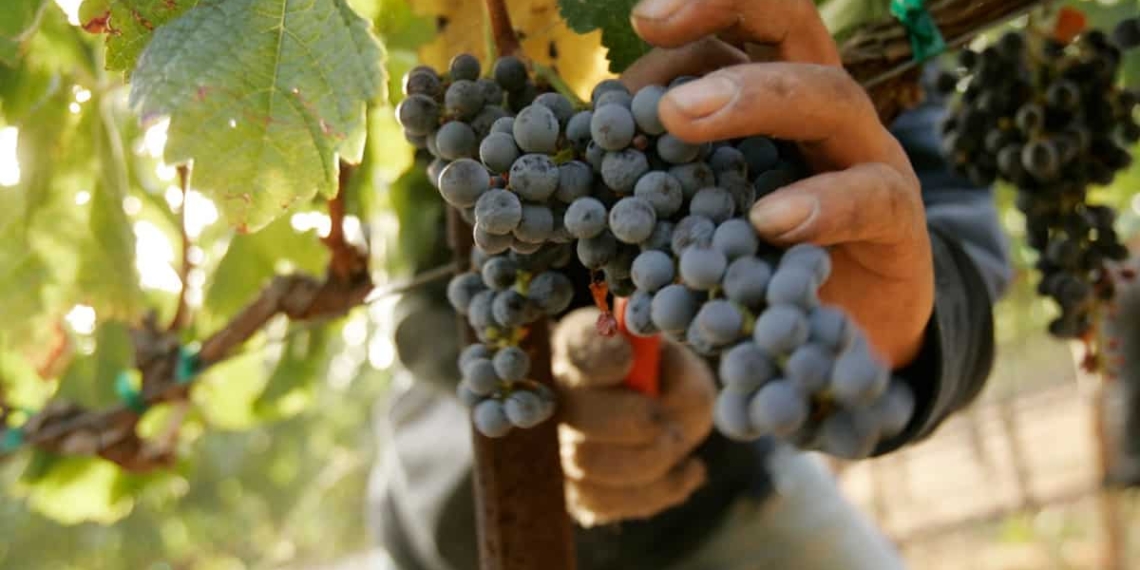
Every weekday in the last the decade, Karen Demas* worked in the vineyards of a well-known Western Cape wine estate.
The sun is relentless, particularly in February, and during the rainy months she does her best to limit the grapes’ exposure to moisture.
The reality is that the 40-year-old Demas has never been able to afford a single bottle of the wine she has nurtured from planting to harvesting.
Despite this, she feels honoured to see the finished product on store shelves, knowing that she had a hand in it.
“We are the people that work outside in the sun, rain and wind,” she tells Food For Mzansi, a few days after the new national minimum wage for farmworkers was announced.
Language of comparisons
According to Statistics South Africa, the country has nearly three million farmworkers. Most will now be earning 16% more in wages.
For skilled labourers, a 16% salary increase in this day and age is almost unheard of – and since the announcement, agricultural role-players have warned that it isn’t sustainable.
To Demas, huge percentages are meaningless, though. In the language of comparisons, a 16% increase may sound impressive, but for farmworkers it translates to a new wage of R21.69 per hour.

As a full-time employee, it means Demas’ lower-paid colleagues will take home about R350 more per month. For this, they are most grateful, she says.
South Africa’s expanded unofficial employment rate is at 43.1%, according to the latest Quarterly Labour Force Survey. And in the wine-making town where Demas lives, it is projected to be much higher.
“When it comes to wage increases, we always get the short end of the stick,” Demas says.
Poverty cycle
She asked us to protect her identity. She doesn’t want to be seen as ungrateful to still have a job, and she fears that she may be victimised by her employer who has, until now, only treated her with kindness.
Until now, Mzansi’s farmworkers were the poorest and most vulnerable labour group. This view is supported by Astrid Grub, a researcher, who found in her 2005 study that it was important to look at rural people’s lives from a micro perspective.
Her study, published by Wits university, found that “the minimum wage effectively fails to address the core issues that lock farmworkers and farm dwellers into a cycle of poverty, inequality, vulnerability and powerlessness. The most vulnerable ones are hurt by… legislation and have to be supported by a comprehensive rural development strategy.”

About the new minimum wage Demas says, “The R350 is like R3.50. It has little value. What can you buy with that kind of money when you walk into a grocery store these days? Almost nothing.”
Demas is not exaggerating. Global food prices have increased by 3.1% from 2019; the highest it has been in three years.
In South Africa, it’s just as bad. From now until April, consumers can expect to pay more for food due to inflated prices driven primarily by bread, cereals, meat, fish, milk, eggs, cheese, oils and fats in the last quarter of 2020.
Wages vs. expenses
As a single mother, Demas raises her two daughters (aged 21 and 14) and a grandchild in an RDP house nestled against the breath-taking vineyards of a premier wine producer.

Her eldest daughter is unemployed and the youngest is still at school
Demas’ monthly take-home wages is R5 500 because she is a farm supervisor. This makes her affluent compared to most others in her neighbourhood, but it is barely enough to cover all their expenses.
Almost half of her monthly earnings is for a bank loan she took out to slightly extend her RDP house.
Then, of course, she still has to buy food and electricity, which works out about R1 800. A further R1 000 pays the local loan sharks on whose door she has to knock to make ends meet.
ALSO READ: Food prices: Here’s why you’re paying more
“So, now you have to pay the loan sharks who have their own interest rates. Before you know it, you are only left with about R500. Then there’s expenses for clothes, schoolbooks and (my daughter’s) uniform. There’s just so many (expenses) I don’t even want think about it.”
Payday doesn’t excite her at all, Demas says.
“If I calculate all my expenses, then it’s actually more than my pay.”
Demas says, “I just wish that those in power could take the salary of a farmworker and see if they would be able to survive on that little money. As workers were so highly regarded in the news and on TV, but when it comes to our salaries, we just have to be content with the little we get.”
A different perspective
Now Demas also heard how agricultural role-players are complaining about the new minimum wage. From their perspective, the new rate puts workers like her at risk. The sector simply cannot afford it in the aftermath of severe Covid-19-induded financial losses.
From Demas’ perspective, though, it looks like the powers that be are publicly complaining that they have pay workers on minimum wage a mere R3.01 more per hour. That saddens her, and makes her feel underappreciated.
“If farmers cannot produce food affordably and employ agricultural workers on a large scale, this will result in a food crisis and large-scale social upheaval as food insecurity and unemployment start to take root,” warns Agri SA executive director, Christo van der Rheede.
Covid-19 aftermath
TAU SA president Henry Geldenhuys says, “The ability of employers – farmers – to absorb these levels of remuneration, are impossible. We shudder when thinking of the consequences of unemployment when government implements the increased hourly rate.”

Those in the know say a recommendation by Agri Western Cape should’ve been considered. They proposed a sustainable increase in accordance with the consumer price index.
They also suggested that the current 10% dispensation be kept in place for an additional two years, whereafter it could be phased out over another two years.
Agri Western Cape said it supports government in their mandate to promote equality and alleviate poverty. However, “as price takers, farmers whose cash flow is already under pressure, can’t absorb an increase of 16.1%. It will contribute significantly to the cost squeeze farmers are experiencing.”
The value of being valued
Some permanent farmworkers, like Demas, already earn more than the new minimum wage. The sector cannot afford a 16,1% increase (for the rest) in one production input, though.

For farmers in the Western Cape, the increase comes amid the detrimental effect that Covid-19 regulations have had on the agricultural sector, as well as a protracted drought in the Little and Central Karoo and the Matzikama district of the West Coast.
The drought has had a massive impact on the financial stability of agricultural enterprises in these regions and many producers cannot afford the increase.
Afriwu general secretary Gafieldien Benjamin, however, maintains arguments of unaffordability are unfounded.
Earlier, he told Food For Mzansi, “It just indicates who and what these leaders and stakeholders value more. It is definitely not their workers and their efforts on farms.”